Countryside & Nature Weddings
There is something undeniably magnetic about exchanging vows surrounded by rolling hills, ancient vines, or beneath a canopy of stars. Countryside and nature weddings offer couples an escape from conventional ballrooms, trading predictable elegance for raw, authentic beauty. Yet this romance comes with a unique set of challenges that can catch even the most organized planners off guard.
Unlike traditional venues with built-in kitchens, climate control, and reliable power, outdoor settings demand creative problem-solving at every turn. The very elements that make these locations breathtaking—open skies, natural terrain, working agricultural land—also introduce variables that indoor spaces simply do not have. From navigating soft ground in formal attire to ensuring your caterer can actually cook without a commercial kitchen, the details multiply quickly.
This resource explores the essential considerations for three of the most popular countryside wedding settings: vineyards, barns, and tented celebrations. Whether you are drawn to the sophistication of wine country, the rustic warmth of timber beams, or the flexibility of creating your own outdoor space, understanding what lies ahead will help you plan with confidence rather than anxiety.
Why Vineyard Weddings Require More Than Beautiful Scenery
Vineyards rank among the most photographed wedding locations, and for good reason. The geometric rows of vines, the quality of light at golden hour, and the association with celebration and fine wine create an irresistible combination. However, working agricultural land operates on its own schedule, and your wedding day is just one small event in a much larger annual cycle.
Timing Your Ceremony Around the Harvest
Autumn might seem like the obvious choice for a vineyard wedding, but September and early October often coincide with harvest season. This means tractors running at dawn, workers moving through the rows, and a general level of activity that can compete with your ceremony. Many experienced couples opt for late spring or early summer, when the vines are lush but the property remains quieter.
Practical Challenges of the Terrain
Vineyard soil is designed to drain well, which often means it is uneven and soft. Guests in formal footwear—particularly heels—can find themselves sinking with every step. Solutions range from providing heel protectors to designating pathways with temporary flooring. Wedding dresses with trains face similar hazards, with hems picking up dust, grass stains, and moisture from irrigation.
The Darkness Factor After Sunset
Unlike urban venues with ambient light pollution, vineyards become remarkably dark once the sun sets. Many couples underestimate this dramatic shift, which can leave reception areas feeling cave-like if lighting has not been adequately planned. Strategic uplighting, string lights woven through vines, and pathway illumination become essential rather than decorative.
Barn Weddings: Balancing Rustic Charm with Modern Expectations
The appeal of barn weddings lies in their ability to combine character with flexibility. Exposed timber, weathered wood, and generous ceiling heights create a natural atmosphere that requires minimal decoration. Yet barns were built for agriculture, not hospitality, and this distinction affects nearly every aspect of your planning.
Historic Authenticity Versus Purpose-Built Convenience
Couples often face a choice between authentic historic barns and modern structures built specifically for events. Each comes with trade-offs:
- Historic barns offer genuine character, unique photo opportunities, and often stunning architectural details—but may lack insulation, modern wiring, or convenient access points
- Purpose-built barns provide reliable climate control, adequate power supply, and integrated facilities—but can feel somewhat manufactured despite their rustic styling
Neither option is inherently superior; the right choice depends on your priorities and tolerance for logistical complexity.
Temperature Control Challenges
Barns are notoriously difficult to heat and cool effectively. Early spring weddings may require industrial heaters to combat cold stone floors and drafty openings, while summer celebrations need powerful ventilation or air conditioning units. The volume of air inside a high-ceilinged barn means that climate control costs significantly more than comparable spaces with standard ceiling heights.
Lighting Those Dramatic Ceilings
The soaring ceilings that make barns so visually striking also present lighting challenges. Without a cherry picker or scaffolding, installing fixtures at height becomes expensive and time-consuming. Many venues include basic lighting packages, but achieving the warm, ambient glow couples envision typically requires additional investment.
Why Caterers Charge More for Field Kitchens
Without a commercial kitchen on-site, caterers must bring everything with them: refrigeration units, cooking equipment, washing facilities, and generators. This mobile kitchen approach, sometimes called a field kitchen setup, adds substantial costs beyond the food itself. Expect catering quotes for barn venues to run fifteen to thirty percent higher than comparable indoor events.
Tent and Marquee Celebrations: Creating Your Own Venue
For couples with access to private land—whether family property, farmland, or rented estates—tented weddings offer unmatched flexibility. You are essentially building a temporary venue from scratch, which means total creative control but also total responsibility for infrastructure.
Choosing the Right Structure
The two primary options each suit different situations:
- Pole tents feature elegant peaked silhouettes and work well on flat, open ground where center poles will not obstruct sightlines
- Frame tents offer completely unobstructed interiors but require more setup time and typically cost more to rent
Beyond aesthetics, wind ratings matter critically. A tent rated for light breezes can become genuinely dangerous in moderate wind conditions. Verify the structural specifications with your rental company and have a contingency plan for unexpected weather.
Space Calculations That Actually Work
The common mistake is underestimating square footage. While minimum recommendations suggest around one square meter per seated guest, this leaves no room for dance floors, bars, catering stations, or comfortable circulation. Practical planning typically requires doubling that figure for a complete reception setup.
The Hidden Infrastructure Costs
The tent itself represents only a fraction of total costs. Budget separately for:
- Flooring to create level, stable surfaces over uneven ground
- Electrical supply and distribution for lighting, music, and catering equipment
- Climate control units appropriate for your season
- Restroom facilities, whether luxury trailer units or basic portables
These elements can easily equal or exceed the tent rental itself, transforming what seemed like an affordable option into a significant investment.
Sustainability in Natural Settings: Beyond Aesthetic Choices
Countryside weddings often attract couples with environmental values, yet turning those values into practice requires more than Instagram-worthy intentions. Genuine sustainability involves decisions that may not photograph particularly well but make meaningful differences.
Vendor Selection and Greenwashing
Many vendors now market themselves as eco-friendly, but actual practices vary enormously. Questions worth asking include specific waste disposal methods, sourcing policies for materials, and whether certifications are current and verifiable. A vendor unable to provide concrete details is likely relying on marketing rather than genuine commitment.
Floral Choices That Matter
Floral foam—the green blocks used to anchor arrangements—represents one of floristry’s largest environmental problems. Non-biodegradable and impossible to recycle, this material persists in landfills indefinitely. Sustainable alternatives include chicken wire mechanics, water tubes, or foam-free arranging techniques that skilled florists can execute beautifully.
Similarly, choosing seasonal and locally grown flowers reduces the carbon footprint of refrigerated transportation while often proving more budget-friendly than imported exotics.
Managing Event Waste Responsibly
A wedding reception for one hundred guests can generate substantial food waste, often exceeding fifty kilograms. Establishing relationships with local composting services before the event, rather than assuming the venue will handle everything, ensures organic materials are diverted from landfills appropriately.
Guest Comfort: Small Details with Big Impact
Outdoor celebrations demand attention to practical guest needs that indoor venues handle automatically. Anticipating these requirements transforms your event from potentially uncomfortable to genuinely enjoyable.
For ceremonies on grass, providing heel protectors or offering flip-flops prevents guests from aerating the lawn with every step. Clear signage about terrain helps guests prepare appropriately. Comfortable restroom facilities—whether upgraded portable units or luxury trailers—affect guest satisfaction more than most decorative choices.
Temperature considerations extend beyond the couple’s comfort to every guest present. Summer tents without adequate ventilation become unbearably hot, while spring barn weddings without heating leave guests shivering throughout dinner. Neither scenario supports the celebratory atmosphere you are working to create.
Countryside and nature weddings reward couples willing to engage deeply with logistics alongside aesthetics. The venues themselves provide beauty that no decorator could replicate; your role is ensuring that practical realities never overshadow the natural magic that drew you outdoors in the first place.
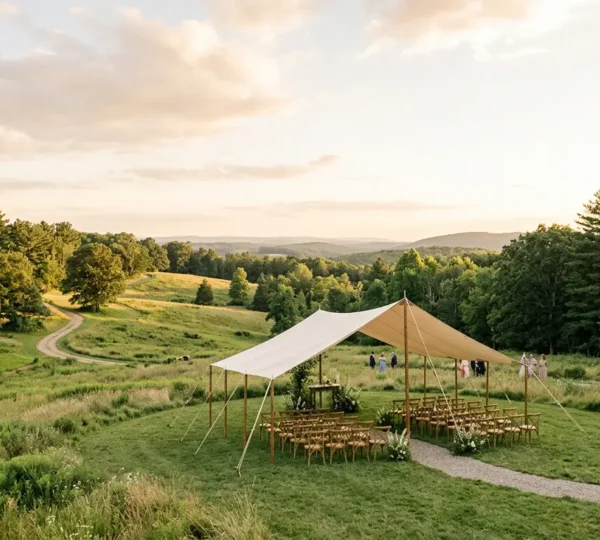
Pole Tent vs. Frame Tent: Which Structure Suits Your Land Best?
The choice between a pole and a frame tent is fundamentally a structural and logistical decision, not an aesthetic one. A pole tent’s stability is integral to the ground itself, requiring deep staking and making it suitable only for penetrable…
Read more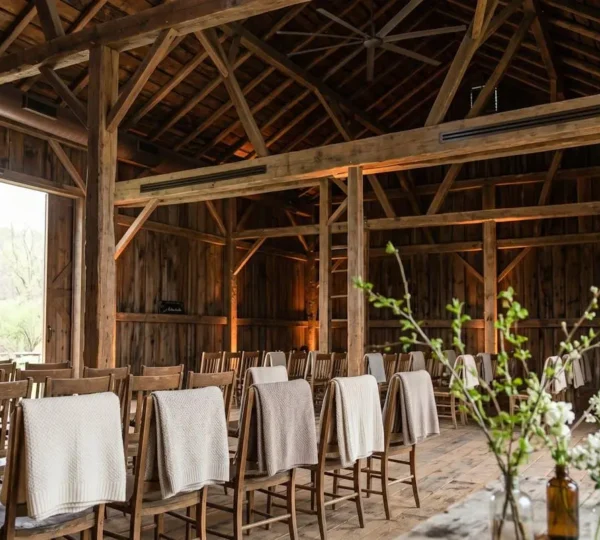
How to Temperature Control a Barn Wedding in Early Spring?
Achieving guest comfort in a historic barn isn’t about adding more heaters; it’s an engineering challenge requiring a comprehensive infrastructure plan before any decor is considered. Authentic barns lack the power, insulation, and facilities of modern venues, leading to significant…
Read more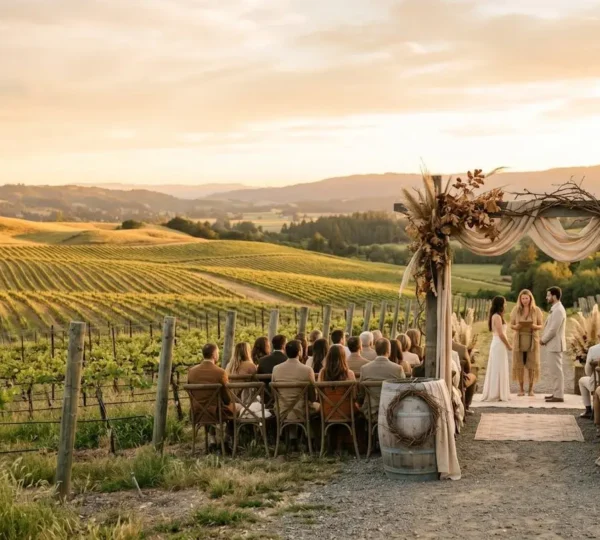
How to Plan a Zero-Waste Wedding in a Sensitive Vineyard Ecosystem?
A true zero-waste luxury wedding is achieved not through simple eco-gestures, but through a rigorous audit of your event’s logistics and supply chain. Vendor integrity must be verified through a three-tier system to avoid “greenwashing.” Waste management requires a detailed…
Read more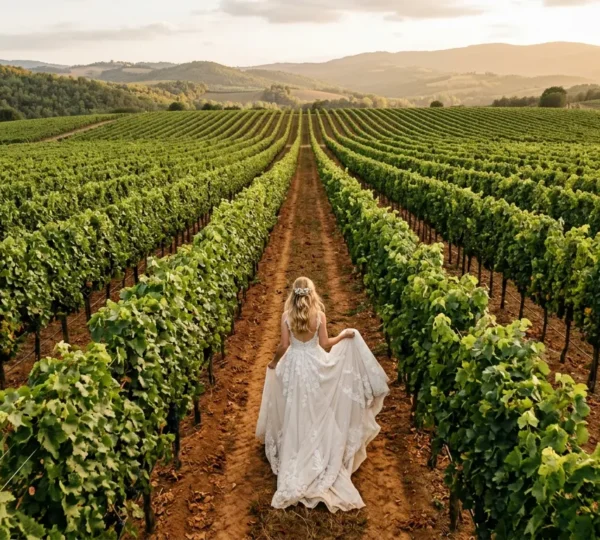
How to Protect Your Wedding Dress Hem in a Vineyard Setting?
Protecting your wedding dress in a vineyard is not about luck; it’s about strategic environmental planning that anticipates and neutralizes threats to your gown before they happen. Unseen risks like harvest machinery ruts, chemical pest control, and inadequate night lighting…
Read more