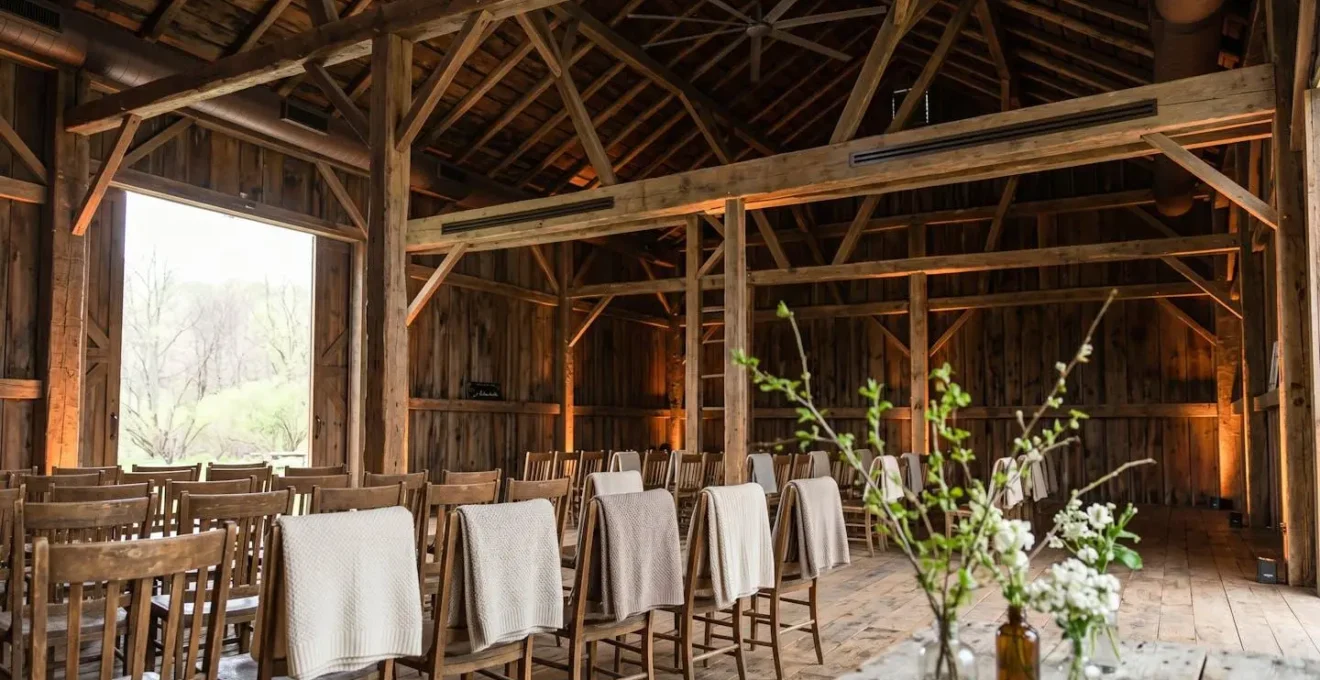
Achieving guest comfort in a historic barn isn’t about adding more heaters; it’s an engineering challenge requiring a comprehensive infrastructure plan before any decor is considered.
- Authentic barns lack the power, insulation, and facilities of modern venues, leading to significant hidden costs and logistical hurdles.
- Key infrastructure deficits include insufficient electrical circuits, non-existent HVAC, inadequate restrooms, and challenging vendor logistics.
Recommendation: Prioritize a venue’s foundational infrastructure—power, climate control, and accessibility—over its aesthetic charm to prevent budget overruns and ensure a safe, comfortable guest experience.
The vision is captivating: soaring wooden beams, the soft glow of string lights, and the authentic charm of a historic barn. It’s a dream setting for a wedding. But for couples planning an early spring or late autumn event, a pressing fear underlies the fantasy: the physical discomfort of their guests. The very elements that create rustic character—drafty walls, vast uninsulated ceilings, and aged infrastructure—can quickly turn a dream into a chilly, logistical nightmare. Many couples believe the solution lies in a few portable heaters and a basket of blankets, a well-intentioned but fundamentally flawed approach.
The conventional wisdom focuses on cosmetic fixes, but this perspective overlooks the core issue. The truth is, ensuring genuine warmth and comfort in a structure not designed for large gatherings is an engineering problem, not a decorative one. It involves a technical assessment of power loads, thermal loss, and structural capacity. It requires thinking like an infrastructure specialist, not just an event designer. This guide moves beyond the superficial advice to dissect the foundational challenges of a barn wedding. We will analyze the critical systems—from HVAC and electrical capacity to fire safety and acoustics—that truly dictate the success and comfort of your event.
This article will provide a technical framework for evaluating and managing a barn venue. We will explore the crucial differences between authentic and purpose-built barns, demystify vendor surcharges, and provide actionable strategies for everything from lighting to structural safety. By the end, you will have a clear understanding of the infrastructure required to transform a raw, agricultural space into a sophisticated and genuinely comfortable wedding venue.
Summary: How to Temperature Control a Barn Wedding in Early Spring?
- Luxury Trailers vs. Built-in Bathrooms: What Do Barn Guests Expect?
- Hay Bales and Sparklers: The Fire Risk You Must Avoid in Wood Barns
- How to Light High Barn Ceilings Without a Cherry Picker?
- Authentic Historic Barn vs. Modern Purpose-Built Barn: Which is Better?
- The “Field Kitchen” Challenge: Why Caterers Charge More for Barns?
- Pole Tent vs. Frame Tent: Which Structure Suits Your Land Best?
- How to Soften the Acoustics in a Concrete Industrial Loft?
- Hanging Florals: The Engineering Cost You Didn’t Budget For?
Luxury Trailers vs. Built-in Bathrooms: What Do Barn Guests Expect?
The first point of failure for guest comfort in a barn setting is often the most overlooked: restroom facilities. An authentic barn rarely includes bathrooms sufficient for a large-scale event. This isn’t just about convenience; it’s about meeting a baseline expectation of modern hospitality. While guests appreciate rustic charm, they do not appreciate long lines or subpar sanitation. The solution is typically a luxury restroom trailer, but this introduces its own set of logistical and financial considerations. It’s a prime example of retrofitting modern infrastructure onto a historic property.
The necessary scale is often underestimated. For an event lasting several hours, industry standards recommend at least one toilet per 75-100 attendees to prevent queues and ensure a pleasant experience. A high-end trailer provides more than just toilets; it delivers a climate-controlled environment with flushing porcelain fixtures, running hot and cold water, and proper lighting. These features are not luxuries but necessities for events that span from day to night, especially in the unpredictable weather of early spring. The cost of renting such a unit, often running into thousands of dollars, must be factored into the venue budget from the outset.
Furthermore, placement and power are critical. The trailer needs a level, accessible location that doesn’t create a bottleneck or obstruct emergency access. It also requires a dedicated power source and a plan for water supply and waste management. These requirements underscore the central theme: a successful barn wedding depends on meticulous infrastructure planning, treating guest facilities with the same seriousness as catering or entertainment.
Hay Bales and Sparklers: The Fire Risk You Must Avoid in Wood Barns
The very material that gives a barn its warmth and character—aged, dry wood—is also its greatest liability. The risk of fire in a wooden structure filled with guests, decorations, and electrical equipment is a paramount concern that demands a professional safety protocol. Decorative elements like hay bales, candles, and celebratory sparklers can dramatically increase this risk. The statistics are sobering, with fire safety data showing that in the United States, there are more than 1,200 barn fires annually, causing nearly $33 million in property damage. For a wedding, the potential for tragedy elevates this from a financial risk to a critical human safety issue.
A comprehensive fire safety plan is non-negotiable. This goes beyond simply forbidding open flames. It involves a systematic approach to prevention, detection, and response. The venue must be equipped with modern, regularly inspected smoke detectors and a sufficient number of the correct type of fire extinguishers. Staff and vendors must be trained in their use and in emergency evacuation procedures. Clear “no-flame zones” must be established, keeping all heat sources, including catering warmers and lighting fixtures, a safe distance from combustible materials like drapery, dry floral arrangements, and wooden walls.
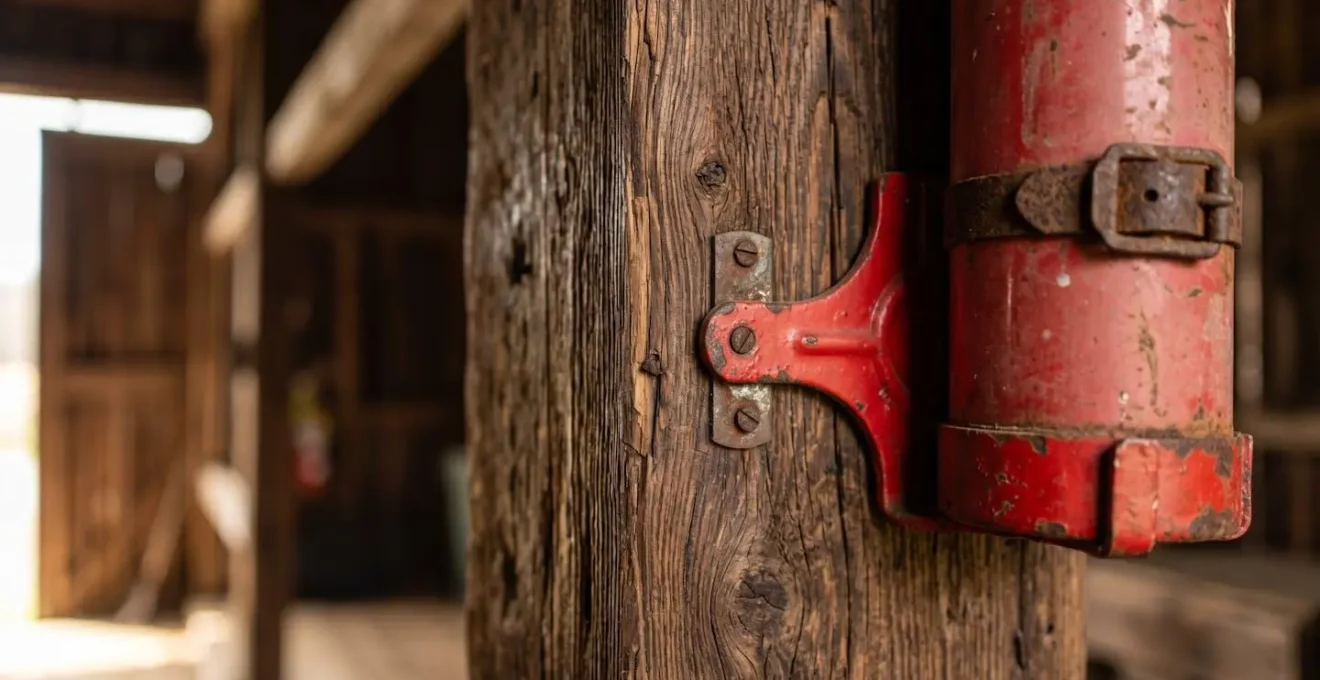
The responsibility for fire safety is shared between the venue, the couple, and their vendors. Before signing a contract, couples should inquire about the venue’s fire suppression systems, emergency exits, and policies on flammable materials. A venue that cannot provide a clear and reassuring fire safety plan is not a suitable choice, no matter how beautiful it may be. Guest safety must always be the highest priority.
Action Plan: Fire Safety and Zone Designation
- Install ABC-type fire extinguishers near every exit and ensure no point in the barn is more than 50 feet from one.
- Designate and clearly mark no-flame zones, mandating that all decorations are kept at least 3 feet away from any heat source.
- Establish sand bucket placement stations throughout the venue for immediate, intuitive response to small fires.
- Map extinguisher stations by type for trained personnel: Type A for wood/combustibles, Type B for flammable liquids, Type C for electrical, and Type K for cooking grease.
- Train all on-site personnel and vendor leads on the PASS acronym for extinguisher use: Pull, Aim, Squeeze, Sweep.
- Conduct scheduled hazard checks before and during the event to identify and promptly remove any buildup of combustible debris.
How to Light High Barn Ceilings Without a Cherry Picker?
Lighting is transformative, but in a barn with high ceilings, it presents a significant engineering challenge. The common assumption is that dramatic overhead lighting, such as chandeliers or extensive string light canopies, requires complex and expensive rigging mounted to the roof beams. This often involves scissor lifts or cherry pickers, adding thousands to the budget and posing potential damage to historic structures. However, an effective and equally stunning lighting design can be achieved entirely from the ground up, eliminating the need for aerial work and complex structural assessments.
The key is a strategy of layered, ground-supported lighting. This involves perimeter uplighting to wash the wooden walls and ceiling in warm, ambient light, which highlights the architecture without requiring a single fixture to be hung from above. This foundational layer creates depth and warmth, mitigating the “black hole” effect of a dark, high ceiling. From there, freestanding structures can be used to create dramatic focal points. For example, as demonstrated in a transformation at Stonover Farms, a large wooden chandelier with Edison bulbs can be suspended from a floor-supported gantry over a bar or dance floor, providing a central feature without touching the original barn structure.
This approach also simplifies power load calculation. By using ground-based fixtures, cable runs can be planned more safely and efficiently along walls and floors, minimizing tripping hazards and voltage drop over long distances. A combination of bistro lights strung between freestanding poles, uplights, and floor-supported chandeliers can create a rich, immersive atmosphere. It’s crucial to use incandescent bulbs over LEDs when power capacity allows, as their warmer color temperature is far more flattering to skin tones and enhances the rustic wood. The entire system must be controlled by dimmers to allow for adjustments, transitioning the mood from a bright cocktail hour to an intimate dinner and finally to a high-energy dance party.
Authentic Historic Barn vs. Modern Purpose-Built Barn: Which is Better?
The central dilemma for many couples is the choice between an authentic, historic barn with its undeniable character and a modern, purpose-built “barn-style” venue that offers contemporary comforts. While the former provides a genuine story and unique imperfections, the latter is engineered from the ground up for events. From an infrastructure standpoint, the modern venue is almost always superior. It eliminates the cascade of hidden costs and logistical headaches associated with retrofitting an agricultural building for a luxury event.
A purpose-built venue is designed with a robust electrical system capable of handling the simultaneous demands of a catering team, a DJ or band, and extensive lighting. It features integrated, zoned HVAC systems that provide consistent heating and air conditioning, a stark contrast to the drafty, uninsulated nature of a historic barn which suffers from significant thermal loss. Furthermore, modern venues have built-in, multi-stall restrooms that are ADA-compliant and climate-controlled, removing the need and expense of renting luxury trailers. Accessibility is another key differentiator, with paved pathways, designated accessible parking, and smooth interior floors, whereas a historic barn often presents challenges with uneven terrain and gravel lots.
While research shows that most farm or barn wedding venues cost between $5,989 and $12,341, the final price of an authentic barn can balloon with these necessary infrastructure rentals. The charm of a historic barn is real, but it must be weighed against the practical realities and potential budget overruns. The table below outlines the critical infrastructure differences.
| Feature Category | Historic Barn (Authentic) | Modern Purpose-Built Barn |
|---|---|---|
| Power Infrastructure | Limited electrical capacity; may require generator rental; aging wiring concerns | High-capacity electrical systems; multiple 20-amp circuits; supports full lighting, DJ, and catering simultaneously |
| HVAC Systems | Typically absent; requires portable heater/AC rental; drafty structure with gaps between boards | Built-in climate control with heating and air conditioning; insulated construction; year-round comfort |
| Restroom Facilities | Often absent or minimal; requires luxury trailer rental (adds $1,000-$3,000+) | Built-in restrooms with multiple stalls; ADA-compliant facilities; climate-controlled bathrooms |
| Accessibility | Uneven terrain; may lack ramps or paved paths; gravel/grass parking areas; ADA upgrades required | Paved accessible pathways; designated accessible parking; ADA-compliant from construction; smooth flooring |
| Hidden Costs | Structural survey fees; mandatory pest control; permits for modifications; vendor surcharges | Typically all-inclusive pricing; fewer surprise expenses; predictable budget |
| Charm Factor | Authentic patina and character; weathered wood; historic significance; unique imperfections | Clean, polished aesthetic; customizable decor; modern elegance with rustic inspiration |
| Vendor Compatibility | Some caterers/vendors charge 10-20% more due to logistical challenges | Standard vendor pricing; easier logistics for setup and service |
The “Field Kitchen” Challenge: Why Caterers Charge More for Barns?
One of the most common and least understood “hidden costs” of a barn wedding is the catering surcharge. Many couples are surprised when their caterer adds a 10-20% fee specifically for a barn venue. This is not arbitrary; it directly reflects the cost of building a temporary, health-code-compliant commercial kitchen in a space that has none. A caterer cannot simply cook in a field or an unequipped corner of a barn. They must create a “field kitchen” that meets rigorous standards for safety, sanitation, and food storage.
This surcharge is a direct consequence of the venue’s lack of infrastructure. A standard venue provides a catering kitchen with running water, commercial-grade power outlets, proper ventilation, and non-slip flooring. In a barn, the caterer must rent and transport every single one of these components. This logistical effort is substantial and requires specialized equipment and additional labor, all of which are factored into the surcharge. The investment ensures that the food served is not only delicious but also prepared and held at safe temperatures, protecting the health of every guest.
Understanding what this fee covers demystifies the cost and highlights the importance of asking a venue about its catering facilities before booking. The absence of a dedicated prep area is a major red flag that will inevitably impact the budget.
Deconstructing the Barn Catering Surcharge
When a caterer itemizes a barn surcharge, the costs typically include: a portable tent structure for the food prep area, non-slip rubber flooring for safety, commercial-grade ovens and cooking equipment, refrigeration trucks for cold storage, a dedicated generator with sufficient amperage, transport of potable water in tanks, legal greywater and grease disposal services, and temporary handwashing stations. As detailed in an analysis by event center specialists, these elements transform an empty field into a functional, health-code-compliant kitchen, with the associated costs passed to the client.
Pole Tent vs. Frame Tent: Which Structure Suits Your Land Best?
If a barn venue requires an additional outdoor covered space for a cocktail hour or ceremony, the choice of tent structure becomes another critical infrastructure decision. The two primary options, pole tents and frame tents, have vastly different engineering requirements that dictate where and how they can be installed. This choice is not aesthetic but technical, depending entirely on the ground surface and available space. A pole tent is the more traditional option, characterized by its graceful, swooping roofline supported by one or more center poles.
The key engineering constraint of a pole tent is its anchoring method. It relies entirely on tension and must be staked directly into a penetrable surface like grass or soil. This makes it unsuitable for installation on asphalt, concrete, or patios. Furthermore, the stakes and guy-lines require an additional 5 to 8 feet of clearance around the entire tent perimeter, significantly increasing its total footprint. The interior center poles also create obstructions that must be incorporated into the floor plan, affecting table layouts and sightlines.
A frame tent, by contrast, is a freestanding structure with a rigid metal framework that supports the vinyl top. It requires no center poles, offering a clear-span interior with complete layout flexibility. Its most significant advantage is its versatility in placement. Because it can be secured with dead-weight anchoring, such as concrete blocks or water barrels, a frame tent can be installed on any surface—hard paving, a tennis court, or a grassy lawn. While typically more expensive and time-consuming to install, its engineering offers a solution for spaces where staking is impossible, making it the superior choice for adding a covered area adjacent to a building on paved ground.
| Comparison Factor | Pole Tent | Frame Tent |
|---|---|---|
| Anchoring Method | Requires penetrable ground for stake installation (minimum 18-24 inches deep) | Uses dead-weight anchoring (water barrels, concrete blocks) on any surface |
| Surface Compatibility | Grass, soil, or soft ground only; cannot install on asphalt, concrete, or patios | Works on any surface: hard paving, asphalt, patios, decking, or grass |
| Guy-Line Footprint | Requires additional 5-8 feet clearance beyond tent perimeter for tension guy-lines and stakes | Footprint ends at tent walls; no extended clearance needed beyond structure |
| Interior Layout | Center pole(s) create obstacles for dance floor placement, table arrangement, and sightlines | Clear-span interior with no poles; complete design freedom for floor plan and centerpieces |
| Wind Load Rating | Excellent performance in high winds when properly staked in suitable soil | Good performance; frame structure provides stability; anchoring method must suit wind conditions |
| Cost | Generally more affordable; simpler structure and materials | Premium pricing; engineered frame components and labor-intensive installation |
How to Soften the Acoustics in a Concrete Industrial Loft?
While distinct from a wooden barn, an industrial loft venue presents a similar challenge in guest comfort: harsh acoustics. Large, open spaces with hard surfaces like concrete floors, brick walls, and high ceilings create significant reverberation, or echo. In such an environment, the sound of conversations, music, and even clinking glassware can merge into an overwhelming cacophony, making it difficult for guests to hear each other and creating a stressful, noisy atmosphere. As with temperature control in a barn, solving this requires an engineered approach to sound management, not just turning down the music.
The principle is sound absorption. The goal is to introduce soft, porous materials into the space to capture sound waves and prevent them from bouncing off hard surfaces. The most effective solution is strategic draping. Long, heavy drapes of fabric like velvet or thick linen hung along walls or sectioning off areas of the room can dramatically reduce echo. These can be integrated into the decor, appearing as a design choice rather than a technical necessity. Acoustic panels, which are specifically designed to absorb sound, can also be used. Many companies offer panels wrapped in custom-printed fabric, allowing them to be disguised as artwork to match the wedding’s theme.
Furniture and flooring also play a crucial role. Area rugs are one of the simplest and most effective ways to absorb sound reflecting off a concrete floor. Upholstered furniture, such as lounge seating areas with sofas and armchairs, adds more soft surfaces to the environment. Even the table settings contribute; using tablecloths instead of leaving tables bare will help dampen sound. By layering these elements, you can systematically soften the room’s acoustics, transforming a loud, cavernous space into an intimate and conversation-friendly environment where guests feel relaxed and comfortable.
Key Takeaways
- Guest comfort in a non-traditional venue is an engineering problem, not a decorative one. Prioritize infrastructure over aesthetics in your initial planning.
- Authentic historic barns almost always carry significant hidden costs related to power, HVAC, restrooms, and vendor logistics that are absent in purpose-built venues.
- Every element, from lighting to floral installations, has a structural and electrical implication. A thorough technical assessment is required to ensure safety and avoid budget surprises.
Hanging Florals: The Engineering Cost You Didn’t Budget For?
Elaborate hanging floral installations are a popular trend for adding drama and romance to a barn’s high ceilings. However, these seemingly decorative elements carry significant weight and present a serious structural engineering challenge. A lush floral garland or chandelier can weigh hundreds of pounds, especially once water-soaked foam is factored in. Suspending this weight from a historic barn’s wooden beams requires more than just a ladder and some wire; it demands a professional assessment of the structure’s load-bearing capacity.
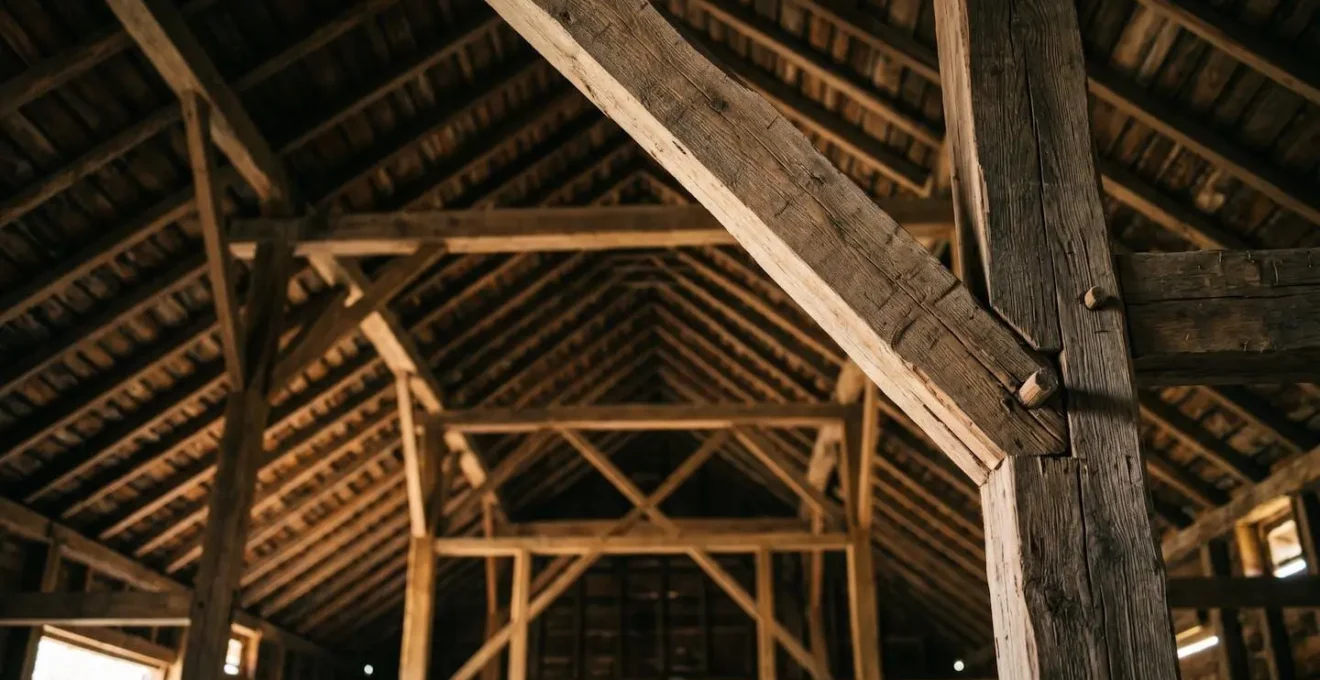
Most historic barns were not designed to support concentrated, heavy loads from their rafters. Attaching a heavy installation without proper analysis can pose a catastrophic safety risk. A professional floral or event design company that offers rigging services will insist on a structural survey or work with the venue’s own engineer to identify approved rigging points. These are specific locations on the beams that have been certified to handle a certain amount of weight. The cost of this assessment, along with the specialized labor and hardware (trusses, safety cables, and motors), is an engineering cost that is often not included in the initial floral quote.
Couples must ask their florist and venue about the process and costs for suspended installations early in the planning phase. Assuming that anything can be hung from anywhere is a dangerous and costly mistake. This final point brings the entire discussion full circle: even the most beautiful, aesthetic elements of a wedding are fundamentally dependent on the unseen infrastructure and engineering of the venue. True success lies in building your creative vision upon a solid, safe, and well-planned foundation.
To ensure your barn wedding is as comfortable as it is beautiful, begin your venue evaluation with a critical eye on its core infrastructure. A proactive, engineering-focused approach is the definitive step toward a flawless and memorable event for you and your guests.