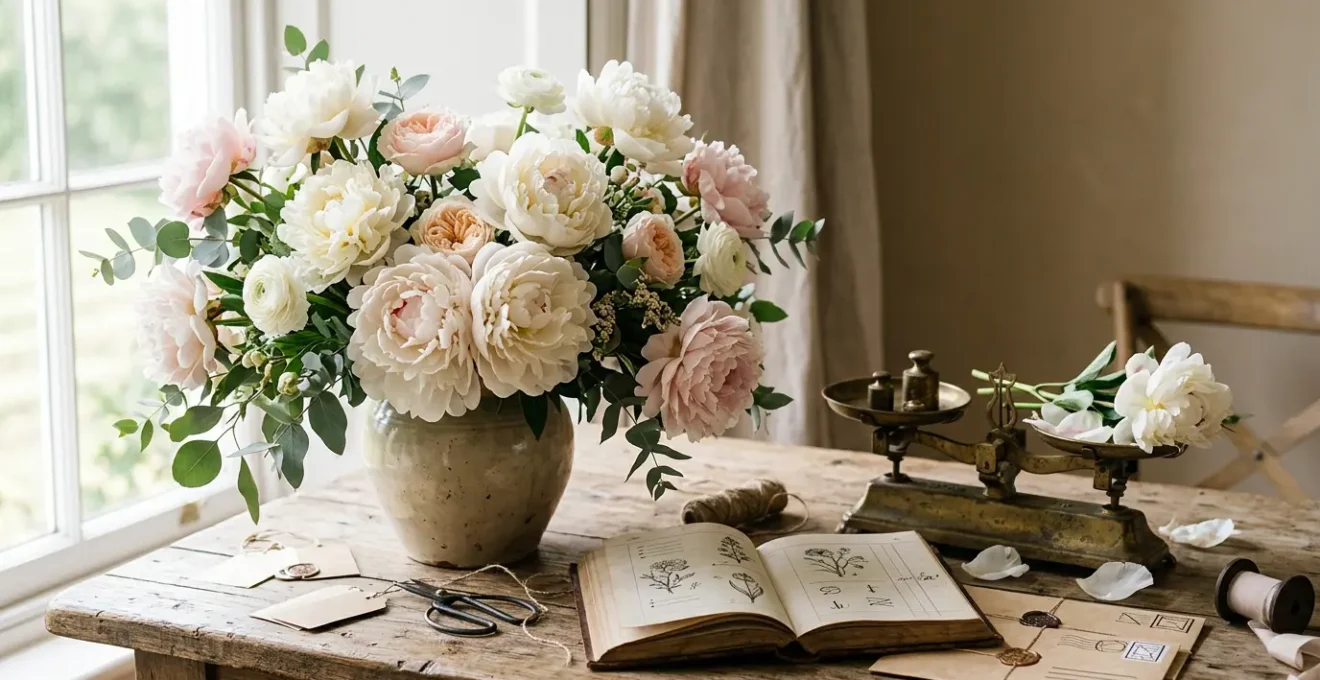
Your dream of August peonies isn’t impossible, it’s an advanced logistical operation with a price tag to match.
- Out-of-season blooms cost 2-3 times more not because of farming, but due to a global cold chain of air freight and refrigerated transport.
- “Seasonal” refers to a month-long availability window; expecting perfect blooms on a specific weekend is a costly gamble against nature and logistics.
Recommendation: Shift your conversation with your florist from demanding a specific stem to achieving a desired *look and feel* with peak-season alternatives.
There is a specific image in your mind: lush, romantic, cloud-like peonies spilling from your bridal bouquet. The problem? Your wedding is in late August, and the Pinterest board you’ve curated is a gallery of May and June blooms. The common advice you’ll hear is to simply “choose seasonal flowers” or that “Pinterest isn’t reality.” While true, this advice ignores the sophisticated economic and botanical engine operating behind the scenes. It dismisses your vision without explaining the tangible forces that make it a high-stakes investment. Your desire for a specific flower isn’t wrong; it’s simply a luxury commodity subject to global market dynamics, much like any other.
This guide isn’t here to tell you no. It’s here to explain the cost of ‘yes’. We will deconstruct the entire floral supply chain, from farm to venue, to reveal the hidden factors you are actually paying for. The key isn’t abandoning your vision, but understanding the principles of floral arbitrage, the realities of botanical variance, and the immense impact of cold chain logistics. By understanding the ‘why’ behind the price tag—the complex journey from a farm in Alaska or Chile to your ceremony—you gain the power to make strategic, informed decisions. You can then work with your florist not as a dreamer, but as an educated partner, ready to either invest in the logistics or pivot smartly without compromising on beauty.
This article will walk you through the core economic and practical realities of floral sourcing. By exploring these topics, you’ll gain a true understanding of your floral bill and learn how to navigate your choices with expertise.
Summary: Why Importing Peonies in August Can Triple Your Floral Bill?
- Garden Roses vs. Peonies: How to Get the Look for Half the Price?
- Why “Seasonal” Defines the Month, Not the Specific Weekend?
- Which Seasonal Summer Blooms Survive 30°C Heat Without Water?
- Nature vs. Pinterest: Why Real Flower Colors Vary from Photos?
- How to Ask Your Florist for “Locally Grown” Without Limiting Design?
- Why September Might Be Too Noisy for a Vineyard Ceremony?
- Why You Should Never Do a Menu Tasting More Than 6 Months Out?
- Hanging Florals: The Engineering Cost You Didn’t Budget For?
Garden Roses vs. Peonies: How to Get the Look for Half the Price?
The desire for peonies is understandable. Their lush, multi-petaled structure creates a look of romantic abundance that is hard to replicate. However, when requested for a late-summer wedding, you are no longer buying a flower; you are buying a logistical feat. The peony season in North America and Europe peaks in late spring. An August peony must be air-freighted from a region with an opposing season, like Alaska or South America. This introduces enormous costs. In fact, sourcing data shows the cost for off-season peonies can be 2-3 times higher than their in-season counterparts.
This is where the concept of floral arbitrage becomes your most powerful tool. It involves substituting a flower with a similar aesthetic that is in its peak season, thereby capturing the desired look without the premium price. The most effective substitute for a peony is the garden rose. Varieties like the David Austin ‘Juliet’ or ‘Patience’ rose offer the same dense, ruffled petal structure and romantic feel. They are cultivated year-round and are at their peak in summer, making them readily available and more cost-effective.
Case Study: The August Bride’s Peony Pivot
An August bride was quoted an astonishing $16 per stem for the out-of-season peonies she dreamed of. Faced with a budget crisis, her florist proposed a strategy of floral arbitrage. They substituted the peonies with a mix of lush garden roses and English tea roses, which provided the same peony-like aesthetic. By combining these with complementary, heat-resistant blooms like freesia, they achieved the desired full, romantic look for a fraction of the cost, proving that the vision is not dependent on a single, specific flower.
By shifting your request from “I must have peonies” to “I want to achieve a lush, multi-petaled, romantic look,” you empower your florist to use their expertise. They can select peak-season blooms that deliver the visual impact you crave without being forced to pass on exorbitant international shipping and handling fees to you. This is the first and most critical step in aligning your vision with economic reality.
Why “Seasonal” Defines the Month, Not the Specific Weekend?
The term “seasonal” is often misunderstood. For a bride, it can mean “available for my wedding day.” For a florist and the global floral market, it means “available for harvesting within a general 4-to-6-week window.” This discrepancy is the source of significant frustration and budget overruns. A flower’s readiness is dictated by weather, sunlight, and rainfall—factors that cannot be scheduled down to a specific Saturday. A cold snap can delay a crop by a week, while a heatwave can cause it to bloom and perish before it’s even needed.
This is where cold chain logistics become the invisible driver of cost and availability. To manage this unpredictability, harvested flowers are immediately placed into a refrigerated supply chain. They travel from a farm’s cooler to a refrigerated truck, to a chilled air cargo hold, to a wholesaler’s refrigerated warehouse, and finally to your florist’s cooler. This complex, energy-intensive process is what allows a flower harvested in the first week of a month to be viable in the third week. It’s also what adds significant cost. When you choose in-season flowers, you benefit from a shorter, more efficient supply chain, with industry data indicating savings of 30-50% for choosing flowers that are at their natural peak.
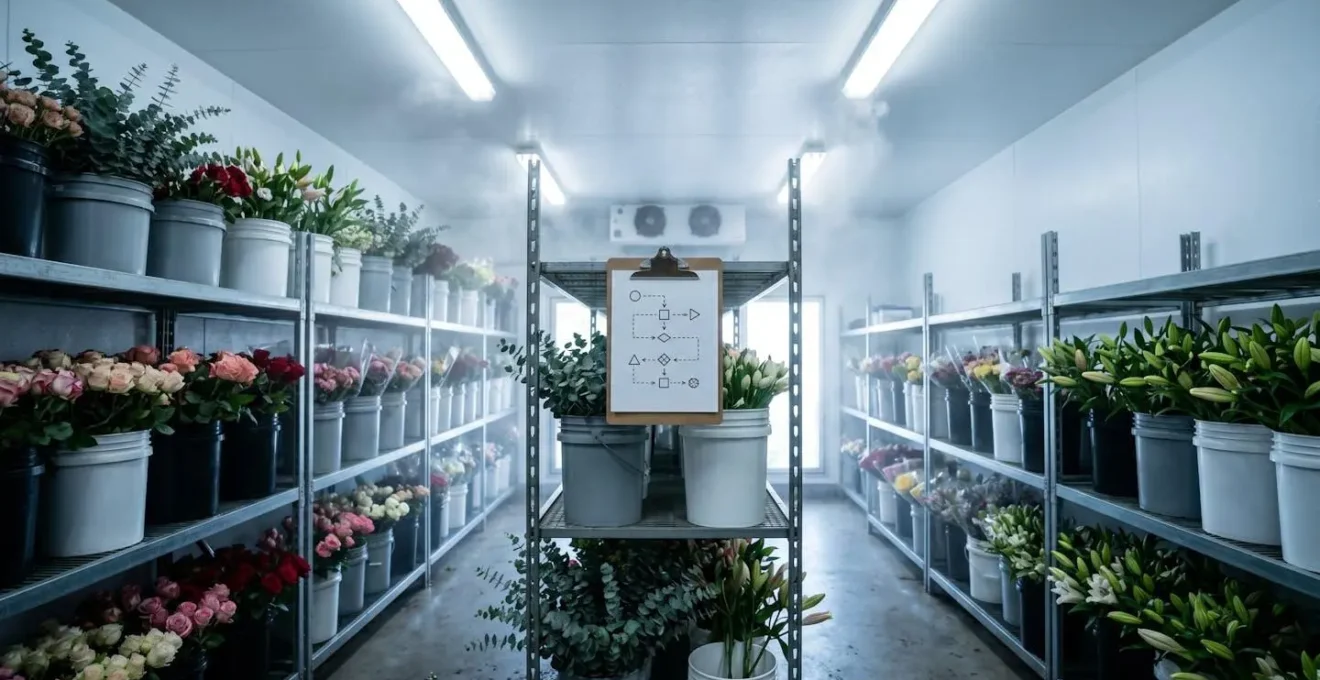
As the illustration shows, this is an industrial process. Expecting a florist to guarantee a specific shade or size of a dahlia for the third weekend of September is like asking a fisherman to guarantee a specific size of tuna on that same day. They operate within the bounds of what nature and logistics provide that week. A smart floral plan has built-in flexibility, identifying primary, secondary, and tertiary floral choices that all fit the color palette and aesthetic, allowing the florist to procure the best possible product available on the market during your wedding week.
Which Seasonal Summer Blooms Survive 30°C Heat Without Water?
An outdoor summer ceremony presents a brutal challenge for delicate flowers. High temperatures and direct sun can cause blooms to wilt in minutes, especially those in bouquets, boutonnieres, and archways that are without a direct water source. The botanical principle is simple: the more delicate and thin the petals, the faster the flower dehydrates. As floral design experts often advise, dainty flowers like hydrangeas and peonies are extremely thirsty and will struggle immensely in heat.
Therefore, for a summer wedding, resilience is as important as beauty. Your floral selection must prioritize species that are naturally adapted to warm climates and have structural characteristics that help them retain moisture. Waxy petals, thick stems, and tropical origins are all indicators of a flower’s ability to withstand a 30°C (or 90°F) day. Choosing these hardy varieties not only ensures your flowers look fresh from the first photo to the last but also reduces the labor cost associated with a florist having to create complex, hidden water sources or perform on-site replacements.
Here are some of the most heat-resistant blooms ideal for outdoor summer events:
- Orchids: Their tropical origin provides natural heat tolerance, and their thick, waxy petals maintain structure in high temperatures.
- Carnations: With thick, waxy petals, they hold up exceptionally well, adding a ruffled texture while lasting for weeks after being cut.
- Sunflowers: Naturally sun-loving and incredibly sturdy, they are a perfect and symbolic choice for outdoor celebrations.
- Calla Lilies: Their smooth, waxy structure with no traditional petals makes them highly resistant to drooping in the heat.
- Zinnias: Surprisingly resilient despite a delicate appearance, these garden favorites thrive even in temperatures well above 30°C.
- Protea: These exotic, structural blooms have woody stems and tough leaves, making them naturally tolerant of extreme heat conditions.
Incorporating these flowers into your design is a strategic decision. It acknowledges the environmental realities of your wedding day and prioritizes longevity, ensuring your floral investment looks its best when it matters most.
Nature vs. Pinterest: Why Real Flower Colors Vary from Photos?
One of the most common points of friction between a bride’s vision and the final product is color. You show your florist a Pinterest image of a “dusty mauve” rose, but the flowers that arrive are a shade lighter or have a slightly pinker undertone. This is not a mistake by the florist; it is the reality of botanical variance. Flowers are agricultural products, not manufactured goods. Their final color is influenced by a host of uncontrollable variables: the specific cultivar, the mineral content of the soil, the amount of sunlight received, and even the temperature during its blooming period.
A single variety of rose, like the popular ‘Quicksand’, can look beige, blush, or pale lavender depending on the farm it came from and the time of year it was harvested. There is no Pantone swatch for nature. Furthermore, the images you see online are almost always professionally edited. Color saturation is boosted, filters are applied, and lighting is manipulated to create a perfect, often unattainable, ideal. Your phone screen and the florist’s monitor are also calibrated differently, meaning you are literally not seeing the same color they are.
A professional florist understands this. They work with color in ranges and palettes, not in single, rigid shades. When you request a “dusty mauve,” they are sourcing flowers that fall within that family of colors. Their goal is to blend these natural variations to create a cohesive and beautiful overall palette that matches your vision’s intent. The key to a successful outcome is to communicate your color palette in terms of mood and feeling—”warm, earthy, and muted” or “bright, vibrant, and jewel-toned”—rather than fixating on a single, digitally-rendered color swatch. Trust their expertise to interpret that palette using the best and most beautiful botanical materials available.
How to Ask Your Florist for “Locally Grown” Without Limiting Design?
The term “locally grown” has become a popular request, often driven by a desire for sustainability and freshness. These are worthy goals, but the request can inadvertently limit your florist’s ability to execute your design if not phrased correctly. The primary benefit of local sourcing is economic and environmental: it drastically shortens the supply chain. Research on farm-to-florist logistics shows that traditional supply chains involve three to four intermediary stops, each adding cost, time, and carbon footprint. Going local bypasses this.
However, local farms have limitations. They specialize in what grows best in their specific climate and soil, meaning they don’t have the vast, year-round inventory of a global wholesaler. A rigid request for “only locally grown flowers” might mean the specific garden rose or dahlia variety you want isn’t available, even if it’s technically in season.
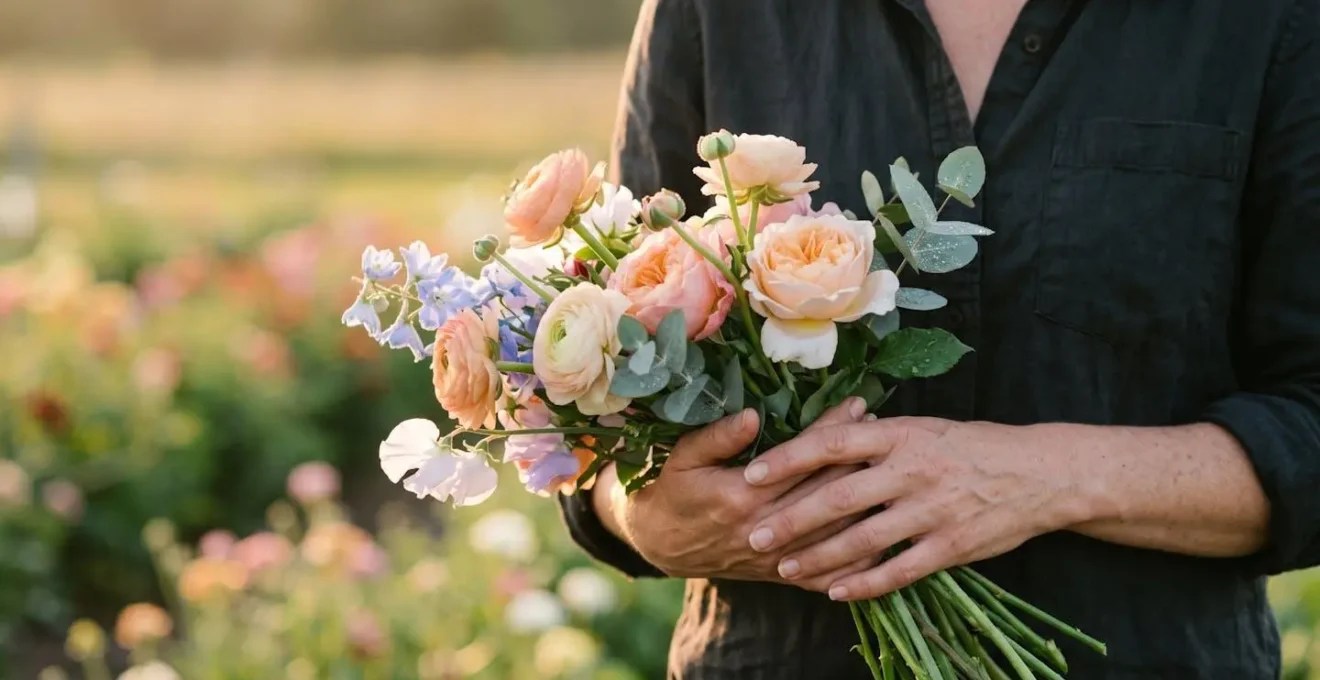
The most productive way to have this conversation is to frame it as a priority, not a restriction. Instead of saying, “I only want local flowers,” try this: “We would love to prioritize locally grown flowers as much as possible within our color palette and design. Could you show us what our local farms excel at this time of year? For any key ‘hero’ flowers that aren’t available locally, we are open to sourcing them from the best possible grower.” This approach signals your preference while giving your florist the flexibility they need. It allows them to build the foundation of your arrangements with beautiful, fresh, local product, while strategically sourcing a few specific, non-local stems that might be essential to your vision. It’s a collaborative approach that achieves both sustainability and design integrity.
Why September Might Be Too Noisy for a Vineyard Ceremony?
A vineyard in September seems like the quintessential romantic backdrop for a wedding. The vines are heavy with fruit, and the light has a golden quality. However, what is romantic for you is the peak of industrial operations for the vineyard. September is harvest month, a period of intense, round-the-clock activity that can directly conflict with the serene ambiance you envision. This concept can be called harvest pressure.
During the harvest, vineyards are loud, active work sites. You can expect the noise of tractors, harvesting machines, and processing equipment running from dawn until well after dusk. Propane-fired bird cannons may be deployed to protect the grapes, creating loud, intermittent bangs throughout the day. The venue’s staff will be stretched thin, focused on the critical and time-sensitive work of bringing in their crop. This is not just a minor inconvenience; it can be a major disruption to your vows and the overall guest experience.
This peak season pressure also has an economic ripple effect. The demand for labor and equipment is at its highest, which can impact vendors. Furthermore, the entire region experiences increased traffic from trucks hauling grapes. This can cause delays for your guests and vendors, a factor to consider in your timeline. While a vineyard is a stunning venue, it’s crucial to ask direct questions about their harvest schedule and noise abatement policies before booking a September date. An August or October wedding at the same venue might offer a similar aesthetic without the acoustic and logistical challenges of a full-scale agricultural operation happening in the background.
Why You Should Never Do a Menu Tasting More Than 6 Months Out?
The logic behind timing a menu tasting holds a powerful lesson for floral planning. A chef planning a September menu in January cannot give you a taste of the actual peak-season heirloom tomatoes or sweet corn you’ll be eating. They can only offer a winter equivalent, creating a projection of the final dish, not a true representation. This exact principle applies to flowers, where the stakes—often representing a significant portion of your decor budget—are just as high. While wedding budget data indicates that flowers and decor consume about 8% of a total wedding budget, that investment is based on market-dependent products.
Committing to a specific flower variety based on a sample seen eight months before your wedding is a significant gamble. The bloom you see in January was likely grown in a Dutch greenhouse under perfect conditions, while the one for your August wedding will come from a different farm, a different continent, and a different climate. It will be a different flower.
Case Study: The Peril of the Premature Peony Promise
A powerful case study on peony sourcing shows a florist consultation was conducted in January for an August wedding. The florist showcased perfect, lush Dutch peonies, creating a specific expectation for the bride. By the time the August wedding date arrived, those peonies were completely out of season. The only option was expensive imports from South America, which came at two to three times the quoted price. Worse, the imported blooms were a different varietal, smaller, and had a more limited color selection than what was originally shown. This created a last-minute crisis of budget and aesthetics.
This scenario highlights why floral mock-ups and final decisions should happen much closer to the event date, typically 3-4 weeks out. At this point, your florist has a clear view of what is actually available on the global market. They know which farms are producing the highest quality blooms and can procure the exact flowers that will be used in your final arrangements. Planning too early locks you into an idea, while planning closer to the date grounds you in reality.
Key Takeaways
- Your floral quote is driven more by logistics, supply chain, and labor than the raw cost of the flowers themselves.
- “Floral arbitrage”—substituting for a similar, in-season bloom—is the single most effective strategy to get a luxe look for less.
- Flexibility is your greatest asset. A rigid vision based on a specific, out-of-season flower is a recipe for budget overruns and disappointment.
Hanging Florals: The Engineering Cost You Didn’t Budget For?
Hanging floral installations are one of the most dramatic and visually stunning elements in modern wedding design. They can transform a tent or ballroom into an enchanted forest. What is often not shown in the inspirational photos, however, is the hidden cost of structural load engineering. You aren’t just paying for flowers; you’re paying for rigging, safety, and specialized labor. A dense floral chandelier can weigh hundreds of pounds, and venues have strict rules to prevent damage to their property or, worse, injury to guests.
This means your florist may need to hire a specialized production and rigging company to safely install the structure. This involves assessing the ceiling’s load-bearing points, using certified hardware, and often requiring additional insurance. This is a separate line item on the invoice that can add thousands of dollars before a single flower is even placed. While national wedding cost data from The Knot shows the average US wedding flower cost was $2,723 in 2024, a significant hanging installation can easily double or triple that figure on its own. While the final look is breathtaking, it’s crucial to understand that it is as much a construction project as it is a floral arrangement.
Given these high costs, a strategic approach to your floral budget is essential. It’s not about cutting corners, but about allocating resources for maximum impact. The following checklist provides practical ways to manage expenses without compromising on a beautiful, flower-filled day.
Action Plan: Strategic Floral Budgeting
- Repurpose ceremony arrangements: Plan for ceremony arch florals to become sweetheart table decor and for aisle markers to be moved to cocktail tables. This maximizes the value of every arrangement.
- Choose seasonal and local flowers: Work with what nature provides during your wedding month to eliminate premium import pricing, which can save 30-50% on raw material costs.
- Design for guest takeaway: If centerpieces consist of bud vases that guests can take home, you can often skip the late-night breakdown service, saving hundreds on labor.
- Prioritize high-visibility areas: Focus your budget on the elements that get the most “screen time”: the ceremony backdrop, the bridal bouquet, and the reception head table.
- Use standard roses over specialty blooms: Opting for high-quality standard roses instead of premium-priced garden roses or peonies for secondary arrangements can significantly reduce costs.
Ultimately, understanding the full scope of costs allows you to decide if a major installation is a priority or if that budget could be better used to create more lush and impactful arrangements closer to eye level.
By understanding the intricate dance of botany, logistics, and economics, you can approach your wedding floral design not as a passive recipient of a quote, but as an informed director of your vision. This knowledge transforms your conversations with vendors, enabling you to work collaboratively to achieve a stunning result that is both beautiful and intelligently planned.