In summary:
- The primary failure point of wedding street food is not the food itself, but the operational bottleneck created by “made-to-order” service, causing long guest queues.
- Venue “buyout fees” are a risk mitigation tool, covering lost revenue and increased liability from using non-vetted external vendors.
- Food selection must prioritize logistics over novelty; items that are messy or require two hands create a poor guest experience and staining risks.
- Elevating street food to a wedding standard is about investing in “presentation infrastructure” and service design, not just changing ingredients.
- Strategic timing is crucial: deploying food trucks as a late-night snack (after 11 PM) minimizes operational pressure and guest frustration.
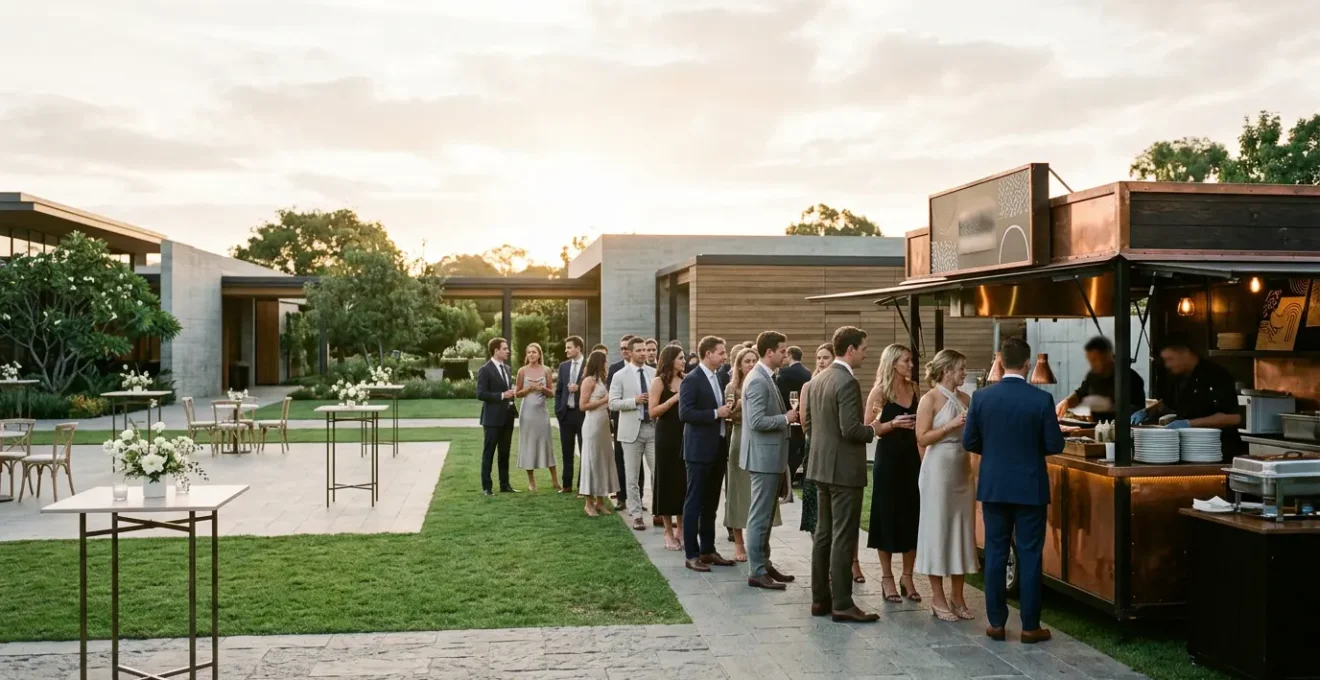
The vision is compelling: your wedding guests, drink in hand, mingling as they enjoy authentic, regional street food served fresh from a trendy local food truck. It promises a personal, memorable, and relaxed atmosphere. This romantic ideal, however, often collides with a brutal operational reality. Couples who want to feature beloved local vendors frequently underestimate the complex logistics involved, focusing on the culinary appeal while ignoring the significant risks to their event’s timeline, guest experience, and budget.
Standard advice often revolves around simple platitudes like “check with your venue” or “provide extra napkins.” This superficial guidance fails to address the core system dynamics. The truth is, integrating an independent food vendor into a tightly scheduled wedding reception is a high-stakes logistical puzzle. It introduces variables that can create significant operational drag, from power supply and waste management to food safety and, most critically, service speed. The success of your cocktail hour doesn’t depend on how good the tacos are, but on the efficiency of the system delivering them.
This analysis moves beyond the fantasy to provide an operational framework. The key to success isn’t abandoning the idea, but approaching it with the discipline of a logistics manager. It requires a fundamental shift in perspective: from choosing a menu to designing a production line. We will dissect the primary failure points and provide actionable, system-based solutions to mitigate the inherent risks. By understanding the mechanics of throughput, liability, and guest flow, you can protect your timeline and ensure your unique food experience is a highlight, not a disaster.
This guide breaks down the critical logistical challenges and provides a clear, operational framework for executing a successful street food service at your wedding. Explore the sections below to understand the core risks and their professional solutions.
Summary: Why Serving Regional Street Food at Cocktail Hour Is a Logistics Risk?
- How to Serve “Made-to-Order” Tacos Without a 20-Minute Line?
- The “Buyout Fee”: Why Venues Charge You to Bring in Local Food Trucks?
- Ribs and Skewers: Foods to Avoid When Guests Are Wearing Silk?
- How to Elevate Street Food to “Wedding Grade” Presentation?
- Why Regional Comfort Food is Best Served After 11 PM?
- The “French Service” Mistake That Frustrates American Couples
- Why You Must Avoid Dairy-Based Cakes at Outdoor Tropical Weddings?
- Authentic Spice vs. Guest Comfort: How to Balance Local Flavors for 100 Palates?
How to Serve “Made-to-Order” Tacos Without a 20-Minute Line?
The single greatest point of failure for any “live action” food station is the service bottleneck. While the idea of freshly made tacos is appealing, a single-person assembly process creates a critical choke point in guest flow. When one person is responsible for heating tortillas, adding protein, and applying toppings, the maximum service rate is severely limited. This inevitably leads to a long queue, guest frustration, and significant operational drag on your event’s timeline. The goal is not just good food; it is efficient throughput.
To solve this, you must abandon the “single vendor” mindset and adopt an assembly line workflow. This model deconstructs the task into specialized stations, each handled by a dedicated staff member. Instead of one person doing everything, you create a linear sequence: one station for tortillas, one for proteins, one for salsas and toppings, and a final quality check. This division of labor dramatically increases the system’s overall throughput, allowing you to serve far more guests in the same amount of time. In fact, commercial kitchen workflow research shows that an optimized assembly line can service 60-80 guests per hour, a rate impossible for a single-person operation.
Implementing this requires pre-event coordination with the caterer to ensure they have the staff and station setup to execute this model. It is a non-negotiable requirement for serving any made-to-order item to a large group under a tight schedule. The focus must shift from the romantic notion of a single chef to the industrial efficiency of a production system. This is the only way to deliver the desired experience without sacrificing your timeline.
Action Plan: Assembly Line Workflow for Event Food Service
- Prepping and organizing: Begin by prepping all necessary ingredients (washing, peeling, chopping, portioning) and preparing sauces, dressings, and garnishes before service begins.
- Cooking and assembly stations: Assign specialized roles where each station handles one component (tortilla warming, protein assembly, toppings, finishing) with dedicated tools and equipment.
- Create specialized workflow: Position stations in a linear sequence following the natural order of dish construction to minimize staff movement and maximize throughput.
- Cross-train staff: Train team members to handle multiple stations for flexibility during peak service and unexpected workflow changes.
- Quality control checkpoint: Establish a designated final station to verify portion consistency and presentation before dishes reach guests.
The “Buyout Fee”: Why Venues Charge You to Bring in Local Food Trucks?
When a venue presents you with a “buyout fee” or “outside catering fee” to bring in your own food truck, it is easy to perceive it as an arbitrary penalty. However, from an operational and risk management perspective, this fee is a calculated business necessity. It is not simply a charge for using an external vendor; it is a mechanism for the venue to compensate for assumed risk and lost revenue. Most venues have a preferred caterer list, which generates a reliable revenue stream through commissions or direct service fees. Allowing an outside vendor circumvents this income.
More importantly, the fee covers the venue’s increased liability and operational strain. Venues like Denver’s historic Grant-Humphreys Mansion have established policies requiring either the use of preferred vendors or a buyout fee precisely for this reason. Their preferred caterers are vetted; they are known to have adequate insurance, proper food handling licenses, and a professional track record. An unknown external vendor introduces significant uncertainty. Is their liability coverage sufficient? Do they understand the venue’s rules regarding power usage, waste disposal, and kitchen access? The buyout fee acts as a financial cushion against these risks.
The liability issue is paramount. A food-related incident, from an allergic reaction to a slip-and-fall near the truck, can create a complex legal situation. Venues must protect themselves, and their insurance policies often mandate specific requirements for all on-site vendors. In fact, industry data shows that many venues and clients require vendors to carry liability insurance of $2 million or more. The buyout fee is therefore a critical tool for the venue to maintain control over its operational environment and mitigate financial exposure when accommodating a non-contracted third-party supplier.
Ribs and Skewers: Foods to Avoid When Guests Are Wearing Silk?
Food selection for a cocktail hour, especially when guests are in expensive formalwear, is a logistical decision, not just a culinary one. The primary criterion for success is minimizing the potential for mess. Foods that are difficult to eat, require two hands, or have a high drip potential are operational liabilities. Items like saucy ribs, overloaded skewers, or anything requiring significant deconstruction (e.g., shrimp with tails on) are high-risk choices. The objective is to select food that facilitates mingling, not hinders it.
The ideal cocktail hour food must be consumable in one to three bites maximum and operable with a single hand. This allows guests to hold a drink and converse comfortably while eating. Skewers can be acceptable, but only if they are not overloaded, the items are fully pierced to prevent them from spinning, and dripping sauces are avoided. A guest struggling with a collapsing skewer or wiping BBQ sauce off a silk dress is the definition of a poor experience. The focus must be on clean, efficient, and graceful consumption.

Furthermore, the operational plan must include a strategy for disposal. Providing small, strategically placed containers for discarded skewers, bones, or napkins is essential. Without these discard stations, guests will either be forced to hold onto trash or leave it on the nearest available surface, creating a cluttered and unappealing environment. Every element of the food experience, from selection to disposal, must be engineered to be as seamless and mess-free as possible.
How to Elevate Street Food to “Wedding Grade” Presentation?
The charm of street food lies in its authenticity and simplicity, but this can appear underdressed in a formal wedding setting. The risk is that a casual presentation (paper boats, foil wrappers) clashes with the event’s overall aesthetic, making the food feel cheap rather than charming. Elevating street food to a “wedding grade” level is not about altering the core recipe; it is about investing in presentation infrastructure and service design.
As demonstrated by innovative caterers like Thomas the Caterer, the transformation is achieved by changing the delivery system. Instead of serving directly from a truck window into a paper container, the food is brought to dedicated, elegantly designed food stations or “shacks.” Here, the food can be plated on proper serviceware—whether it’s ceramic, high-grade bamboo, or other stylish vessels. This one change immediately lifts the perceived value. The food is the same, but the context is elevated.
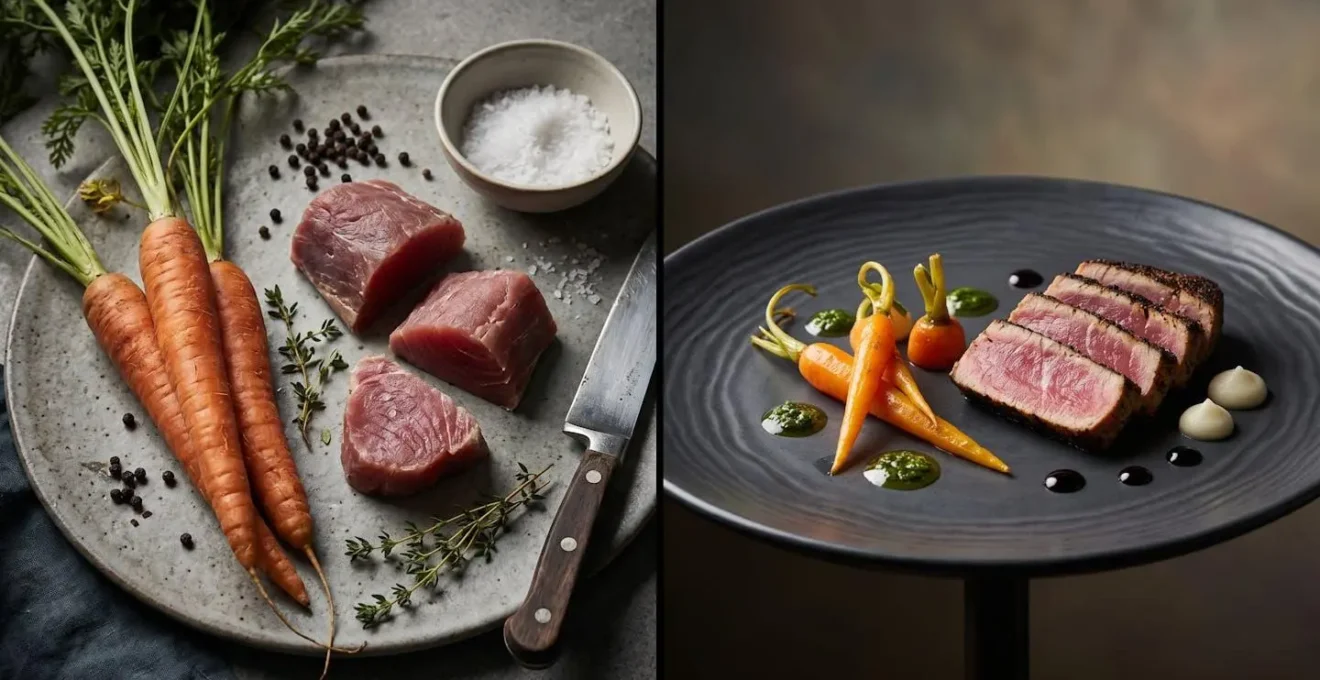
Beyond plating, service design can add another layer of sophistication. This can include having “food ambassadors” at each station to explain the dish’s origin and ingredients, adding a narrative element. Another effective technique is creating sensory stations where guests can customize their dish with high-quality garnishes like exotic salts, infused oils, or fresh herbs. This interactive element preserves the informal spirit of street food while adding a layer of bespoke luxury. The key is to deconstruct the street food experience and rebuild it within a more controlled, sophisticated, and wedding-appropriate framework.
Why Regional Comfort Food is Best Served After 11 PM?
One of the most effective strategies for mitigating the risks of a food truck is not about changing the *what*, but changing the *when*. The highest pressure point of any wedding reception is the cocktail hour and the main meal service, when all guests are hungry and expect prompt service. Introducing a slow, made-to-order food truck during this peak time is a recipe for operational failure. A much safer and more effective approach is to deploy the food truck as a late-night snack station.
By shifting the service to later in the evening, typically after 11 PM, you fundamentally change the dynamic. At this point, the formal dinner is over, guests are no longer ravenously hungry, and the service expectation is more relaxed. The crowd at the food truck will be staggered, with guests visiting between dances or as they prepare to depart. This naturally throttles demand and eliminates the potential for a massive queue to form. The food truck becomes a fun, surprise-and-delight feature rather than a critical component of the main meal service, which removes immense pressure from the vendor and your timeline.
This strategy is endorsed by seasoned event professionals. As Jennifer Price, CEO of Event Shoppe Chicago, advises, the optimal use case for this service model is clear. She states:
We always recommend using food trucks for late-night snacks when there’s not a huge rush, and people aren’t starving.
– Jennifer Price, Event Shoppe Chicago CEO, wedding planning expert
Serving comfort food late at night also aligns better with guest behavior. After several hours of dancing and celebrating, a savory, casual snack is often more appealing than more formal dessert options. This timing transforms the food truck from a logistical liability into a strategic asset that enhances the guest experience at a low-stakes moment in the event schedule.
The “French Service” Mistake That Frustrates American Couples
While not strictly street food, understanding service style conflicts is critical to overall event logistics, and the “French Service” issue is a perfect example of a cultural mismatch causing operational drag. Many American couples are drawn to the elegance of French service, envisioning waiters gracefully presenting dishes to each guest. The logistical mistake is a failure to understand the fundamental difference in timing philosophy between a traditional French meal and a typical American wedding reception.
Professional catering agencies have identified this as a major point of friction. Traditional French service is a leisurely, multi-hour experience where the meal itself *is* the event. Courses are served sequentially, with significant pauses in between. In contrast, an American wedding reception treats the meal as one component of a tightly programmed schedule that also includes speeches, first dances, and cake cutting. The expectation is for coordinated service, where an entire table is served within a 15-minute window to keep the overall event on track.
When a caterer executes authentic French service, the course-by-course pacing can completely derail an American wedding timeline. As noted in a catering logistics analysis, this mismatch can push key moments like the first dance back by an hour or more, causing immense frustration for the couple and other vendors like the DJ and photographer. The solution lies in clear communication and a hybrid approach. A “hybrid French service” can maintain elegant presentation elements, like tableside sauce pouring, while compressing the service window to align with the event’s schedule. It is essential to specify the desired service *speed* and not just the service *style* in your catering contract.
Why You Must Avoid Dairy-Based Cakes at Outdoor Tropical Weddings?
The choice of a wedding cake for an outdoor event in a warm climate is a critical food safety and structural integrity decision. This is especially true in tropical locations where heat and humidity are significant environmental factors. Dairy-based frostings, particularly those made with buttercream or cream cheese, pose a substantial risk. These fats have a low melting point and can begin to soften, weep, or even collapse when exposed to high ambient temperatures for extended periods.
The science is straightforward. As food science data shows, butter and cream cheese have melting points around 32-35°C (90-95°F). In a tropical setting, even in the shade, ambient temperatures can easily reach or exceed this threshold. A cake that looks perfect when it leaves the refrigerated van can become a melting disaster within an hour of being displayed. This not only ruins the aesthetic and the significant financial investment but also poses a food safety risk as the cake enters the temperature “danger zone” where bacteria can multiply rapidly.
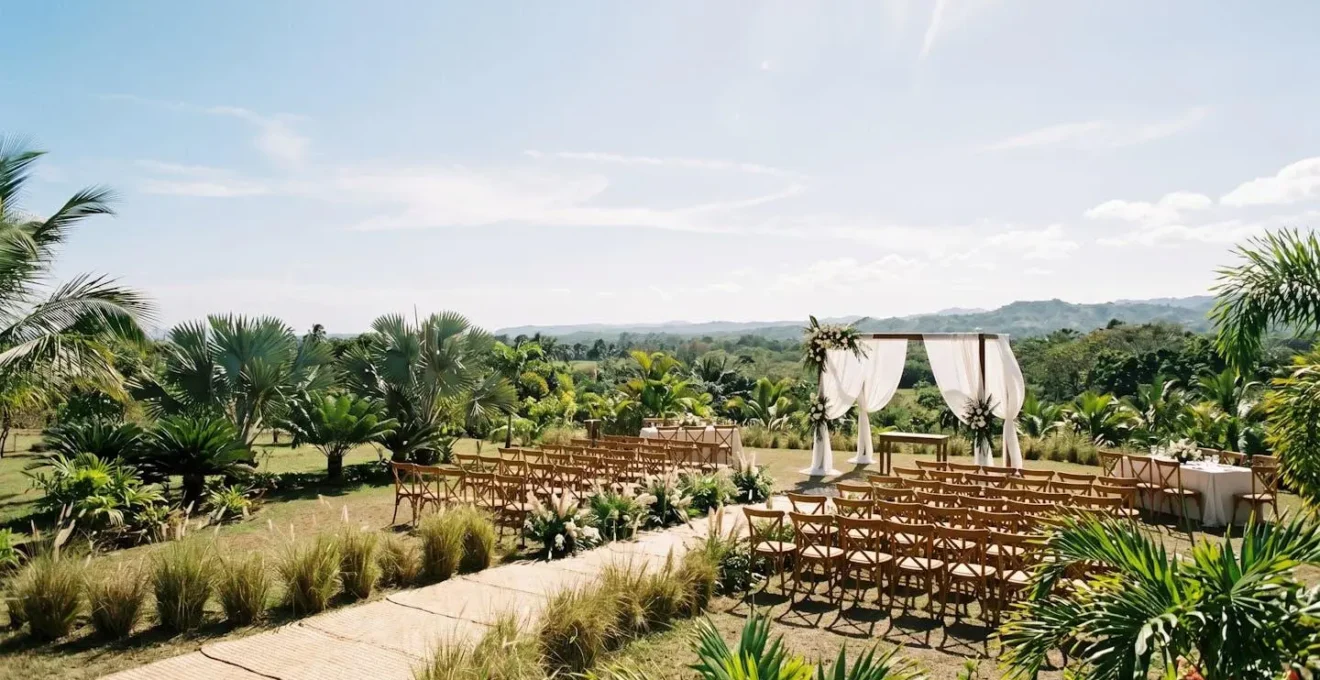
The logistical solution is to select a cake specifically engineered for the environment. This means opting for more stable frostings like fondant, which holds its shape in the heat, or a “naked” cake with minimal frosting. Another strategy is to use a dummy display cake for photographs and keep the actual, edible sheet cakes refrigerated until the moment of service. The decision must be driven by an objective assessment of the environmental conditions, not just by flavor preference. Ignoring the laws of thermodynamics is a risk that is never worth taking with such a central element of the celebration.
Key Takeaways
- Guest flow is a metric: Treat your food service like a production line and measure its success by throughput, not just taste.
- Risk has a price: “Buyout fees” from venues are not penalties; they are calculated costs for assuming the liability and operational strain of unvetted third-party vendors.
- Timing is a strategy: Shifting a high-risk service (like a food truck) to a low-pressure time slot (like a late-night snack) is the most powerful way to mitigate operational failure.
Authentic Spice vs. Guest Comfort: How to Balance Local Flavors for 100 Palates?
Serving authentic regional cuisine introduces a final logistical challenge: managing a wide spectrum of guest palates, particularly concerning spice and heat. What is considered a flavorful, mild heat level for one person can be uncomfortably overwhelming for another. Presenting a single, authentically spiced dish to a diverse group of 100+ guests risks alienating a significant portion of them. The goal is to offer an authentic experience without sacrificing guest comfort and enjoyment.
A one-size-fits-all approach is doomed to fail. A more sophisticated strategy involves offering customization and managing expectations. Instead of serving a dish at a fixed heat level, serve a milder, but still flavorful, base version. Then, create a “Heat Spectrum Bar” or “Flavor Station.” This allows guests to self-customize their dish with a curated selection of house-made hot sauces, chili oils, spiced salts, or fresh chilies. This approach gives guests autonomy, caters to all tolerance levels, and turns the experience into an engaging exploration of flavor.
Clear communication is another essential tool. Using small, elegant “Flavor Profile Cards” next to each dish can manage expectations effectively. These cards should describe the dish and include clear but appealing warnings, such as “Features the smoky heat of chipotle peppers” or “Infused with fiery Scotch Bonnet.” This shows respect for the culture and the guest, preventing negative surprises. Balancing a menu according to an 80/20 rule—where 80% of dishes are broadly appealing and 20% are reserved for more adventurous palates—is another sound strategy. Below are several structured approaches to this challenge.
| Strategy | Implementation Method | Guest Experience Impact | Cost Consideration |
|---|---|---|---|
| Heat Spectrum Bar | Serve base dish with mild authentic flavor, offer curated selection of house-made hot sauces, chili oils, and spiced salts for self-customization | High autonomy, accommodates all tolerance levels, encourages exploration | Moderate (requires multiple sauce preparations) |
| Flavor Profile Cards | Place small elegant cards describing dishes with clear heat warnings (e.g., ‘Contains fiery Scotch Bonnet pepper’) | Manages expectations, shows cultural respect, reduces negative surprises | Low (printing and card design only) |
| 80/20 Flavor Rule | 80% of menu is broadly appealing formats with authentic unique flavors, 20% reserved for adventurous no-compromise dishes | Balanced satisfaction, caters to both conservative and bold eaters | Low (menu design strategy only) |
| Cultural Food Ambassador | Hire local food expert or chef for one-hour consultation to identify crowd-pleaser vs. acquired-taste dishes | High confidence in menu selections, avoids expensive mistakes | Moderate (consultant fee, typically $150-300) |
To ensure your unique culinary vision enhances your wedding day instead of complicating it, a shift in mindset is required. You must transition from thinking like a foodie to thinking like a logistics manager, where every choice is evaluated based on its impact on the timeline, guest experience, and overall operational integrity.