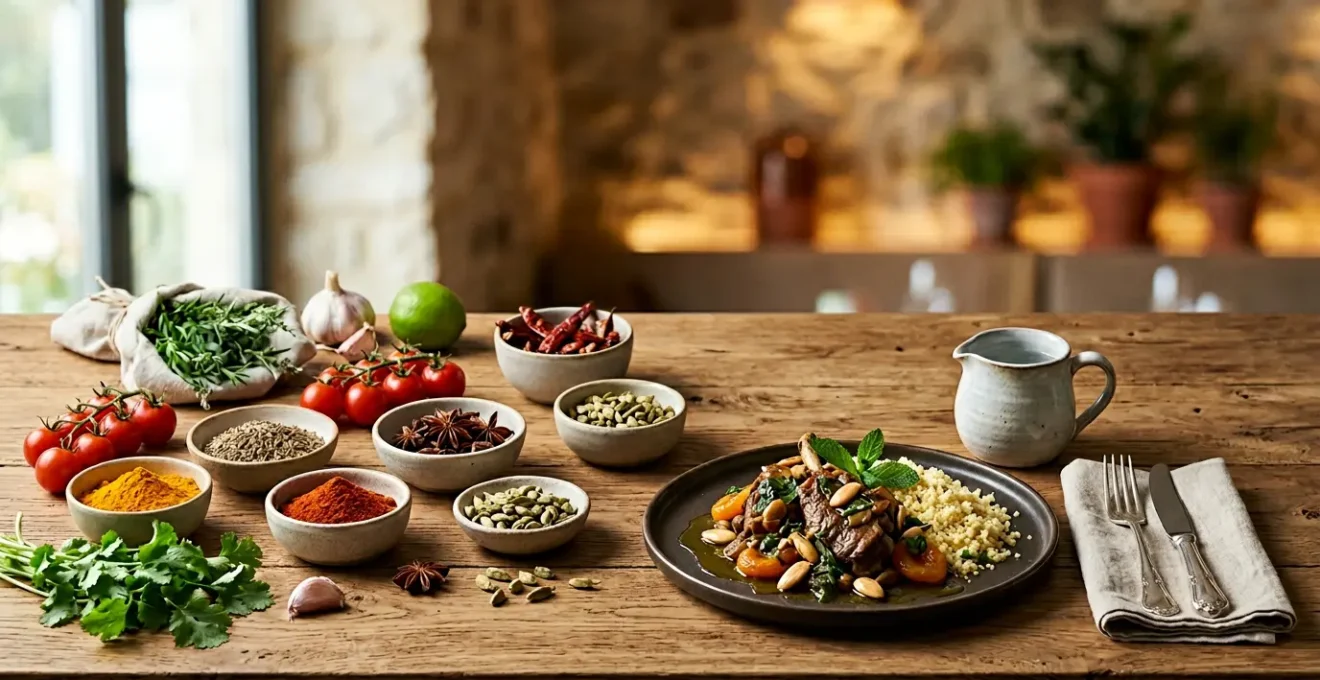
You chose a destination wedding for the vibrant culture, the breathtaking views, and the unique flavors. You dream of serving that incredible local dish you both fell in love with. But then, the fear sets in. What about your aunt who only eats chicken? Your cousin who finds black pepper “too spicy”? Or the dozens of guests whose palates are, to put it mildly, less adventurous than yours? Suddenly, your culinary dream feels like a logistical nightmare, a high-stakes balancing act between authenticity and accommodating 100 different tastes.
The common advice feels like a compromise. You’re told to offer a sprawling buffet with “something for everyone,” which often translates to generic, uninspired food. Or, you’re advised to include a “safe option”—a bland chicken or pasta dish that feels like a culinary apology. These solutions treat your guests’ comfort and your desire for authenticity as mutually exclusive. They miss the point that a destination wedding is an opportunity for shared discovery, not just a party in a different location.
But what if the solution wasn’t about compromise, but about strategy? What if the key wasn’t to dilute the local flavor, but to present it with a diplomat’s touch? This is the art of culinary diplomacy: transforming authentic local cuisine from a perceived risk into a celebrated experience. It’s about deconstructing dishes to make them approachable, curating the guest experience through service style, and telling a story with every bite. It’s how you honor the local culture while graciously hosting all your guests.
This guide will equip you with the practical strategies of a menu design consultant. We will explore how to make local dishes accessible, evaluate the risks and rewards of daring food stations, optimize your tasting timeline, and navigate the complex logistics of remote locations. The goal is to empower you to create a menu that is both courageously authentic and universally enjoyed.
Summary: A Diplomatic Guide to Destination Wedding Menus
- How to “Deconstruct” Local Dishes to Make Them Approachable?
- Raw Seafood Stations: The Risk vs. Reward in Tropical Destinations
- Why You Should Never Do a Menu Tasting More Than 6 Months Out?
- Family Style vs. Buffet: Which Keeps Local Food Hotter?
- Plated Dinner vs. Family Style: Which Is Best for Foodie Couples?
- How to Menu Plan When All Food Must Be Imported by Boat?
- Why Serving Regional Street Food at Cocktail Hour Is a Logistics Risk?
- Local Wine vs. Imported Champagne: When to Stick to the Region?
How to “Deconstruct” Local Dishes to Make Them Approachable?
The greatest barrier between a cautious guest and an authentic local dish is often not the flavor itself, but the unfamiliar combination of ingredients. A complex curry or a regional stew can be intimidating when presented as a single, unchangeable entity. The solution lies in flavor deconstruction: breaking a dish down into its core components and presenting them in a way that gives guests control and familiarity. Instead of a pre-mixed ceviche, imagine a “Build-Your-Own Ceviche Bar” where guests can choose their preferred fish, citrus juice, and level of chili heat.
This approach transforms a potentially challenging meal into an interactive experience. A professional caterer can masterfully blend exotic elements with recognizable presentations, creating a unique dining experience that feels both adventurous and safe. The goal is to turn hesitation into curiosity. This can be achieved through live cooking stations where local chefs demonstrate authentic techniques, creating culinary theater. It’s about empowering guests to be the masters of their own plates.
Furthermore, this concept extends to “narrative plating.” Menu cards that tell the story of a specific ingredient’s origin or the cultural significance of a dish can reframe the entire experience. When a guest understands the history behind what they’re eating, they are more likely to engage with it. This strategy of deconstruction and interaction is the cornerstone of culinary diplomacy, ensuring the menu is a highlight for everyone, not just the foodies.
Case Study: The Interactive Station Approach
A successful wedding catering strategy transforms mealtime into an engaging activity. Instead of a static buffet, caterers set up interactive “Build-Your-Own” stations, such as a taco bar with various salsas or a pasta station with different sauces and toppings. This allows guests to customize their meal to their exact preference, controlling spice levels and flavor combinations. For a destination wedding, this could be a ceviche bar with local fish or a “spice-your-own” curry station. This method not only accommodates picky eaters but also adds a fun, memorable element to the reception, turning dinner into a conversation starter.
Raw Seafood Stations: The Risk vs. Reward in Tropical Destinations
A raw seafood bar at a tropical wedding is the epitome of luxury and freshness. It promises a spectacular visual and an unforgettable taste of the locale. The reward is immense: a high-impact, interactive station that screams elegance and provides a light, refreshing option in a warm climate. However, the risk is equally significant and hinges on one critical factor: impeccable food safety. In a tropical environment, where temperatures can soar, maintaining the integrity of raw seafood is a non-negotiable, high-stakes operation.
The success of a raw bar is entirely dependent on the professionalism of your caterer. They must demonstrate an obsessive commitment to food safety, a knowledge that goes far beyond simply putting oysters on a pile of ice. This includes understanding the cold chain from the ocean to the serving platter. Experienced caterers know that proper cooling and serving techniques with seafood on ice and prompt service are absolutely critical. This involves a deep bed of crushed ice that is constantly replenished and a presentation that ensures no item sits out for too long.
The visual element is part of the safety protocol. A pristine, well-maintained station with glistening, fresh products and elegant serving implements reassures guests of the quality and safety of what they are about to eat. If your caterer cannot guarantee a flawless cold chain, dedicated and knowledgeable staff to manage the station, and a pristine presentation, the risk far outweighs the reward. A poorly executed raw bar can lead to foodborne illness, which is the last thing you want associated with your wedding day. When done right, it’s a showstopper; when done wrong, it’s a disaster.
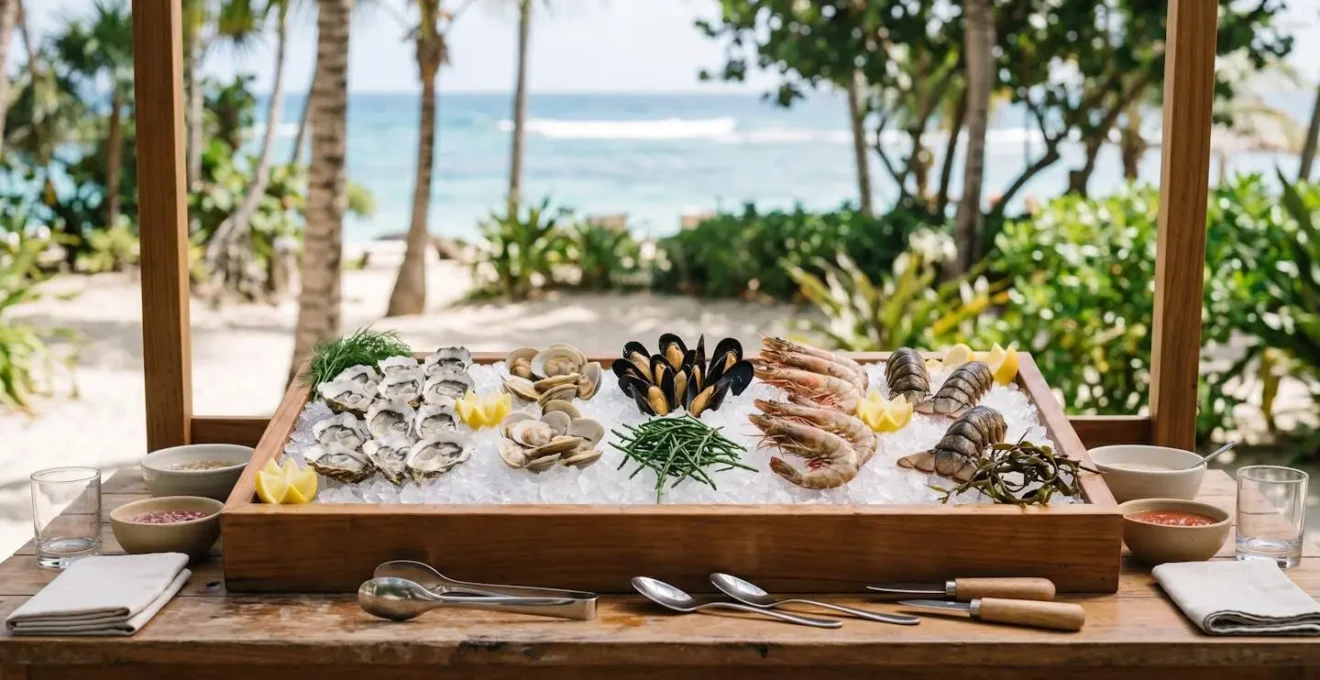
As this image demonstrates, a successful seafood station is a work of art and science. The clean, symmetrical arrangement and visible freshness are as much about guest safety as they are about aesthetics. The investment in a high-quality caterer who understands these nuances is the best insurance policy for a successful and safe seafood experience.
Why You Should Never Do a Menu Tasting More Than 6 Months Out?
The premise of the question is both right and wrong, and understanding the nuance is key to effective menu planning. The crucial mistake couples make is thinking there is only one “tasting.” A sophisticated approach involves a two-tiered tasting strategy. The idea that you shouldn’t do a final tasting more than six months out is absolutely correct, but you should be vetting your caterer’s quality much earlier.
The first tasting, or Tier 1: Conceptual Tasting, should happen as soon as you’re serious about a caterer, even 12+ months out. This isn’t about finalizing your exact wedding menu. It’s about tasting their signature dishes to assess their overall quality, creativity, and style. Does their food excite you? Do they understand your vision? This tasting helps you confirm you’re hiring the right creative partner. Some professional catering companies suggest this is the ideal timeframe for initial engagement.
The second tasting, Tier 2: Finalizing Tasting, is where the “3-6 month” rule is critical. This tasting is for finalizing your actual menu. The reason for this timing is seasonality. The delicious local tomatoes you taste in July will not be the same as those available for your October wedding. Tasting closer to the date ensures the ingredients you sample are a true representation of what will be served. It also allows you to make final tweaks based on a more concrete guest count and dietary restrictions. Most venues require final menu decisions within 3 months, making this window the perfect intersection of creative finalization and logistical necessity.
Family Style vs. Buffet: Which Keeps Local Food Hotter?
When it comes to serving a large group, food temperature is a paramount concern for guest satisfaction. The battle between family-style and buffet service for heat retention isn’t straightforward; the winner depends on physics, strategy, and service execution. The simple answer is that family-style service, when executed with the right equipment, has a distinct advantage. The key concept is thermal mass. A large, pre-heated, heavy ceramic or clay pot (like a tagine or cazuela) filled with a stew or curry and placed on a table will retain its heat far more effectively than a thin, wide metal pan sitting over a small flame at a buffet station.
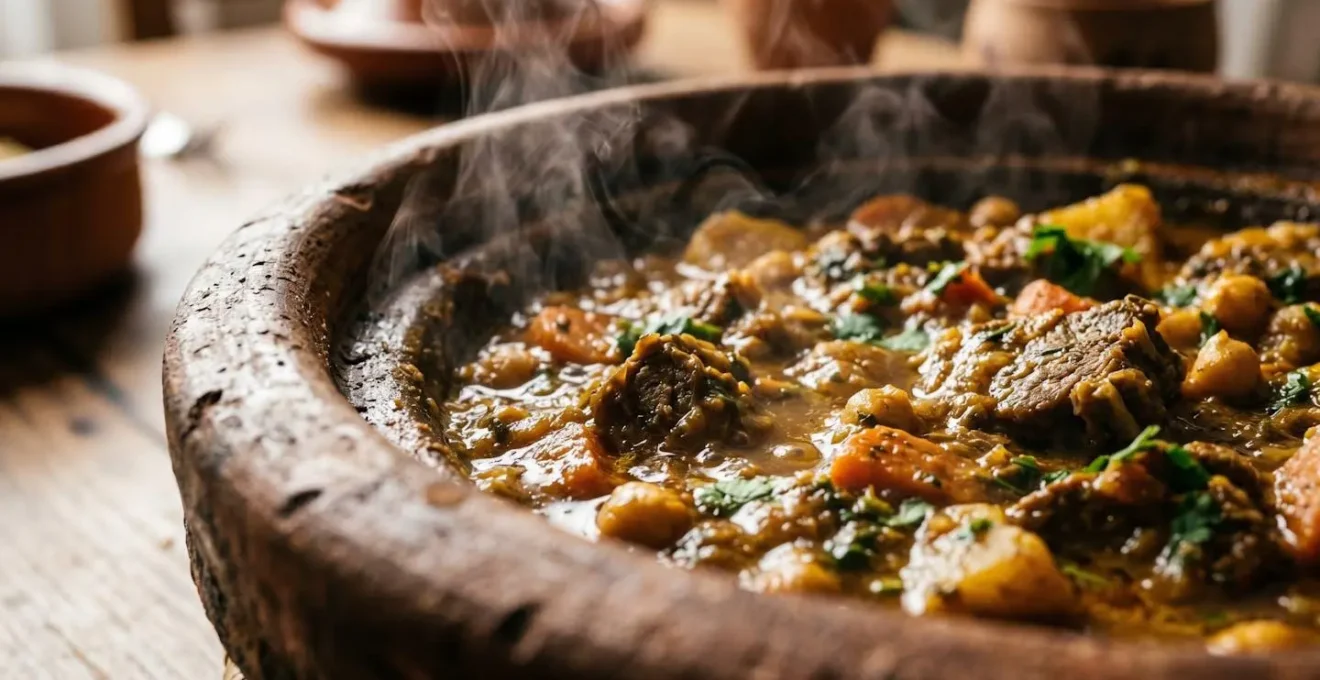
This image of a traditional clay pot illustrates the principle perfectly. The thick walls of the vessel act as a heat reservoir, keeping the contents steaming hot long after it leaves the kitchen. This ensures that even the last person to serve themselves at the table gets a hot meal. However, a professionally managed buffet can mitigate its inherent disadvantages through an active replenishment strategy. Instead of putting out one giant pan of food for an hour, top-tier caterers bring out fresh, smaller pans every 15 minutes. This ensures food doesn’t sit and dry out under heat lamps. This method is more labor-intensive but drastically improves food quality.
The buffet’s challenge is also one of quantity. To ensure the last guest doesn’t face an empty tray, catering companies usually need to prepare 20 percent more food than plated-style service, leading to potential waste and cost increases. Ultimately, for maintaining the integrity of hot, saucy local dishes, family-style in high thermal mass vessels is the superior choice. For variety and guest movement, a well-managed, actively replenished buffet can be successful, but it requires a higher level of service and logistical planning to keep food hot and fresh.
Plated Dinner vs. Family Style: Which Is Best for Foodie Couples?
For a “foodie” couple, the wedding menu is not just sustenance; it’s a core part of the event’s narrative. The choice between a plated dinner and family-style service is not about which is “better,” but which best tells your specific culinary story. The answer depends on what kind of foodie you are. Are you a Technique & Presentation Foodie who values the chef’s precise vision, or a Communal & Abundance Foodie who cherishes shared experience and variety?
A plated dinner is the chef’s canvas. It allows for intricate plating, delicate ingredients, and a perfectly controlled culinary journey told through a sequence of courses. This is the ideal format for showcasing complex techniques and a chef’s artistry. It’s a formal, elegant experience where every guest receives a plate that looks like a work of art. The service is controlled, sophisticated, and allows for more elaborate table decor since there’s no need to make space for large platters.
Conversely, family-style service champions a different set of foodie values: generosity, community, and discovery. Passing platters around the table naturally sparks conversation and fellowship. It allows guests to try a wider variety of dishes and control their own portions. While it compromises some of the chef’s plating control for delicate items, it excels with robust, rustic dishes that are meant to be shared. It creates a chic yet casual atmosphere that feels like an abundant, celebratory feast. A popular hybrid approach involves a precisely plated main course with family-style sides, offering the best of both worlds.
The following table breaks down the key considerations to help you decide which service style best aligns with your foodie philosophy.
This comparative analysis, based on a framework from industry experts like the Daley Hospitality Group, highlights the distinct philosophies behind each service style.
| Aspect | Plated Dinner | Family-Style Service |
|---|---|---|
| Best for Foodie Type | Technique & Presentation Foodie – values chef’s precise vision | Communal & Abundance Foodie – values generosity and variety |
| Service Philosophy | Controlled, chef-led narrative – story told in courses | Guest-led discovery – creates conversation as people share |
| Formality Level | Very formal – upscale sophistication and elegance | Less formal than plated, more formal than buffet – chic yet casual |
| Plating Control | Chef’s canvas – allows complex techniques and fragile ingredients | Compromise on precise plating for delicate items |
| Guest Interaction | Guests remain seated – minimal movement | Passing platters encourages fellowship and mingling at tables |
| Cost Structure | Highest cost – extensive labor for service staff and onsite chefs | Same price as plated – requires many service staff and chefs |
| Table Decor Impact | Allows elaborate centerpieces | Requires space for serving platters – limits floral arrangements |
| Temperature Control | Optimal – food plated and served immediately | Good for high thermal mass dishes (thick clay pots retain heat) |
How to Menu Plan When All Food Must Be Imported by Boat?
Menu planning for a remote island wedding where all provisions arrive by boat is the ultimate test of logistical prowess. This is not a task for an inexperienced caterer. Your first and most critical step is to hire a team with a proven track record in destination weddings. They must be experts in navigating multi-step transport, customs clearance, local regulations, and service in remote locations. The success of your menu hinges less on the ingredients themselves and more on the integrity of the supply chain.
A smart strategy is to shift the menu’s focus from delicate, highly perishable produce to what can be called “shelf-stable stars.” This involves reframing “imported” as a curated theme rather than a limitation. A skilled caterer can design a stunning menu around high-quality imported items that travel exceptionally well: premium cured meats, aged artisanal cheeses, high-grade pastas, and flavorful tinned fish. The “fresh” element can then be sourced from hyper-local, reliable island resources like coconuts, certain fruits, and, most importantly, the local catch of the day. This approach ensures consistent quality regardless of shipping delays.
Due to these complex logistics, booking your caterer well in advance is non-negotiable. For destination weddings with significant import requirements, it’s ideal to book your catering service at least six months prior to your wedding date, if not earlier. This provides the necessary lead time to plan shipments, secure permits, and arrange for contingencies. Your peace of mind depends on a caterer who has mastered the art of remote logistics.
Your Action Plan: Logistics Chain of Custody Audit
- Points of Contact: Verify your caterer has deep experience with destination logistics and is fully aware of all local regulations and customs clearance requirements for importing food.
- Collection & Inventory: Inquire about their specific protocols for port storage facilities and temperature-controlled holding areas upon the boat’s arrival, before last-mile transport to the venue.
- Coherence & Consistency: Demand confirmation of an end-to-end refrigerated transport chain—from mainland to port to the final venue—and ask specifically about their backup power sources for refrigeration equipment.
- Emotional & Memorable Experience: Establish a real-time communication system (like a shared tracker or WhatsApp group) to monitor shipment progress and address any potential delays proactively.
- Integration Plan: Create a contingency menu plan with your caterer that relies on shelf-stable items in case of a major shipping delay with fresh ingredients.
Why Serving Regional Street Food at Cocktail Hour Is a Logistics Risk?
The idea is romantic: an authentic local street food vendor, a charming food truck, serving up incredible regional specialties during cocktail hour. It promises an immersive, memorable experience. However, transitioning from a street corner serving a few dozen people to a wedding serving 100+ guests in a tight one-hour window is a massive logistical leap that is often underestimated. The primary risk is the bottleneck. A typical food truck is designed for sequential service, and as catering experts know, one food truck can serve about 75 to 100 people tops per truck over a longer period. At a cocktail hour, this creates long queues, kills the mingling vibe, and leaves many guests hungry and frustrated.
Beyond the service bottleneck, there are significant hidden infrastructure costs and requirements. A food truck needs a large, accessible parking space, often with special permits. It requires electrical hookups, and if the venue can’t provide them, you’re renting (and listening to) a loud generator. Weather is a major factor; you’ll need to rent tents to cover both the ordering window and the guest line in case of rain. Furthermore, you must consider waste management for disposable containers and lighting to make the area feel like part of the wedding, not a separate, dark parking lot.
A much safer and more effective strategy is a hybrid approach: street food as theater, not as the primary service. Hire the authentic local vendor to cook live, creating atmosphere and a fantastic visual element. Let them be a feature, a piece of culinary entertainment. Meanwhile, have your professional catering staff circulate with perfectly executed, street-food-inspired canapés prepared in the main kitchen. This delivers the authentic flavor profile and cultural vibe without the logistical nightmare. Guests get the experience and the taste, but without the queue, ensuring the cocktail hour energy remains high and celebratory.
Key Takeaways
- Shift from a “compromise” mindset to one of “culinary diplomacy” to balance authenticity and guest comfort.
- Use “flavor deconstruction” and interactive food stations to make unfamiliar local dishes approachable and engaging.
- The best service style (plated, family, buffet) depends on your “foodie” identity and the specific dishes you want to highlight, with major implications for food temperature and guest interaction.
Local Wine vs. Imported Champagne: When to Stick to the Region?
The beverage menu is as much a part of the culinary story as the food. When it comes to a destination wedding, the question of local wine versus globally recognized names like Champagne presents a fantastic opportunity for culinary diplomacy. The most elegant solution is not an “either/or” choice, but a strategic “both/and” approach that assigns different roles to different beverages, respecting both local culture and universal symbols of celebration.
From Italian wine to Jamaican rum, every destination has its own beverage of choice
– Destination Wedding Cuisine Experts, Catersource Industry Publication
This expert insight highlights that honoring the local “beverage of choice” is a key part of an authentic destination experience. The ideal strategy is to separate the Toast from the Table. For the main celebratory toasts, serve an imported, universally recognized sparkling wine like Champagne or Prosecco. This leverages the familiar symbolism of celebration that all guests understand and appreciate. It’s a moment of shared tradition.
Then, for the cocktail hour and dinner service—the “Table”—you can fully embrace the region. Feature interesting local wines, craft beers, or signature cocktails made with local spirits like rum or tequila. This is your chance to educate and delight. Consider setting up a “Local Wine Bar” with a sommelier during the cocktail hour to tell the stories behind the regional grapes. This turns the beverage from a simple drink into an experience, allowing connoisseurs to discover new vintages and novices to learn something new. This tiered strategy ensures you get the “wow” factor of a Champagne toast while still paying homage to the unique flavors of your chosen destination.