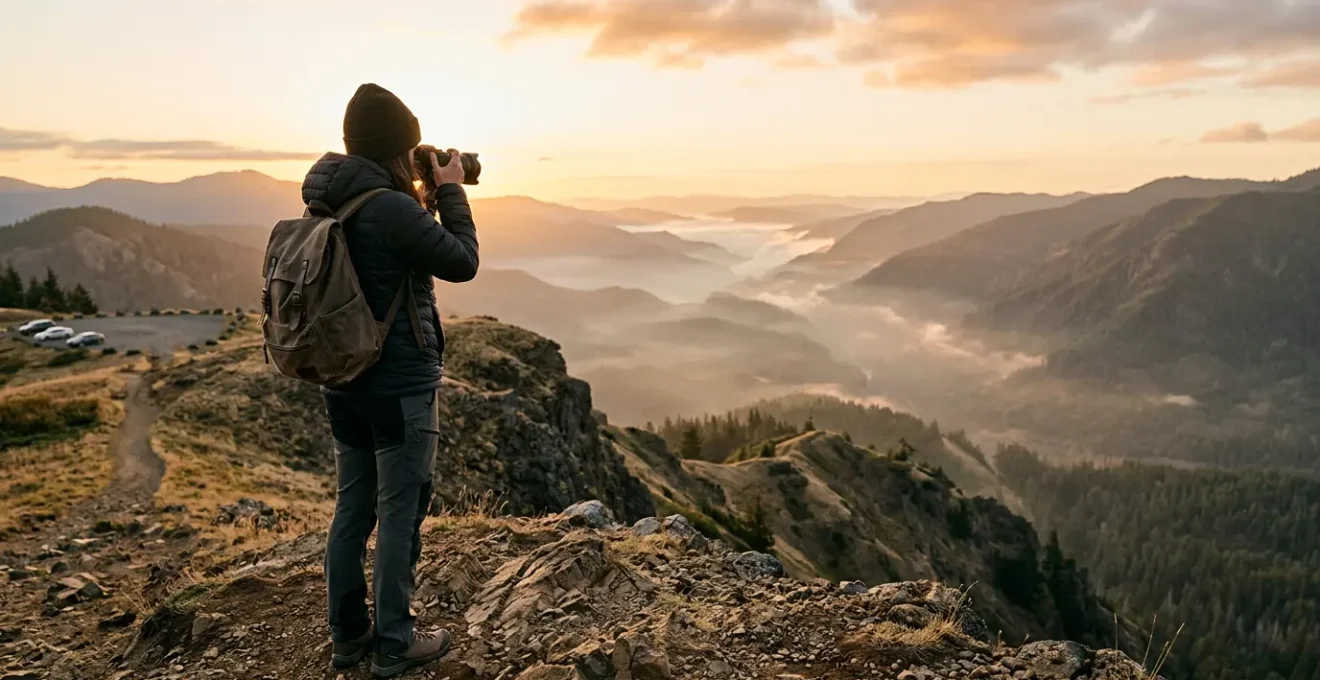
The key to finding truly original photo locations isn’t about stumbling upon a hidden gem; it’s about adopting the operational mindset of a professional location scout. This means shifting from being a tourist to becoming a strategist who assesses legal risks, masters logistical choreography, and sees the photographic potential where others see nothing. This guide shares the trade secrets to unlock any destination, from Santorini to the Amalfi coast, beyond the cliché Instagram feed.
You’ve seen them a thousand times: the same shot of a couple in Santorini against a blue dome, the same pose at the Trevi Fountain, the same Amalfi Coast cliffside vista. Your destination is epic, but your photo album is at risk of looking like a carbon copy of everyone else’s. The endless scroll on Instagram has turned breathtaking locations into predictable backdrops, leaving you wondering if any undiscovered corners are even left.
The common advice—”wake up for sunrise” or “explore the side streets”—is well-meaning but ultimately insufficient. It’s a tourist’s approach to a professional’s problem. You don’t just need a different time of day; you need a different way of thinking. What if the secret wasn’t about finding a spot no one has ever photographed, but about knowing how to shoot a famous place in a way no one else has? What if the real magic lies in the logistics, the permits, and the planning that happens before the camera even comes out of the bag?
This isn’t just a list of locations; it’s a debrief from a location scout. We’re going to pull back the curtain on the operational mindset required to secure those one-of-a-kind shots. We’ll cover the legal reconnaissance for “abandoned” sites, the strategic deconstruction of crowded landmarks, the logistical choreography of transporting a bridal party to a remote cliff, and how to choose the right talent to execute the vision. Prepare to stop thinking like a traveler and start scouting like a pro.
Summary: A Scout’s Guide to Uncovering Unique Photo Locations
- Trespassing for the Shot: The Legal Risks of “Abandoned” Locations
- Why Sunrise is the Only Time You Can Get an Empty Trevi Fountain Shot?
- Drone vs. Hike: How to Get the Epic View Without the Sweat?
- The Permit Fee You Didn’t Know You Needed for National Parks
- How to transport a Bridal Party to a Remote Cliffside safely?
- How to Scout City Photo Spots That Aren’t Swarming with Tourists?
- The Transport Error That Strands Guests at Remote Excursion Sites
- Fly-In Photographer or Local Talent: Which Is Safer for Your Investment?
Trespassing for the Shot: The Legal Risks of “Abandoned” Locations
The allure of a decaying building or a forgotten industrial site is powerful. The textures, the light, the story—it’s a photographer’s dream. But the line between “abandoned” and “private property” is dangerously thin, and a dreamy shot isn’t worth a real-world legal nightmare. This is the first test of the operational mindset: understanding that legal reconnaissance comes before creative exploration. Even if a property looks derelict and there are no “No Trespassing” signs, entering without explicit permission is a liability for you, your photographer, and your entire party.
The professional approach isn’t to risk it; it’s to mitigate the risk entirely. This involves researching property ownership through public records and contacting the owner to request access, often with a signed liability waiver. But a more efficient and safer route is to work with services that have already done this legwork for you. This is the insider’s secret to getting the “urbex” look without the risk.
The Professional Alternative: Curated “Abandoned Aesthetic” Venues
Instead of illegal trespassing, professionals turn to curated location platforms. Services like Giggster and Peerspace offer vetted, legal, and safe venues that replicate the “abandoned” feel. For instance, Giggster provides access to over 45,000 locations, including junkyards and empty warehouses, specifically for filmmakers and photographers. These platforms handle the legalities, offering liability coverage and site representatives, transforming a high-risk gamble into a secure, professional transaction.
This methodical approach turns a potential legal threat into a controlled creative opportunity. It’s about respecting property rights while still achieving your desired aesthetic, a core tenet of professional location scouting.
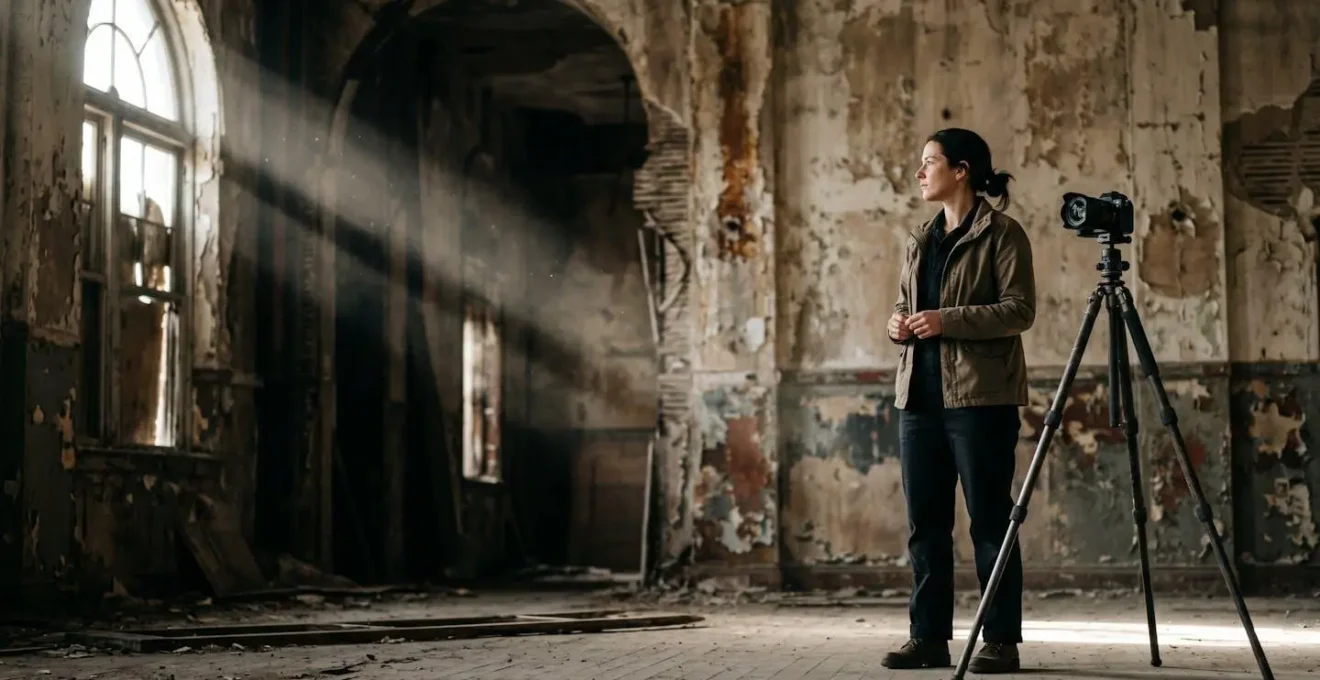
Ultimately, a photographer who suggests trespassing is signaling a lack of professional foresight. A true pro understands that the most breathtaking shots are the result of meticulous planning, not reckless opportunism. They know how to get the look without breaking the law.
Why Sunrise is the Only Time You Can Get an Empty Trevi Fountain Shot?
The classic advice for avoiding crowds is to “go at sunrise.” While true, this oversimplifies a more powerful strategic concept: predicting low-density windows. It’s not just about being early; it’s about understanding the specific human traffic patterns of a landmark. For a place like Rome’s Trevi Fountain, the pre-7 AM window is golden because it’s the one time when tour buses haven’t started their routes, overnight street cleaners have finished, and the city’s pulse is at its lowest ebb. Early morning shoots (before 7 AM) are a scout’s primary tool for securing still and peaceful conditions.
But a true location scout doesn’t rely on just one tactic. What if a sunrise shoot isn’t feasible? The operational mindset involves having a portfolio of solutions for any crowded location. Instead of fighting for an empty frame, a pro knows how to re-contextualize the crowd or find an angle that makes the crowd irrelevant. This might involve strategic timing, finding alternative angles, or even using the crowd as part of the art.
Here is a framework for how professionals deconstruct and conquer a crowded landmark:
- Seasonal Planning: Don’t just think about the time of day, but the time of year. A Tuesday morning in February at a popular European landmark has a fraction of the foot traffic of a Saturday in July. Researching off-peak seasons is a macro-level strategy that pays huge dividends.
- Alternative Angle Approach: The ground-level, head-on shot is what everyone else is getting. A scout looks up. They investigate private balconies, hotel room windows with a view, or nearby cafe terraces that can be rented for an hour to provide an exclusive, elevated perspective.
- The Crowd-as-Prop Technique: If you can’t beat them, blur them. Using a long exposure (drag-shutter) technique can transform a swarm of tourists into a beautiful, abstract motion blur. This creates a dynamic backdrop that emphasizes the stillness and connection of the couple, turning a problem into a creative element.
This multi-faceted approach is far more robust than just setting an early alarm. It’s about a visual deconstruction of the problem, analyzing a location not for what it is, but for what it *could be* with the right strategy and technique.
Drone vs. Hike: How to Get the Epic View Without the Sweat?
The epic, sweeping landscape shot is a destination wedding staple. Traditionally, getting that view meant a strenuous hike in full wedding attire—a logistical and physical challenge. Today, technology offers a shortcut, but it comes with its own set of rules and requires a new kind of scouting. The choice between a drone and a hike is a classic scout’s dilemma: a trade-off between physical effort and technological regulation.
Drones are revolutionary for aerial reconnaissance. They can quickly scout compositions, identify the most efficient paths to a viewpoint, and capture angles that are physically impossible for a human. However, they are not a magic wand. Operating a drone for commercial purposes (which wedding photography is) is subject to strict regulations. For example, in the United States, drone operators can fly up to 400 feet above ground level, must maintain a line of sight, and are prohibited in many sensitive areas like National Parks. A pro knows these rules and has the necessary licensing (like the FAA’s Part 107 certificate).
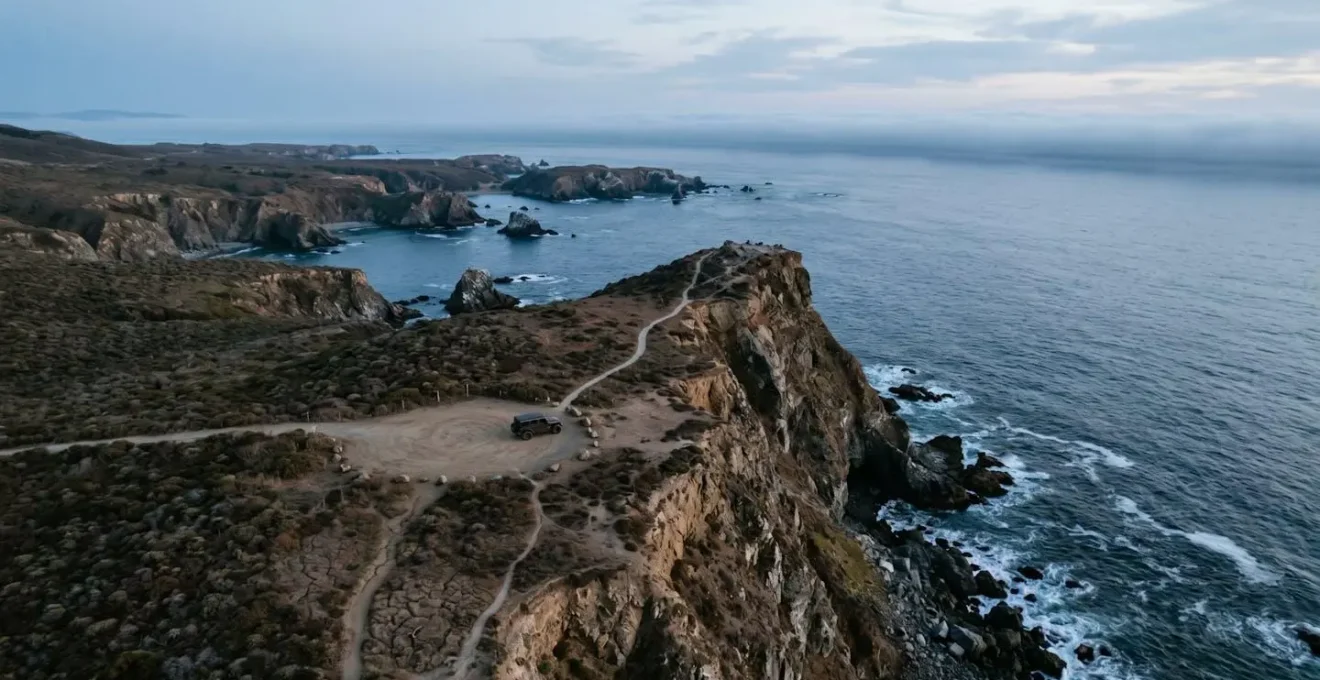
The smartest approach often combines digital scouting with minimal physical effort. You don’t have to choose between a 5-mile hike and a drone. The real secret is using digital tools to find the “hike-less” epic view. This involves a methodology of digital sleuthing:
- 3D Map Reconnaissance: Use Google Earth’s 3D view to digitally “fly” through a landscape. This allows you to identify stunning, unmarked lookout points that are just a short walk—perhaps less than 100 feet—from a road or parking area that most tourists drive right past.
- Filtered Trail Searches: Use apps like AllTrails and apply filters for difficulty (“easy”), length (“under 1 mile”), and “paved” or “wheelchair accessible.” This can reveal short, simple walks that lead to surprisingly dramatic vistas.
- The “Digital Double” Technique: In extreme cases where safety is the absolute priority, an ethical composite is the ultimate pro move. This involves photographing the couple safely in a controlled environment and then compositing them into a separately captured epic landscape shot. It delivers the “impossible” shot without risking anyone’s well-being.
This blend of technology and strategic searching allows you to achieve that jaw-dropping perspective without the sweat, stains, and safety risks of a major trek. It’s about working smarter, not harder.
The Permit Fee You Didn’t Know You Needed for National Parks
Imagine finding the perfect, majestic spot in a National Park, only to be shut down by a ranger on your wedding day because you lack a piece of paper. This is a common and entirely preventable disaster. The belief that public land is a free-for-all for photography is a costly misconception. For any “commercial” photoshoot—which includes paid wedding photography—most national and state parks require a permit. This is a non-negotiable part of legal reconnaissance.
The rules can be complex and vary wildly between parks. While recent legislation like the 2025 EXPLORE Act has clarified some rules, stating that permits and fees are not required for filming or still photography that involves 8 or fewer individuals, this often doesn’t apply when specific wedding-related activities are involved or if props are used. The terminology you use when contacting park officials is critical; words like “wedding” or “elopement” can trigger entirely different permit processes and costs than “portrait session.”
A seasoned location scout or photographer treats permit acquisition as a core part of the planning timeline, not an afterthought. They understand that a single location might require “permit stacking”—coordinating permits from the National Park Service, a local county film office, and even specific tribal land authorities simultaneously.
Case Study: The Complex Permit Structure of Rocky Mountain National Park
To illustrate, a location like Rocky Mountain National Park has a multi-tiered system. A photographer conducting fewer than seven sessions might apply for a Single Session Commercial Use Authorization. Someone doing more, or holding a workshop, needs a full CUA. These permits specify exact locations, times, and personnel numbers. They often require the photographer to carry significant liability insurance naming the United States government as an insured party and may even demand a bond to ensure the area is left pristine. This is the level of bureaucratic detail that professionals manage behind the scenes.
Action Plan: Your Strategic Permit Application Timeline
- Advanced Planning: Map out permit application deadlines immediately. For popular National Park locations, this can be 6-12 months in advance, meaning the permit timeline can dictate your entire wedding planning process.
- Terminology Awareness: Before contacting park officials, decide on your terminology. Understand how “elopement” vs. “commercial shoot” will affect your application, requirements, and fees. Be precise and honest.
- Permit Stacking Navigation: Research all governing bodies for your chosen spot. Does the county, state, and federal government all have a say? Create a checklist to track each application.
- Leave No Trace Certification: For photographers, obtaining a formal Leave No Trace (LNT) certification can be a significant advantage. It signals professionalism and a commitment to conservation that park authorities value, potentially streamlining the approval process.
- Budget for Fees and Bonds: Permits are not free. Factor in application fees, usage fees based on group size, and potential bonds into your photography budget from day one.
Navigating this red tape is a hallmark of a true professional. It’s the unglamorous but essential work that guarantees your dream location is legally secured for your big day.
How to transport a Bridal Party to a Remote Cliffside safely?
You’ve secured the remote, breathtaking cliffside location. The legal permits are in hand. Now comes the most overlooked challenge: logistical choreography. How do you get a bridal party, a photographer with delicate gear, and potentially elderly relatives to that spot safely, comfortably, and with everyone still looking photo-ready? This is where many ambitious photo plans fall apart.
The journey is as important as the destination. A standard limousine or shuttle bus won’t cut it when the pavement ends. A professional plan accounts for the “last mile” with specialized transport. This could mean hiring local 4x4s with experienced drivers who know the terrain, using ATVs, or even arranging for mule-packing services to transport heavy equipment. This isn’t extravagance; it’s essential risk management. Critically, you must factor in a significant time buffer. For unpaved or tricky roads, a professional planner will tell you that factoring unpaved road conditions at 1.5x Google Maps estimate plus 30 minutes is the minimum for a realistic schedule.
Beyond the vehicles, the comfort and safety of the people are paramount. A great shot is worthless if the bride is shivering, the groom is dehydrated, and the mother of the bride has twisted her ankle. A scout’s remote location kit is a mobile base camp designed to anticipate every need:
- Comfort & Changing: Portable changing tents are a must for outfit adjustments in the wild. Thermal blankets, even in summer, are crucial for locations where temperatures can drop suddenly.
- Sustenance: High-energy, non-messy snacks (like protein bars and nuts) and personal hydration packs are non-negotiable to keep energy and spirits up.
- Footwear: Everyone in the party should have sturdy, comfortable walking shoes for the journey to the location, changing into their formal footwear only at the last moment.
- Communication: For any location with spotty or non-existent cell service, renting satellite phones or personal locator beacons (like a Garmin inReach) is a critical safety measure. Establish a fixed check-in schedule with a contact who is not on-site.
For very high-stakes shoots, the ultimate pro move is to hire a dedicated Location Safety Manager. This person’s sole responsibility is risk assessment, monitoring weather patterns, managing emergency plans, and ensuring the well-being of every single person. It’s the final layer of professional assurance that transforms a potentially chaotic adventure into a smooth, safe, and successful shoot.
How to Scout City Photo Spots That Aren’t Swarming with Tourists?
Finding solitude in a bustling city like New York or Paris seems impossible. Every iconic landmark is a sea of tourists, and every “hidden gem” has been tagged on Instagram millions of times. But an urban environment is a location scout’s playground. The key is to apply the “Reverse Commute Method”—thinking and moving against the city’s natural flow of people. This means identifying places that are beautiful for reasons other than tourism.
Instead of focusing on landmarks, focus on timing and function. What parts of the city are deserted when they are most beautiful? The answer is often right in front of you. Photographing in a city’s financial district on a quiet Sunday morning offers a backdrop of powerful, empty architecture. Industrial parks or university campuses during the golden hour of a weekday evening can provide stunning, modern lines and textures without a single tourist in sight. This is about seeing the architectural soul of the city, not just its postcard face.
The ultimate urban secrets, however, are found by going beyond what is visible from the street. This requires a deeper level of scouting:
- Non-Visual Data Sources: A scout’s best tools are often not cameras. They dig into urban planning maps, historical society archives, and zoning websites to discover preserved historic alleys, private courtyards, or forgotten public art installations that don’t show up on tourist maps.
- Interior-Exterior Connections: The best views of the city are often from *inside* other buildings. Scout brutalist libraries with massive windows overlooking parks, the atriums of public buildings, or the tops of parking garages (often with the best, cheapest views of the skyline).
- Building Relationships with “Keepers of the Keys”: This is the pinnacle of urban scouting. Cultivate connections with city concierges, building superintendents, and event space managers. These are the people who know about the private rooftops, hidden gardens, and empty ballrooms that are never, ever available to the public but might be accessible for a price, or a favor.
Urban Hidden Gem: The Long Island City Strategy
A perfect example of this mindset is choosing Long Island City for New York City wedding photos. While tourists cram onto the Brooklyn Bridge, a scout knows that LIC offers the exact same stunning Manhattan skyline views without the crowds. It’s nestled between Brooklyn and Queens and is full of scenic spots and professional, photography-friendly venues like The Foundry, providing the “hero” shot in a more controlled and exclusive environment.
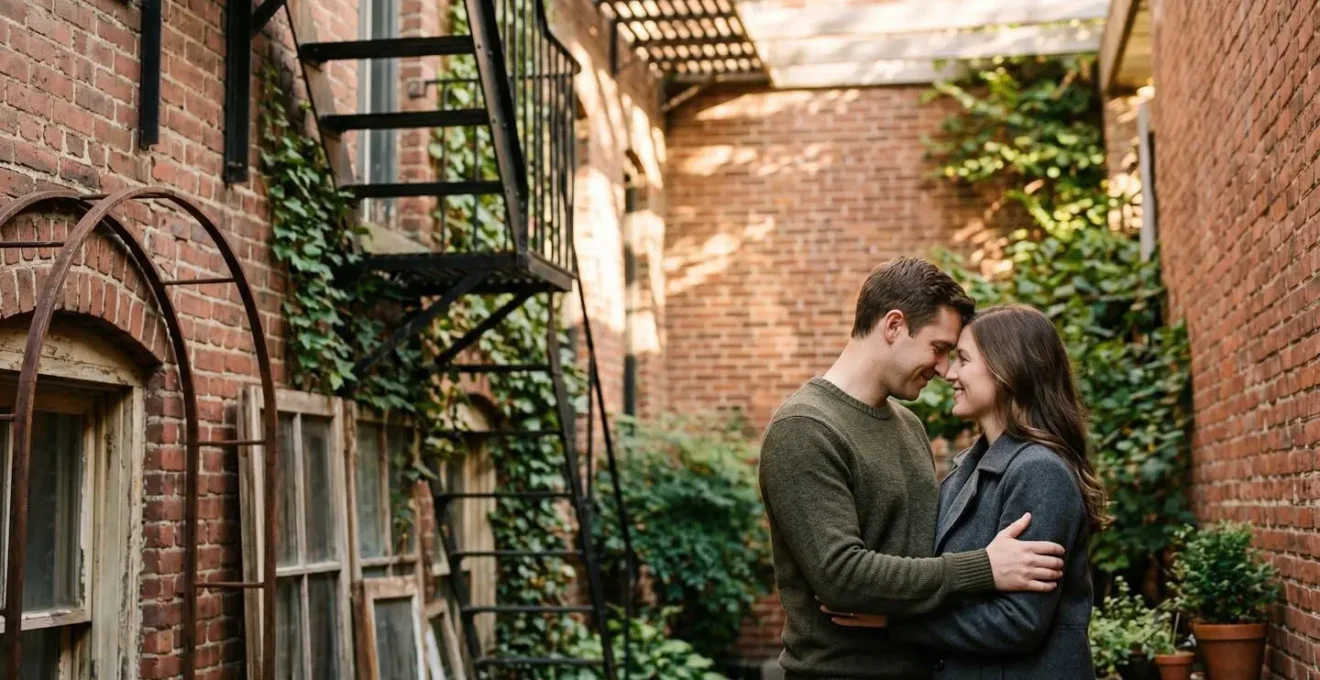
Scouting a city is about reading its rhythms, understanding its structure, and making connections. It’s an investigation that rewards the curious and the resourceful with truly unique, story-rich locations.
The Transport Error That Strands Guests at Remote Excursion Sites
The single most common—and catastrophic—error in planning a remote photo session is underestimating transportation. It’s not just about getting the couple to the spot; it’s about the entire ecosystem of guests, vendors, and crew. A miscalculation here doesn’t just cause a delay; it can physically strand your entire party, turning a dream day into a logistical crisis. The most frequent mistake is naively trusting map app estimates.
A professional location manager operates on a principle of “multiplied time.” They know that for remote locations, you must apply a buffer formula. A good rule of thumb is that transportation planners recommend multiplying base travel time by 1.5x standard estimate for any unpaved roads, and then adding another 30 minutes for contingencies like unexpected traffic, wildlife crossings, or single-lane road jams. This buffer isn’t a “nice-to-have”; it’s a mandatory part of the schedule.
Beyond timing, the second pillar of professional transport planning is redundancy. Relying on a single vehicle or a single driver for a remote location is a single point of failure. A pro plan incorporates backups:
- The Two-Driver Rule: Never rely on one bus. A backup vehicle and driver should be on standby, or the party should be split among multiple smaller vehicles. If one breaks down, it’s an inconvenience, not a catastrophe.
- Digital AND Analog Navigation: Cell service is the first casualty in remote areas. Provide all guests and drivers with pre-downloaded offline maps (like Google Maps Offline or Maps.me) as a mandatory part of their welcome kit, but also include old-fashioned printed maps with clear, unmistakable landmarks.
- Verification of Operational Hours: This is a critical detail that’s often missed. Your transport plan must account for “soft” deadlines. Does the private road’s gate lock at sunset? Does the last ferry depart at 4 PM? These operational hours must be personally verified with the provider, as they can leave an entire party stranded overnight.
Failure to implement these strategies is the primary reason guests get left behind or shoots are ruined by a late-arriving party. It underscores that logistical choreography is not just about elegance, but about rigorous, defense-in-depth planning against every conceivable failure point.
Key Takeaways
- Finding unique photo spots is a skill based on a scout’s operational mindset, not luck.
- Legal reconnaissance, permit acquisition, and logistical choreography are non-negotiable for professional-level results.
- The best photographers and planners have robust contingency plans for weather, crowds, and transport failures.
Fly-In Photographer or Local Talent: Which Is Safer for Your Investment?
The final, critical piece of your location-scouting puzzle is the person behind the camera. You might find the most incredible, secret location on earth, but without the right talent to capture it, the opportunity is wasted. This brings you to a pivotal decision: do you fly in a photographer with a signature style you love, or do you hire a local expert who knows the terrain intimately? From a risk-management perspective, the answer is more complex than simply looking at portfolios.
A fly-in photographer represents a single point of failure. A flight cancellation, a lost bag of gear, or a simple illness can jeopardize your entire investment. A local photographer, on the other hand, might not have the “star power,” but they possess an invaluable asset: ground-truth knowledge. They know the exact moment the light will hit a specific canyon wall, the seasonal wind patterns on a cliffside, and the schedule of the security guard at that coveted private location. They have a built-in contingency portfolio in their head.
The savviest approach, often used in high-stakes commercial shoots, is a hybrid model. This involves hiring the renowned fly-in photographer for their signature style and creative vision, but also hiring a top-tier local photographer as a “creative consultant” or second shooter. The local expert provides the on-the-ground intelligence and contingency planning, ensuring the shoot is efficient and safe, while the fly-in artist focuses on delivering their unique aesthetic. It combines the best of both worlds, turning a risk into a strength.
| Factor | Fly-In Photographer | Local Photographer | Hybrid Approach |
|---|---|---|---|
| Primary Risk | Single point of failure (flight cancellation/delay) | Weather-dependent location knowledge | Combines both strengths with dual coverage |
| Contingency Plan | Requires travel insurance and backup travel arrangements | Needs robust ‘rainy day’ location portfolio | Renowned fly-in for style + local as creative consultant/second shooter |
| Location Knowledge | Limited to pre-scouting and research | Knows specific timing when canyon lights up, wind patterns, security schedules | Local provides on-ground intel, fly-in brings signature aesthetic |
| Portfolio Vetting | Review hero shots and signature style | Request full galleries in varied conditions, detailed contingency plans for top 3 locations | Both portfolios reviewed for complementary strengths |
If a hybrid approach isn’t feasible, your vetting process for a local photographer must be rigorous. Don’t be swayed by a few “hero shots.” Ask for complete wedding galleries shot in varied weather conditions. Ask them for their specific, detailed backup plan for your top three locations. The depth and specificity of their answer will reveal their true level of local expertise and foresight.
By adopting this operational mindset—assessing risks, mastering logistics, and vetting talent with a critical eye—you transform the search for a photo spot from a game of chance into a strategic mission. This is the path to capturing images that are not only beautiful but also truly, uniquely yours.