A true zero-waste luxury wedding is achieved not through simple eco-gestures, but through a rigorous audit of your event’s logistics and supply chain.
- Vendor integrity must be verified through a three-tier system to avoid “greenwashing.”
- Waste management requires a detailed logistical plan for sorting and processing, especially for large-scale food scraps.
- Floral and menu choices have massive hidden financial and environmental costs that can be mitigated with strategic, seasonal sourcing.
Recommendation: Adopt a ‘sustainability consultant’ mindset to transform potential environmental problems into elegant, innovative, and often cost-effective solutions for your event.
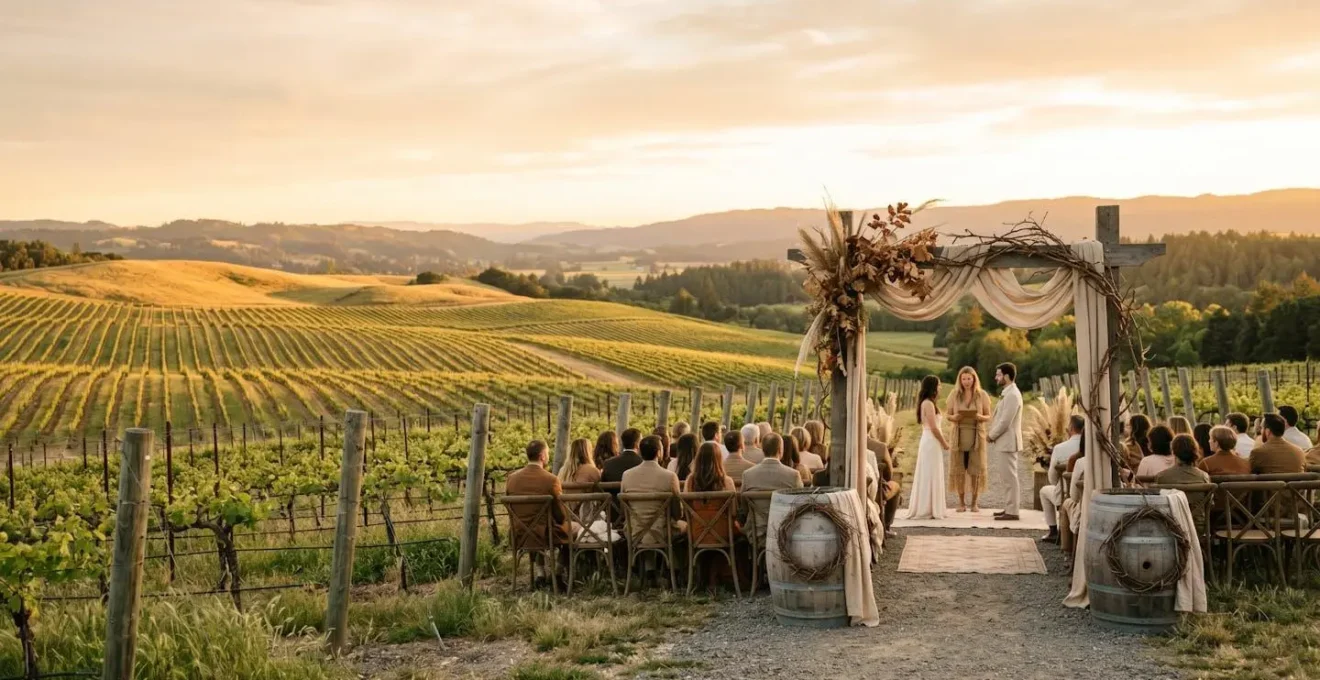
The vision is captivating: a celebration of love amidst rolling hills of grapevines, bathed in golden light. A vineyard wedding promises unparalleled romance and natural beauty. For the eco-conscious couple, however, this idyllic setting presents a unique challenge: how to host a luxurious, unforgettable event that honors and protects the very land it celebrates? The desire for a zero-waste wedding is growing, but the path is often littered with well-intentioned but ineffective advice.
Many guides will point you toward the basics: digital invitations, plantable favors, or simply asking for “local” vendors. While these are good starting points, they barely scratch the surface of the logistical complexities involved in a large-scale, high-end event within a sensitive agricultural ecosystem. What do you do with 100 kilograms of food scraps when the nearest industrial composter is hours away? How do you protect a couture wedding gown from the vineyard’s rich soil? And how do you navigate a floral market that often prioritizes appearance over planetary health?
This is where a paradigm shift is necessary. Moving beyond a simple checklist of “green” items requires adopting the mindset of a sustainability consultant. The key is not just to make eco-friendly choices, but to implement a system of ethical logistics and systemic auditing for every facet of your wedding. It’s about understanding the “why” behind the “what”—analyzing the hidden environmental and financial costs of conventional choices and discovering innovative, elegant solutions.
This guide will equip you with the strategic frameworks to tackle the real, complex challenges of planning a zero-waste vineyard wedding. We will dissect the most critical operational areas, from vetting vendors and managing waste to making informed floral and catering decisions that are both beautiful and genuinely sustainable.
Explore the detailed sections of this guide to master the art of ethical and innovative wedding planning. The following table of contents will direct you to the specific logistical challenges and strategic solutions we’ll cover.
Summary: A Strategic Guide to a Flawless Zero-Waste Vineyard Wedding
- How to Spot Vendors Who Are Only “Green” on Instagram?
- Recycling or Composting: What to Do With 100kg of Food Scraps?
- Confetti Alternatives: Which Ones Actually Decompose Safely in Vineyards?
- Why Floral Foam is the Enemy of Sustainable Floristry
- Why “Seasonal” Flowers Are Cheaper and Better for the Planet?
- How to Protect Your Wedding Dress Hem in a Vineyard Setting?
- Why Importing Peonies in August Can Triple Your Floral Bill?
- Why “Farm-to-Table” Menus Are Riskier for Large Guest Counts?
How to Spot Vendors Who Are Only “Green” on Instagram?
In today’s market, “eco-friendly” and “sustainable” have become powerful marketing buzzwords. Unfortunately, this has led to a rise in “greenwashing,” where vendors project an environmentally conscious image without implementing substantive practices. For a zero-waste wedding, relying on vague claims from an Instagram bio is a significant risk. A truly sustainable event requires partners whose commitment is verifiable and deeply integrated into their operations. The goal is to move from accepting self-reported claims to conducting a thorough vendor audit.
This means asking pointed, specific questions that go beyond the surface. Instead of asking “Are you a sustainable vendor?”, ask “Can you provide documentation of your waste-sorting process?” or “Which third-party certifications do you hold?”. A vendor genuinely committed to sustainability will welcome these questions and have ready answers, documentation, and references. Those who are merely “green” on social media will often respond with vague platitudes or be unable to provide concrete proof. This diligence is the first and most critical step in building a wedding that is authentically ethical from the ground up.
To systematically differentiate authentic partners from the pretenders, implement a multi-tiered verification process. This structured approach ensures every vendor, from the caterer to the florist, aligns with your zero-waste goals.
Your Vendor Verification Checklist: A Three-Tier System
- Review Self-Reported Claims: Start by analyzing the vendor’s website and social media. Note the language used. Are they making specific claims (e.g., “we compost 90% of food waste”) or using vague buzzwords like ‘eco-friendly’ and ‘green’?
- Verify Third-Party Proof: Ask for evidence of certifications. This could include B-Corp status, 1% for the Planet membership, or industry-specific labels like Fair Trade or LEAF (Linking Environment And Farming). Request certificate numbers and cross-check them in official databases.
- Conduct Peer-to-Peer References: Request contact information for 2-3 past clients who specifically hired the vendor for sustainable or zero-waste services. This provides direct insight into their on-the-ground performance.
- Request Specific Data: Ask for tangible proof of their processes. This can include waste-sorting documentation, certifications for material origins, or even their transport carbon footprint calculations and mitigation strategies.
- Plan for Integration: Once verified, work with the vendor to create a specific sustainability plan for your event, outlining clear goals and responsibilities.
Ultimately, choosing vendors is about building a team that shares your values not just in words, but in measurable actions. This initial investment of time protects your wedding’s integrity and ensures its environmental ambitions are fully realized.
Recycling or Composting: What to Do With 100kg of Food Scraps?
A wedding is a celebration of abundance, but that abundance often leads to a significant amount of waste, particularly from food. For an event with 150 guests, generating 100kg of food scraps—from kitchen prep to plate leftovers—is a realistic scenario. In a sensitive vineyard environment, simply sending this to a landfill is not an option. The resulting methane emissions are a potent greenhouse gas, and it represents a tragic waste of resources. The scale of this problem is vast, with only 5% of wasted food being composted in the US in 2019, according to EPA data.
The solution requires a robust, pre-planned waste logistics strategy. This goes far beyond placing a “Compost” bin next to the trash. It involves understanding the different types of food waste, securing the right processing partners, and educating guests and staff to ensure the system works. Contamination is the biggest enemy of a successful composting program; a single piece of plastic in a compost bin can render the entire batch unusable. Therefore, a successful system must be both well-equipped and well-managed.
Integrating a beautifully designed, clear, and attended sorting station into your reception layout is key. It’s not an eyesore to be hidden; it’s a statement piece that demonstrates your commitment and invites guests to participate in the solution.
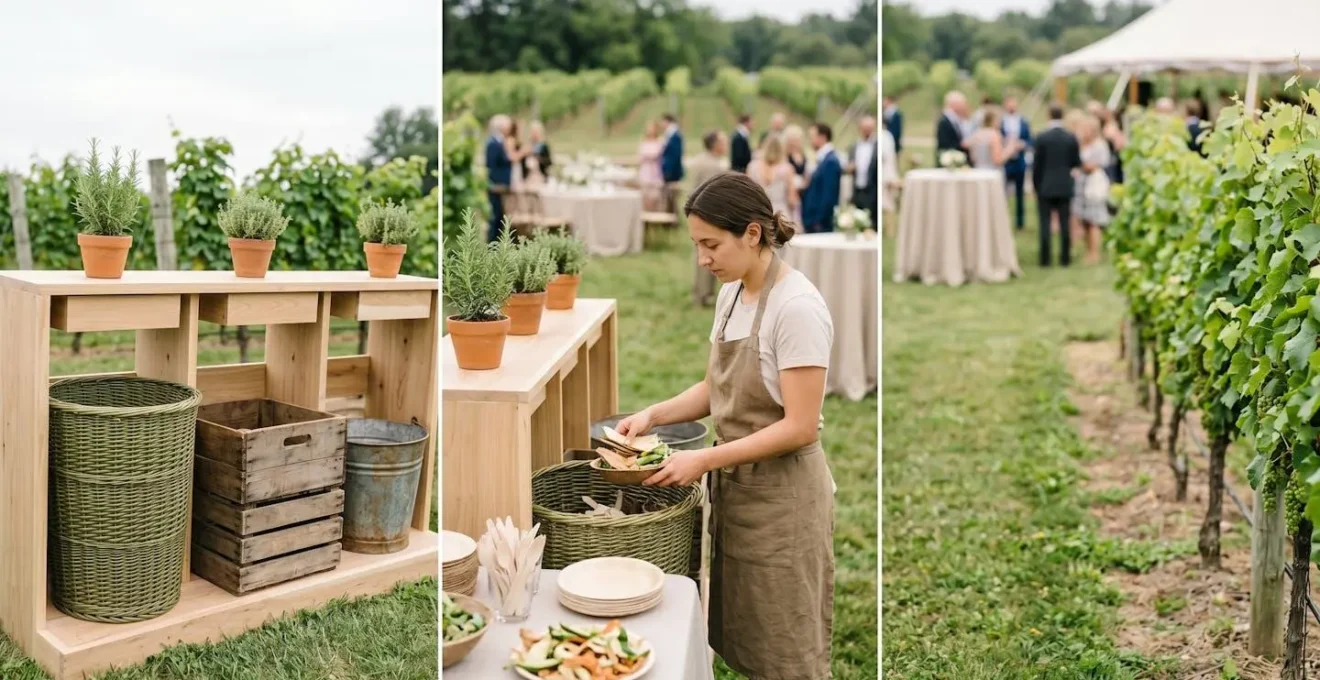
As the image illustrates, a sorting station can be an elegant part of the decor. The critical next step is creating a clear logistical framework to ensure every piece of waste goes to its proper destination, especially in a location that may lack on-site industrial facilities. This involves creating a hierarchy of solutions and designating trained personnel to oversee the process.
By transforming waste management from an afterthought into a central part of your event design, you not only minimize your environmental impact but also create a powerful educational moment for your guests, proving that luxury and responsibility can go hand-in-hand.
Confetti Alternatives: Which Ones Actually Decompose Safely in Vineyards?
The confetti toss is an iconic, joyous moment, creating spectacular photographs and a festive atmosphere. However, in the delicate ecosystem of a working vineyard, what you toss matters immensely. Traditional paper or plastic confetti is an environmental non-starter, lingering for years and polluting the soil. Even so-called “biodegradable” options can be misleading, as they may require specific industrial composting conditions to break down or may release harmful substances. Introducing foreign organic matter, like non-native flower petals or rice, can also pose a risk by altering soil pH or introducing invasive species.
The challenge is to find an alternative that provides the desired visual effect without harming the vineyard’s soil, vines, or local wildlife. The ideal solution must decompose quickly, naturally, and safely, essentially becoming part of the vineyard’s natural cycle. This requires a deeper look into the material science and ecological impact of each option. Fortunately, several innovative and beautiful alternatives meet these strict criteria, from natural elements found on-site to specially formulated products designed for zero impact.
Choosing the right option is a matter of balancing aesthetics, cost, and, most importantly, ecological safety. A comparative analysis is the most effective way to make an informed decision.
The following table provides a clear breakdown of common confetti alternatives, evaluating them against the criteria most important for a sensitive environment like a vineyard. This data, based on analysis from sustainability experts at pioneering eco-event firms, serves as a practical decision-making tool.
| Option | Decomposition Time | Vineyard Soil Impact | Ecosystem Safety | Recommendation |
|---|---|---|---|---|
| Hole-punched leaves (native trees) | 2-4 weeks | Neutral – matches natural leaf litter rate | Safe – no invasive species risk | ✓ Best Choice |
| Dried native herbs (lavender, rosemary) | 3-6 weeks | Beneficial – adds aromatics, decomposes naturally | Safe – regionally appropriate plants | ✓ Excellent |
| Rice/Birdseed | Eaten, not biodegraded | Moderate risk – can introduce invasive plant species | Risk of non-native species | ✗ Avoid |
| Fresh flower petals (non-native) | 1-3 weeks but moldy phase | May alter soil pH, introduce plant diseases | Moderate risk | ⚠ Use with caution |
| Bubbles (plant-safe formula) | N/A – dissipates | Zero trace if biodegradable formula used | Safest option | ✓ Zero-trace alternative |
| Water-soluble rice paper | Hours when wet | Dissolves completely, no residue | Safe | ✓ Good option |
By selecting a truly safe alternative like hole-punched native leaves or bubbles, you ensure that your celebratory toss leaves behind nothing but beautiful memories, safeguarding the vineyard for future harvests.
Why Floral Foam is the Enemy of Sustainable Floristry
For decades, green floral foam has been the undisputed workhorse of the floral industry. This dense, water-absorbent brick allows florists to create gravity-defying arrangements with ease. However, this convenience comes at a severe environmental cost. Floral foam is a single-use plastic product made from phenol and formaldehyde. It is non-biodegradable, non-recyclable, and crumbles into microplastic particles that wash down drains and contaminate waterways and soil indefinitely. The scale of this plastic pollution is staggering; research from RMIT University found that each block of foam is equivalent in weight to around 10 plastic shopping bags.
For a zero-waste wedding, particularly in a vineyard where soil health is paramount, the use of floral foam is completely untenable. It directly contradicts the core principles of sustainability and land stewardship. The challenge for couples and their florists is to embrace innovative, foam-free mechanics that can achieve the same, if not more beautiful, results. This requires a shift in mindset and a return to classic, often more artful, techniques that rely on reusable or compostable structures.
Modern sustainable florists have developed a robust toolkit of alternatives. These methods not only eliminate plastic but often lead to more natural, organic, and breathtaking designs. From creating armatures with chicken wire to using traditional Japanese kenzans (pin frogs), these techniques are the hallmark of a truly ethical floral designer. Choosing a florist who is proficient in these foam-free mechanics is a non-negotiable for a sustainable event.
- Chicken Wire Armature: A crumpled ball or grid of reusable chicken wire placed inside a vessel provides a strong, flexible structure. It allows for 360-degree stem placement and is ideal for large-scale installations like arches and urns.
- Pin Frogs (Kenzans): These heavy, reusable metal bases with sharp pins anchor stems securely. They are perfect for creating minimalist, Ikebana-style arrangements in low bowls and require very little water.
- Water-Filled Vials: For delicate hanging installations, boutonnieres, or placing blooms in unexpected places, individual glass or reusable plastic vials with rubber caps provide a water source for single stems without any foam.
- Natural Structures: Using intertwined, compostable materials like grapevine branches, willow, or dogwood as the structural base for an arrangement not only provides support but also adds a beautiful, organic element that ties into the vineyard theme.
- Floral Tape Grid: For smaller arrangements, creating a grid across the mouth of a vase with waterproof floral tape offers excellent support and encourages clean, architectural lines.
By championing these foam-free techniques, you not only protect the environment but also support a more artistic and sustainable future for the floral industry, ensuring the beauty of your day doesn’t leave a permanent scar on the planet.
Why “Seasonal” Flowers Are Cheaper and Better for the Planet?
The advice to “use seasonal flowers” is common in sustainable wedding guides, but it often lacks the context to be truly impactful. The benefits go far beyond a simple feel-good choice; they represent a strategic decision with significant financial and environmental implications. Seasonal, locally-sourced flowers are in their natural peak of abundance and quality. They haven’t been forced to grow in heated greenhouses or shipped halfway across the world, which dramatically reduces their carbon footprint and cost. Choosing flowers that are in season in your region means they are fresher, more vibrant, and last longer.
However, many couples have a specific vision, often inspired by images featuring popular but highly seasonal flowers like peonies or ranunculus. The key to sustainable floral design is not to abandon this vision, but to achieve it through strategic substitution. An expert sustainable florist knows that for almost every popular out-of-season flower, there is a stunning “seasonal doppelgänger”—a different flower that offers a remarkably similar aesthetic in terms of color, shape, and texture.
This approach allows you to achieve your desired romantic, lush, or modern look without the ethical and financial baggage of imported blooms. It’s about being flexible with the specific flower species while staying true to the overall design vision. The following guide is a powerful tool for planning your floral aesthetic around what’s best, not just what’s available through global logistics.
| Desired Flower | Peak Season | Seasonal Alternative | Alternative Season | Visual Similarity |
|---|---|---|---|---|
| Peonies (large, fluffy) | May-June | Cafe au Lait Dahlia | August-October | 95% – same size, soft petals, romantic look |
| Peonies (large, fluffy) | May-June | David Austin Garden Rose | June-September | 90% – cabbage rose shape, fragrant |
| Hydrangeas (full, round) | June-August | Snowball Viburnum | May-June | 85% – same spherical shape, white blooms |
| Ranunculus (layered petals) | March-May | Garden Roses | Year-round in mild climates | 80% – similar petal layering |
| Tulips (spring elegance) | March-May | Calla Lilies (local greenhouse) | Year-round availability | 75% – same clean, modern aesthetic |
By working with a florist who is an expert in seasonal alternatives, you can create a breathtaking floral landscape that is not a compromise, but a celebration of what is most beautiful and abundant at the time and place of your wedding.
How to Protect Your Wedding Dress Hem in a Vineyard Setting?
For any bride, the wedding dress is a centerpiece, often representing a significant emotional and financial investment. In a vineyard setting, the vision of a beautiful gown flowing between rows of vines is romantic, but the reality involves dirt, dust, moisture, and potential snags. Protecting the delicate hem of a wedding dress from damage is a practical concern that requires proactive mitigation, not just wishful thinking. The solution isn’t to avoid the beautiful scenery, but to plan for it with strategic choices in fabric, design, and a well-prepared emergency kit.
The first line of defense is the dress itself. Certain fabrics and silhouettes are inherently more resilient to an outdoor environment. A structured fabric like crepe or mikado will fare much better than a delicate, multi-layered silk organza. Similarly, a design that doesn’t constantly drag on the ground, such as a tea-length or A-line cut, can minimize contact with the soil. For those who dream of a long train for the ceremony, a convertible design with a detachable train is an elegant and highly practical solution, allowing for dramatic photos before transitioning to a more manageable dress for the reception.
Beyond the dress design, a toolkit of proactive measures can ensure the gown remains pristine throughout the celebration. These are not last-minute fixes, but planned components of your wedding day strategy.
- Fabric Selection Strategy: Opt for more durable fabrics. Crepe, satin, or structured mikado are far less likely to snag on vineyard terrain or show dirt compared to delicate Chantilly lace or silk organza.
- Silhouette Optimization: Consider A-line, tea-length (mid-calf), or modern two-piece designs. These styles naturally keep the fabric away from direct and constant ground contact, reducing the risk of stains and tears.
- Detachable Train Solution: If a long train is a must for the ceremony, invest in a convertible gown. A removable cathedral train offers the best of both worlds: dramatic for the vows, practical for the vineyard reception.
- Emergency Kit Contents: Prepare a specialized kit. Include high-quality clear hem tape for quick, invisible repairs, a soft-bristle brush for gently removing dry soil, a targeted wine or grass stain remover pen (after testing on a fabric swatch), and safety pins.
- Sacrificial Underskirt Method: This is a clever professional trick. Wear an inexpensive cotton petticoat that is 2-3 inches longer than your dress hem. It will absorb the majority of the dirt and moisture, and can be easily removed after the outdoor photos are complete.
By combining smart design choices with a practical toolkit, you can move freely and confidently through the vineyard, knowing your cherished dress is well-protected and will look stunning from the first look to the last dance.
Why Importing Peonies in August Can Triple Your Floral Bill?
A specific flower can be central to a wedding’s aesthetic vision. Peonies, with their lush, romantic petals, are a perennial favorite. However, a bride wanting peonies for her August wedding in the Northern Hemisphere faces a significant logistical and financial hurdle. Peonies are a late-spring flower, with a natural peak season in May and June. Sourcing them in August means they must be imported, likely from a region in the Southern Hemisphere where it is currently spring, or from specialized, climate-controlled greenhouses in places like the Netherlands. This is where the simple desire for a flower transforms into a complex and costly supply chain operation.
The base price of an out-of-season flower is just the beginning. The total cost is inflated by a cascade of surcharges related to its long-distance journey. These include air freight costs (which are often priced by weight and volume), refrigerated transport at every stage of the journey, customs duties, phytosanitary inspection fees to prevent the spread of pests, and special handling fees by wholesalers. Furthermore, the risk of spoilage and damage is significantly higher for flowers that travel thousands of miles, meaning suppliers build a higher waste percentage into their pricing.
This cost-impact analysis makes the case for seasonal sourcing crystal clear. The dramatic price difference isn’t arbitrary; it directly reflects the enormous amount of energy, resources, and logistics required to defy nature’s cycles.
The following cost breakdown, based on industry data, illustrates the stark difference between sourcing a local, seasonal bloom versus importing a flower out of its natural season. This analysis uses a local Dahlia as a seasonal alternative to the Peony, both offering a similar lush, multi-petaled aesthetic for a late-summer wedding. The data is provided by floral industry experts who track sustainability metrics in event design.
| Cost Component | Local Seasonal Dahlia (August) | Imported Dutch Peony (August) |
|---|---|---|
| Base Stem Price | $5/stem | $15/stem |
| Air Freight Surcharge | $0 | $3-5/stem |
| Refrigerated Transport | Minimal local | $2-3/stem |
| Customs & Phytosanitary | $0 | $1-2/stem |
| Special Handling Fee | $0 | $1/stem |
| Waste Risk (wilting/damage) | 5-10% | 20-30% |
| Total Average Cost | $5.25-5.50/stem | $22-28/stem |
Choosing a seasonal alternative like a Cafe au Lait Dahlia is not a compromise; it’s a strategic decision that delivers the desired aesthetic with a superior-quality flower at a fraction of the financial and environmental cost. This is the essence of innovative, sustainable luxury.
Key takeaways
- True sustainability requires auditing vendor claims through a verification system, not just accepting marketing buzzwords.
- Zero-waste success depends on robust, pre-planned logistics for waste and food, transforming a potential problem into a managed system.
- Seasonal sourcing for florals and food is not a compromise; it’s a strategic choice that protects your budget, increases quality, and honors the planet.
Why “Farm-to-Table” Menus Are Riskier for Large Guest Counts?
The “farm-to-table” concept is the gold standard for sustainable catering, evoking images of fresh, local ingredients and authentic flavor. For an intimate dinner party, it’s a perfect model. However, when scaling up to a wedding of 150-200 guests, a purely farm-to-table approach introduces significant risks related to capacity, consistency, and crop failure. A small, local farm, while charming, may not have the capacity to suddenly provide 100 pounds of heirloom tomatoes or the consistency to ensure every carrot tastes as sweet as the last. A single hailstorm a week before the wedding could wipe out a key ingredient with no backup.
This doesn’t mean abandoning the farm-to-table ideal. The solution lies in a more sophisticated, hybrid sourcing model that mitigates these risks. Planners have identified a “Three Cs” risk framework for large-scale events: Capacity (small farms can’t fulfill bulk orders), Consistency (agricultural products vary in quality), and Crop Failure (weather events can eliminate supply). Acknowledging these risks allows for the development of a smarter strategy that combines the reliability of larger suppliers with the unique character of local farms.
The most innovative and reliable approach is the “Core & Flair” sourcing strategy. This model uses larger, certified organic suppliers for the “core” 70% of the menu—staples like proteins, grains, and root vegetables where consistency and volume are critical. The “flair” is reserved for the remaining 30%, sourcing unique, hyper-local ingredients like artisanal cheeses, specialty herbs, or unique seasonal garnishes from small local farms. This strategy ensures the meal is reliably supplied while still celebrating the local terroir. It’s the perfect marriage of practicality and principle.
- Core Ingredients (70% of menu): Source reliable staples (potatoes, onions, proteins, grains) from larger certified organic suppliers who have a proven capacity to handle orders for 150+ guests.
- Flair Ingredients (30% of menu): Use hyper-local farm ingredients for specialty items that make the menu unique—heirloom tomatoes for a salad, unique herbs for a signature cocktail, or artisanal cheeses for the appetizer station.
- Flexible Service Format: Opt for family-style platters, elegant food stations, or an upscale buffet over a rigid, plated service. This allows the chef to adapt the final dishes based on the best of the day’s harvest.
- ‘Today’s Harvest’ Signage: Frame the menu’s variability as a celebrated feature. Use small, elegant cards on the buffet that note, “Featuring [Farm Name]’s beautiful harvest bounty.”
- Risk Mitigation Timeline: Finalize core ingredient orders 3-4 weeks in advance. Confirm the “flair” ingredients 7-10 days before the wedding, with identified backup alternatives in case of a last-minute supply issue.
This hybrid approach ensures a delicious, reliable, and truly sustainable feast that delights guests while supporting local agriculture in a responsible and realistic way, proving that you can have both authenticity and assurance.