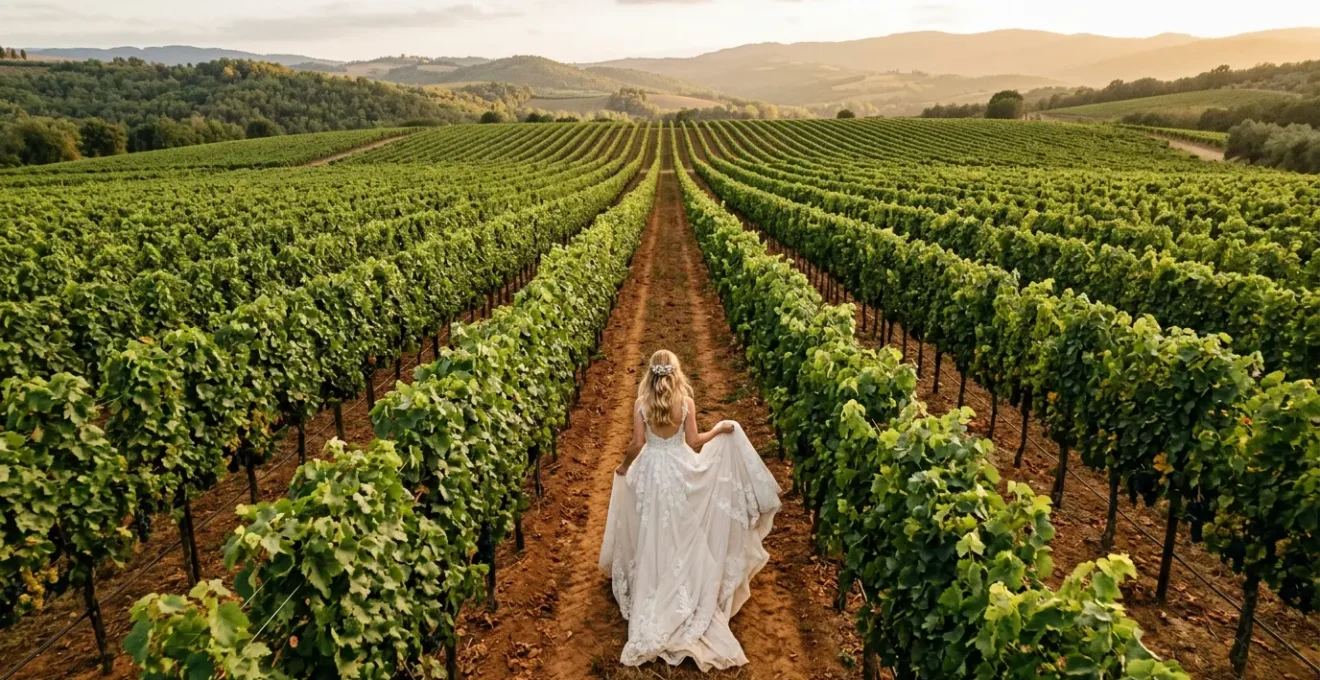
Protecting your wedding dress in a vineyard is not about luck; it’s about strategic environmental planning that anticipates and neutralizes threats to your gown before they happen.
- Unseen risks like harvest machinery ruts, chemical pest control, and inadequate night lighting pose a greater threat to your dress than a simple mud puddle.
- Every logistical choice, from tent flooring to wine service protocol, is a critical dress-protection decision that creates a ‘Gown Safe Zone’ around you.
Recommendation: Adopt a “hem’s-eye view” in your planning. Evaluate every vendor contract and timeline detail based on how it contributes to proactively engineering a pristine environment for your dress.
The vision is intoxicating: a golden-hour ceremony among the vines, a gentle breeze rustling through the leaves, and you, in your perfect wedding dress, creating memories that will last a lifetime. But lurking just beneath this idyllic picture is a bride’s most practical fear: the vineyard itself. The rich soil, the agricultural machinery, the occasional stray glass of Cabernet—they all pose a direct threat to the one element you’ve spent months, and a significant budget, perfecting: your gown. Many will advise you to pack a stain-remover pen or have your bridesmaids carry your train. These are reactive, last-ditch efforts.
The true secret to keeping your wedding dress immaculate in a vineyard setting has little to do with emergency cleaning kits. It’s about proactive, detail-oriented planning. It’s about environmental engineering. This isn’t just about avoiding a muddy hem; it’s about understanding the unique logistical challenges of an agricultural space and designing solutions for them. From the noise of the harvest to the unseen dangers of mosquito fog, every element of your day can be planned to create a protective bubble around your gown.
This guide moves beyond simple tips and offers a strategic framework. We will analyze the hidden risks of a vineyard venue and provide concrete, planner-approved solutions. By thinking like an outdoor logistics expert, you can ensure your dress remains as flawless at the end of the night as it was at the beginning.
To help you navigate these crucial planning stages, this article is structured to address the most common but often overlooked logistical challenges of a vineyard wedding. The following sections will guide you through each potential issue, providing practical solutions to ensure your day is as perfect as your dress.
Summary: A Strategic Guide to Protecting Your Wedding Dress in a Vineyard
- Why September Might Be Too Noisy for a Vineyard Ceremony?
- How to Fog for Mosquitoes Without contaminating the Vines?
- Grass vs. Hard Floor: Do You Really Need to Floor the Entire Tent?
- Heel Protectors or Flip Flops: What to Provide for Grass Ceremonies?
- The “Black Hole” Effect: Why Vineyards Are Darker Than You Expect at Night?
- How to Plan a Zero-Waste Wedding in a Sensitive Vineyard Ecosystem?
- How to Keep Guests Comfortable During a Mid-Summer Wedding in Italy?
- Local Wine vs. Imported Champagne: When to Stick to the Region?
Why September Might Be Too Noisy for a Vineyard Ceremony?
September in a vineyard sounds romantic, doesn’t it? The vines are heavy with fruit, the colors are rich, and the atmosphere feels alive. But “alive” is the operative word. As the Seven Birches Winery notes, “Harvest season may be the most visually stunning time for a winery wedding, but it’s also the busiest period for vineyards.” This business translates into noise from tractors, harvesters, and staff. But the real threat to your dress isn’t the sound; it’s the aftermath of the activity. An active harvest means heavy machinery moving through the rows.
The “Carmel Valley Harvest Wedding Atmosphere Study” provides a critical insight that planners must heed. While the sensory atmosphere is a huge draw for couples, the very activity that creates it is a logistical hazard. The study highlights that harvest activity often creates deep, muddy ruts in vineyard rows. These aren’t just minor inconveniences; they are treacherous trenches for anyone in a long gown and heels. A misstep during your photo session could lead to a fall, a twisted ankle, and, most certainly, a hemline covered in dirt and mud. The risk exists long after the machines are turned off, making a seemingly perfect photo backdrop a minefield for your dress.
Therefore, when considering a harvest-season date, your inquiry must go beyond a simple “Will it be noisy?” You need to ask the venue manager specific questions from a hem’s-eye view: “What is your harvest schedule? Which rows will be used by machinery? Will we have access to manicured, machine-free rows for photos?” The most beautiful photo opportunities can be found, but they must be scouted and secured with an awareness of the terrain. The goal is to capture the visual splendor of the harvest without letting its physical reality ruin your gown, and a study of the area confirms that harvest season adds a layer of sensory atmosphere that requires careful navigation.
Ultimately, a “noisy” September might be a beautiful choice, but only if you plan for the physical, not just the audible, consequences of the harvest.
How to Fog for Mosquitoes Without contaminating the Vines?
An evening celebration among the vines brings with it the unwelcome company of mosquitoes. The obvious solution, fogging, presents a hidden danger to your dress. Traditional chemical treatments, especially those containing DEET, can stain or even damage delicate fabrics like silk or tulle. The mist doesn’t just settle on the leaves; it can drift onto chairs, tables, and, if timed poorly, your gown. The goal isn’t just to get rid of bugs; it’s to create a pest-free environment that is also a fabric-safe zone.
A multi-layered, dress-safe strategy is essential. The first step is professional treatment, but it must be done correctly. According to experts in outdoor event pest control, the key is timing: the treatment should be applied several days before the event. This allows any chemicals to dissipate, ensuring no residue contaminates food, guests, or, crucially, your dress fabric. Opting for a natural treatment service that uses essential oils is an even safer bet, as these are less likely to cause damage.
Beyond spraying, think about engineering the environment itself. The most elegant and effective tool in your arsenal is air movement. Mosquitoes are weak fliers and, as outdoor wedding pest control research shows, they struggle to navigate in windy conditions. Strategically placing outdoor fans creates invisible barriers that bugs can’t cross. This not only protects you and your guests but also keeps your dress from ever coming into contact with pesticides. You can even incorporate mosquito-repelling flowers like lavender and marigolds into your decor for an added layer of beautiful, natural protection. This approach turns a logistical problem into a design opportunity.
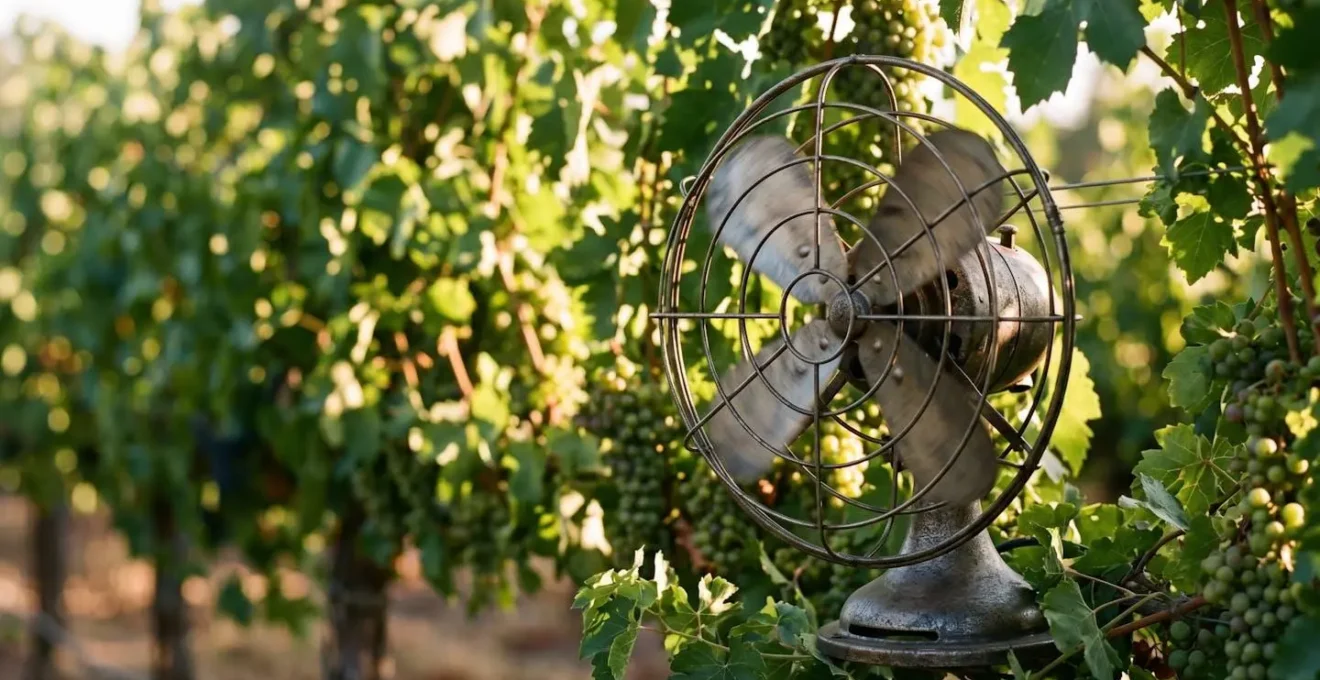
As the image suggests, well-placed, stylish fans can blend seamlessly into the decor while providing a powerful, chemical-free defense. This creates a comfortable, bite-free zone without introducing any risk to your expensive gown. The final layer involves luring bugs away from your key areas with light traps and zappers, ensuring they are dealt with far from any precious fabrics. This is proactive protection at its finest.
This system of barriers and deterrents ensures you can enjoy the evening air without worrying about bites or chemical stains on your dress.
Grass vs. Hard Floor: Do You Really Need to Floor the Entire Tent?
A tented reception in a vineyard is a classic choice, but it presents a foundational question: what’s underfoot? As the Eastgate Supply Party Planning Guide bluntly puts it, “You do not want your guests walking around on wet, soggy grass, do you?” For a bride in a long, white gown, this is more than a comfort issue; it’s a catastrophe waiting to happen. Damp grass means a damp, stained hemline. Uneven ground means tripping hazards. The default answer seems to be flooring the entire tent, but this can be astronomically expensive.
The cost of full flooring can be prohibitive, often exceeding the price of the tent itself. A case study on strategic flooring for outdoor weddings highlights this exact problem, where a bride’s quote for traditional plywood flooring was more than her tent and catering combined. This is where a detail-oriented, logistical approach saves both the budget and the dress. The solution is not to floor everything, but to floor strategically. This is the concept of zoned flooring.
Instead of covering the entire grassy area, you identify the high-traffic zones and critical areas for the bride. This includes the entrance, pathways to restrooms, the bar area, and, of course, the dance floor. For these zones, you can use professional-grade modular flooring systems like Duratrac. These interlocking tiles can be laid directly over grass, dirt, or gravel, providing a stable, clean, and dry surface. The bride can move from the entrance to the head table, to the dance floor, and back, all without her hem ever touching the potentially damp ground. Guests might still walk on the grass in less-trafficked areas, but the bride’s “safe zone” is secured.
This strategic approach to flooring demonstrates how a logistical decision directly impacts dress preservation. It’s a smart compromise that allocates budget where it matters most: creating a secure, clean path for the star of the show. You get the benefit of a solid floor where it counts, without the exorbitant cost of full coverage.
By mapping out your movements for the evening, you can create a floor plan that protects both your dress and your wedding fund.
Heel Protectors or Flip Flops: What to Provide for Grass Ceremonies?
The quintessential vineyard ceremony on a lush lawn is a beautiful image, but it’s a nightmare for anyone in stilettos. The issue goes beyond guest comfort; it’s about the bride’s mobility and stability. Sinking into the grass is not only frustrating but also dangerous, increasing the risk of a stumble that could soil or tear your dress. Providing an option for guests is a thoughtful touch, but the bride’s footwear requires a more strategic, personal solution. The choice isn’t just between heel protectors and flip-flops; it’s about planning a complete shoe wardrobe for the day.
For guests, and even the bridal party, providing heel protectors is a far more elegant solution than flip-flops for the ceremony. They are discreet and allow guests to keep their stylish shoes on. The technology behind them is simple but effective: patented heel protection research shows that wide-base heel protectors increase the surface area of the heel tip by 3 to 10 times, preventing it from sinking into soft ground. It’s a small investment that makes a huge difference in stability and mobility on grass.
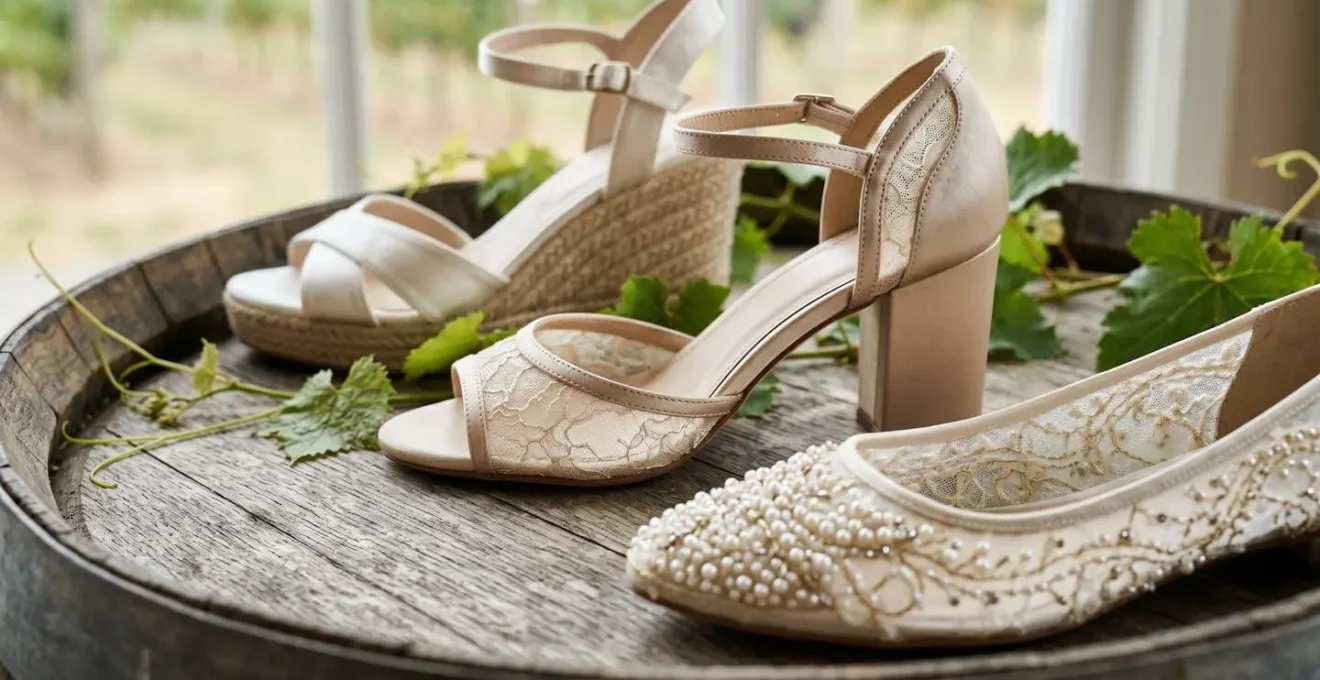
However, for the bride, the best strategy is a multi-shoe approach. Consider having three pairs of shoes: your “ceremony heels” (with protectors), your “photo-op wedges or block heels” for walking in the vines, and your “reception flats” for dancing. This allows you to have the perfect, elegant heel for the aisle walk, a more stable and practical option for navigating uneven terrain for photos, and a comfortable choice for the party. A powerful testimonial from a vineyard bride highlights the value of this foresight: “The Grasswalkers saved my life! It poured rain that morning. My shoes are perfectly white till this day! … I walked on stones, stairs, pavement, grass, and dirt and they did not come off.” This is a testament to how the right footwear accessory is a crucial part of dress protection.
By thinking of your shoes as a system, not a single choice, you empower yourself to navigate any part of your venue with grace and confidence, keeping your hem safely off the ground.
The “Black Hole” Effect: Why Vineyards Are Darker Than You Expect at Night?
As the sun sets over the vineyard, the romantic bistro lights and candles create a magical ambiance. But what they don’t create is sufficient light for safe navigation. Vineyards are often located in rural areas with little to no ambient light. Once the sun is gone, the open spaces become what planners call a “black hole”—vast areas of darkness that absorb light and hide potential hazards. As the team at Seven Birches Winery points out, “Vineyards, being primarily open spaces, can present challenges in this regard.” For a bride in a long gown, these unlit spaces are a significant threat, concealing uneven ground, stray equipment, and mud patches that are invisible at night.
Decorative uplighting on trees is beautiful, but it does nothing to illuminate the ground where your hem is. A truly dress-safe lighting plan focuses on function first and aesthetics second. It requires a detailed audit of every path the bride will walk after sunset—from the reception tent to the restrooms, to a waiting getaway car. The goal is to illuminate the ground, not just the scenery. This means prioritizing path lighting that is directed downwards, clearly showing any puddles, ruts, or other ground-level hazards.
This is where an obsessive level of detail comes into play. Your lighting plan should be a core part of your logistical strategy, designed specifically to protect you and your gown from the unseen dangers of the dark. The most effective approach involves a pre-wedding walkthrough at night to identify and eliminate every single dark zone on your path.
Your Dress-Safe Lighting Design Protocol
- Install path lighting directed downwards to illuminate ground-level hazards like puddles, mud patches, and uneven terrain rather than just decorative uplighting.
- Assign a ‘Post-Sunset Dress Assistant’ – a designated bridesmaid or planner who walks ahead of the bride with a phone flashlight for any nighttime movement.
- Ensure adequate lighting around restroom paths, bar areas, and any transition zones where dress fabric could catch on equipment.
- Create lighted walkways for guests to safely navigate between ceremony and reception areas.
- Test all lighting at the actual event time (post-sunset) to identify dark zones before the wedding day, as detailed in expert vineyard wedding guides.
By treating lighting as a safety and logistics issue, not just a decor element, you can move confidently through your venue all night long, with your dress remaining pristine.
How to Plan a Zero-Waste Wedding in a Sensitive Vineyard Ecosystem?
The movement towards sustainability in the wedding industry is not just an ethical choice; it’s a practical one that directly contributes to protecting your wedding dress. Vineyards, especially those that are organic and biodynamic, are sensitive ecosystems. As Meghan Magnasco, a manager at So Eventful, notes, “Many vineyards and wineries… are leading the charge on being organic and biodynamic, so holding your event at one of these venues is helping to support the movement.” A zero-waste mindset naturally leads to a cleaner, more controlled, and therefore safer, environment for a pristine gown.
Consider the common sources of wedding-day mess. A case study on applying zero-waste principles to dress protection reveals a clear connection. Disposable confetti, for example, is not just waste; it gets caught in tulle and can stain if it gets damp. Single-use plastic water bottles are not just bad for the environment; they are unstable and easily spilled near the bride. A zero-waste approach replaces these risks with safer alternatives. Bubbles are a beautiful, mess-free alternative to confetti. Staffed water stations with glassware eliminate the risk of flimsy plastic bottles being knocked over onto your dress.
This philosophy extends to every vendor. A vendor committed to zero-waste principles is inherently more organized. They are more meticulous about managing trash, cleaning up spills promptly, and preventing clutter. This creates a far less hazardous environment. Fewer stray items on the ground mean fewer tripping hazards for you. A cleaner bar area means a lower risk of a guest bumping into you with a full glass. Even your emergency kit can be eco-conscious, using natural, biodegradable stain removers that won’t harm the vineyard soil if a treated cloth is accidentally dropped.
By aligning your wedding with the sustainable ethos of the vineyard itself, you are not only hosting a more responsible event but are also creating the cleanest, safest possible setting for your dress.
How to Keep Guests Comfortable During a Mid-Summer Wedding in Italy?
A mid-summer wedding in an Italian vineyard is the stuff of dreams, but the reality can be intensely hot. Managing the heat is paramount for guest comfort, but from a planner’s perspective, it’s also a critical component of dress protection. When a bride is overheated and perspiring, two things happen: the delicate lining of her dress can become stained with sweat, and her own discomfort and dehydration can lead to clumsiness and accidents. Keeping the bride cool is a non-negotiable part of keeping the dress pristine.
The heat in vineyard regions can be deceptive. As vineyard microclimate data shows, it’s common to see temperature differentials of 20 to 30 degrees between a breezy coast and a sheltered inland valley. You must plan for the hottest possible scenario. A key part of this plan is the bride’s personal “cooling kit,” a small arsenal of tools designed to manage her body temperature throughout the day. This isn’t just about comfort; every item in the kit serves to protect the dress.
The ideal cooling kit is both elegant and effective. It should include silk blotting cloths, which absorb perspiration from the face and neck without leaving behind the lint that cotton can. A personal, stylish handheld fan is a must-have, not just for a gentle breeze but to actively prevent sweat from building up on the dress lining. The dress itself is a factor; choosing a gown with a breathable natural-fiber lining like silk or cotton instead of polyester makes a world of difference. And while hydration stations are for everyone, they are especially crucial for the bride, as preventing dehydration also prevents the lightheadedness that could lead to a stumble or a spilled drink. Cooling wraps or scarves can be used during downtime or car rides to bring her core temperature down, preventing heat exhaustion.
By viewing heat management as a logistical challenge with direct implications for the gown, you can plan a system that keeps the bride feeling—and looking—cool, calm, and collected.
Key takeaways
- Proactive environmental engineering is more effective for dress protection than any reactive cleaning method.
- View every logistical decision—from lighting and flooring to pest control and drink service—through the “hem’s-eye view” of your gown.
- A multi-pair “shoe wardrobe” (ceremony, photos, reception) is a non-negotiable for navigating varied vineyard terrain safely and elegantly.
- Your vendors are your first line of defense; ensure their plans for lighting, flooring, and waste management align with your goal of creating a ‘Gown Safe Zone’.
Local Wine vs. Imported Champagne: When to Stick to the Region?
You’re at a winery. Of course, you’re going to serve wine. But the final piece of your dress-protection puzzle is managing the single most notorious staining agent at any wedding: red wine. While it feels authentic to serve the estate’s finest Cabernet Sauvignon, a single splash can mean irreversible damage to a wedding gown. The decision of what to serve, and when, is the final act of environmental engineering for your dress. The question isn’t just about local versus imported; it’s about color and timing.
The safest, most pragmatic approach is to create a “Red Wine Proximity Protocol.” This is a strategic plan, communicated to your caterer and staff, designed to keep red wine at a safe distance from the bride during the most vulnerable parts of the day. It’s a system that balances the desire to serve the local vintage with the absolute necessity of protecting a priceless gown. This protocol is not about banning red wine; it’s about controlling its flow.
The core of the protocol is timing. During the standing cocktail hour and any other mingling periods when the bride is mobile and guests are moving around her, serve only white wines, sparkling wines, and champagne. This immediately eliminates 90% of the stain risk. Reserve the red wine service exclusively for the seated dinner. When the bride is stationary at her table, the risk of a guest bumping into her and spilling is drastically reduced. This simple timeline is incredibly effective. The protocol also extends to glassware—using sturdy, well-balanced stemmed glasses instead of easily-tipped stemless options—and the strategic placement of the bar, keeping the red wine station away from the main circulation paths.
To put these strategies into practice, your next step is to open a detailed dialogue with your venue coordinator and catering manager, armed with this checklist of logistical questions. Transform them from simple vendors into key allies in the all-important mission: protecting the dress.