In summary:
- True wedding privacy is not about signs, but about designing an “invisible infrastructure” of control through contracts, logistics, and sensory cues.
- Prioritize “courtesy” room blocks over “guaranteed” ones to eliminate financial liability for unsold rooms, a common industry standard for weddings.
- Use a “Privacy Audit Checklist” during site visits to ask tactical questions about staff routes, floor access, and other events.
- Create psychological boundaries in public spaces like lobbies using “sensory scaffolding”—strategic lighting, scent, and sound.
- Manage the flow of all participants, including guests (via satellite check-in) and vendors (via staggered schedules and designated routes).
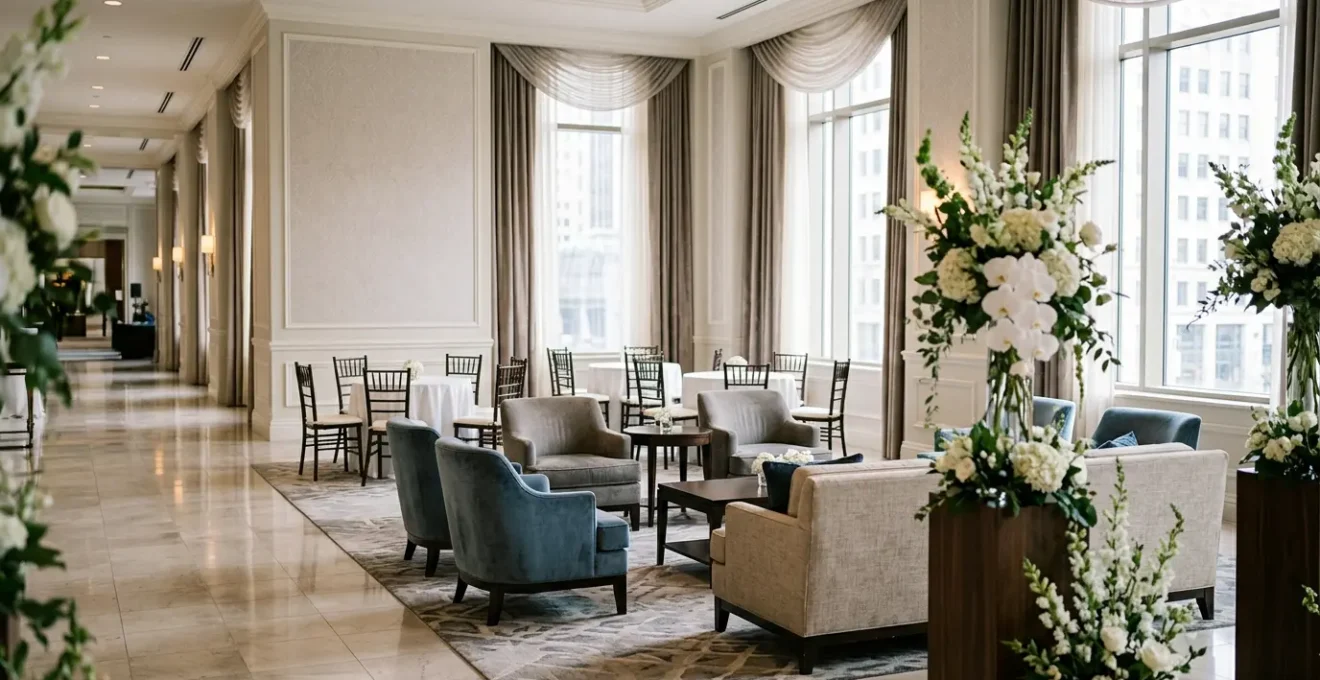
The allure of a boutique hotel wedding is undeniable: sophisticated architecture, impeccable service, and the convenience of having everything in one place. Yet, for couples who cherish intimacy, a single fear persists: the uninvited guest. You envision exchanging vows under the soft glow of chandeliers, not under the curious gaze of strangers wandering in from the lobby. The core tension is between your desire for a private, sacred moment and the reality of a venue that remains open to the public.
Conventional wisdom offers simple but flawed solutions: book a private ballroom or hang a “Private Event” sign. This approach misses the point entirely. Privacy isn’t just about the four walls of your reception hall; it’s about the entire guest journey—from the check-in desk, through the corridors, to the farewell brunch. It’s about preventing your florist’s team from wheeling carts past your arriving grandmother and ensuring the hotel bar crowd doesn’t become the unintended audience for your welcome toast.
But what if the key to true privacy wasn’t about building visible walls, but about architecting an invisible infrastructure of control? The real work of a hotel wedding specialist lies in discreetly managing the flow of people, information, and even senses. It’s a tactical game won long before the wedding day, in the fine print of a contract and the meticulous planning of logistics.
This guide will deconstruct the strategies used to transform a public hotel into your private sanctuary. We will move beyond generic advice to provide a tactical playbook covering contract negotiation, spatial design, and logistical choreography, ensuring your wedding feels as exclusive and intimate as you’ve always dreamed.
This article provides a detailed roadmap for securing your wedding’s privacy. Below is a summary of the key strategic areas we will explore to give you complete control over your event’s atmosphere.
Summary: A Specialist’s Guide to Hotel Wedding Privacy
- The “Attrition Clause” That Can Cost You Thousands in Unfilled Rooms
- Boutique Hotel vs. Big Chain: Which Offers Better Personalized Service?
- How to Use the Hotel Lobby for Welcome Drinks Without It Feeling Public?
- The Loading Dock Limitation That Frustrates Florists at Boutique Hotels
- Why You Should Host a Private Post-Wedding Brunch Instead of Using the Hotel Buffet?
- The 80% Rule: How to Calculate Your Attrition Rate Safely?
- The Check-In Bottleneck: How to Streamline Guest Arrival at Your Venue?
- How to Negotiate Hotel Room Blocks Without Being on the Hook for Unsold Rooms?
The “Attrition Clause” That Can Cost You Thousands in Unfilled Rooms
Before you can control the physical space, you must first control the financial framework. The most significant point of leverage and risk in any hotel wedding contract is the room block, specifically the attrition clause. This clause dictates that you are financially responsible for a certain percentage of the rooms you’ve blocked, whether your guests book them or not. Hotels enforce this to protect themselves from lost revenue, but for a couple, it can translate into a surprise bill for thousands of dollars in empty rooms.
The industry standard often requires you to fill 80% to 90% of your block. According to analysis of hotel group contracts, this typically leaves you with a slim 10-20% attrition allowance—the margin of rooms that can remain unbooked without penalty. Failing to meet this threshold means you pay for the hotel’s “lost” revenue on each unsold room, a devastating financial blow right after your wedding.
However, this clause is not non-negotiable. An experienced planner treats it as the first line of defense in building your event’s infrastructure. You can strategically negotiate terms that shift the risk away from you. Insist on a “resale clause,” which obligates the hotel to try and sell your unused rooms to the public before charging you. Another powerful tactic is proposing a tiered attrition schedule with multiple review dates, allowing you to release rooms incrementally. By leveraging your total event spend (including catering and other services), you can often negotiate a lower fill rate, such as 70%. The goal is to transform the contract from a liability into a flexible tool that serves your needs.
Boutique Hotel vs. Big Chain: Which Offers Better Personalized Service?
The choice between a charming boutique hotel and a large, full-service chain has profound implications for privacy. While both have advantages, they offer vastly different “privacy infrastructures.” A boutique hotel, with its smaller footprint, makes a full property buyout a more attainable goal for an intimate wedding, effectively turning the entire venue into your private estate. This is the ultimate privacy solution, but it’s not always feasible or necessary.
In contrast, a large chain hotel possesses superior technological tools for controlling access. Advanced key card systems can be programmed to restrict elevator and floor access exclusively to your wedding guests, creating a secure “bubble” within a much larger building. However, this comes with the trade-off of higher public traffic in shared spaces like lobbies and restaurants. A boutique hotel offers a naturally more intimate atmosphere with fewer non-wedding guests, but may rely on less sophisticated manual systems. The key is to assess the specific privacy features of each venue against your priorities.
The following table, based on a comparative analysis of hotel types, breaks down the critical differences in their privacy infrastructure.
| Privacy Feature | Boutique Hotels (25-100 rooms) | Chain Hotels (200+ rooms) |
|---|---|---|
| Full Buyout Option | Easier to negotiate; smaller capacity makes exclusive rental feasible for intimate weddings (20-80 guests) | Rare and expensive; requires filling hundreds of rooms |
| Floor Access Control | Limited technology; often manual key systems | Advanced key card systems can restrict elevator/floor access to wedding guests only |
| Operational Privacy | Single point of failure risk: one coordinator holds all knowledge; request dedicated backup contact | System redundancy: multiple staff trained on protocols, reducing dependency on one person |
| Personalization | Highly flexible; can customize routes, schedules, and services without corporate approval | More rigid protocols but predictable, consistent execution |
| Privacy from Other Guests | Naturally fewer guests; intimate atmosphere with less public traffic | Higher public traffic in lobbies/corridors; requires strategic event space placement |
To make an informed decision, you must conduct a thorough privacy audit during your site visit. Don’t just look at the ballroom; analyze the flow of the entire property. Your questions should be tactical and specific, designed to reveal potential weaknesses in the hotel’s privacy protocol.
Your Privacy Audit Checklist for Hotel Site Visits
- Ask: ‘What is your staff’s designated route from the kitchen to our event space? Will they pass through public areas?’
- Inquire: ‘How many other events or conferences are scheduled on our wedding date? What are their sizes and locations?’
- Request: ‘Can you restrict elevator access to our floor using key cards for wedding guests only?’
- Verify: ‘What is your protocol for preventing non-wedding guests from entering our reserved spaces?’
- Confirm: ‘Do you offer a full property buyout option, and what is the minimum room commitment required?’
How to Use the Hotel Lobby for Welcome Drinks Without It Feeling Public?
The hotel lobby is the ultimate public square, a space designed for flow and transient encounters. Hosting a welcome reception here without it feeling like a public spectacle requires a sophisticated approach that goes beyond ropes and stanchions. The solution is to create invisible, psychological boundaries using a technique known as “sensory scaffolding.” This method uses light, sound, and scent to signal to both your guests and other hotel patrons that they are entering a distinct, private zone.
This strategy transforms the environment itself into a soft barrier. Imagine defining your reception area with portable uplighting fixtures casting a warm, amber glow—a clear visual cue of the event’s perimeter. Within this “light fence,” curated music from discreet portable speakers creates an auditory bubble, while signature scents like bergamot and white tea from diffusers add another subconscious layer of separation. These multi-sensory cues create an atmosphere that feels exclusive and intentional, gently discouraging outsiders from wandering in far more effectively than a physical sign.
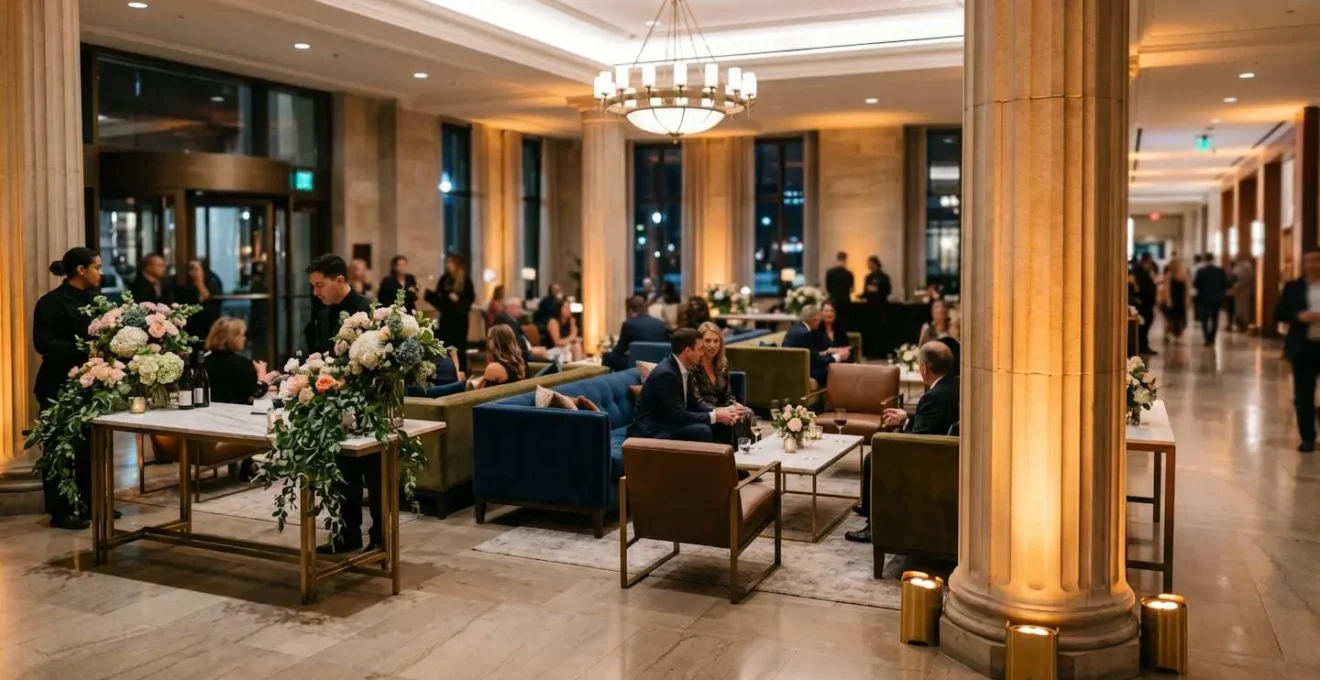
As detailed in a case study on advanced event design, this technique is most effective when paired with a human element. Position two or three well-dressed family members or designated greeters at the periphery of the sensory zone. Their role is not security, but to act as a “human buffer,” warmly welcoming your arriving guests while graciously redirecting any hotel patrons who may stray too close. This combination of environmental design and personal touch creates a powerful yet friendly barrier, preserving the intimacy of your event without sacrificing elegance.
The Loading Dock Limitation That Frustrates Florists at Boutique Hotels
A crucial and often-overlooked aspect of wedding privacy is managing the “backstage.” Your vendors—the florist, the DJ, the cake designer—are essential to your day, but their setup activities should be completely invisible to your guests. This is where the logistical limitations of a hotel, particularly a boutique property, can become a major privacy risk. A historic hotel may have a small loading dock, a single service elevator, or corridors that force vendors to cross through public guest areas. A traffic jam of vendor vans at a single entry point can quickly spill into guest view.
Preventing this requires a comprehensive vendor privacy and logistics protocol. This is not a suggestion; it’s a mandatory one-page brief you create and distribute to every vendor. This document should detail their specific arrival window, designated entrance route (avoiding the main lobby at all costs), parking instructions, and the location of staff restrooms. A key component is a staggered load-in schedule, assigning each key vendor a specific 30-minute window to prevent bottlenecks at the loading dock. This level of coordination is the hallmark of a professionally managed event.
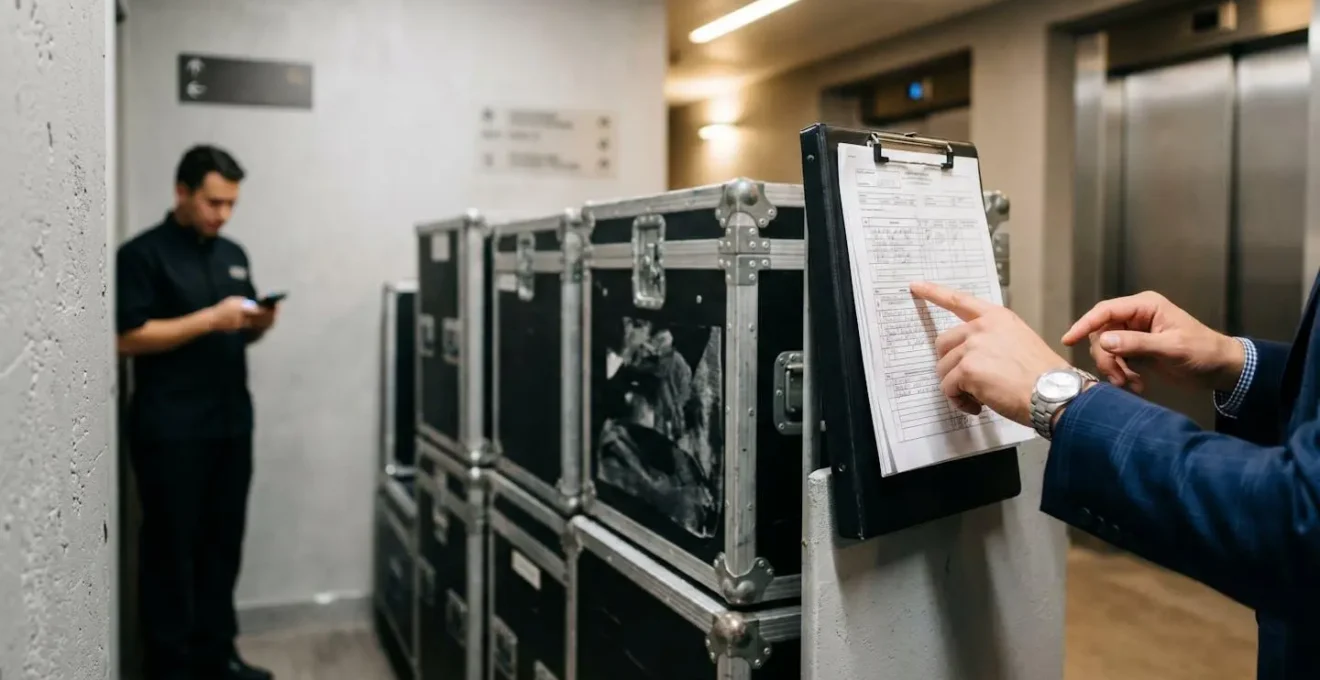
To enforce this, negotiate for a dedicated hotel staff member to act as a Vendor Liaison for the day. This person’s sole responsibility is to manage vendor arrivals, ensure they adhere to the designated routes, and keep all setup activity out of sight. Furthermore, your vendor contracts should include a strict social media clause, requiring your consent before they post any photos featuring recognizable guests or private wedding details. By architecting this backstage workflow, you ensure that the magic of your wedding appears effortlessly, with none of the chaotic setup visible to your loved ones.
Key takeaways
- Negotiate room blocks strategically, aiming for “courtesy blocks” to avoid financial penalties and focusing on flexible cut-off dates.
- Choose your venue based on its “privacy infrastructure,” weighing the buyout potential of a boutique hotel against the access control technology of a large chain.
- Master public spaces by creating “sensory scaffolding”—using light, sound, and scent to establish elegant, invisible boundaries for your event.
Why You Should Host a Private Post-Wedding Brunch Instead of Using the Hotel Buffet?
The wedding celebration doesn’t end when the music stops. The post-wedding brunch is the final act, a crucial moment of decompression and farewell. Opting for the hotel’s public buffet for this event is a common but significant mistake that shatters the intimate bubble you’ve worked so hard to create. A crowded restaurant with other hotel guests is not the place for sharing heartfelt stories from the night before, exchanging photos, or opening gifts. Privacy at this final touchpoint is non-negotiable.
Hosting a private brunch in a separate room transforms this meal from a transactional breakfast into the “Final Act of the Intimacy Bubble.” As luxury wedding planners have found, this dedicated space provides a relaxed and secure setting for the organic continuation of your celebration. It allows for impromptu toasts, private conversations, and a collective sharing of memories. It becomes the narrative closure for your multi-day event, honoring the time and effort guests invested to be with you.
This private setting serves a very practical purpose as well. As one wedding planning guide notes, it’s the only appropriate environment for a time-honored tradition. As the experts at Southern Love Creative state in their planning guide, “A private brunch provides a natural, relaxed, and secure setting for opening gifts in front of close family and friends—an intimate tradition that is impossible and inappropriate in a public restaurant setting.” This final, shared experience becomes a meaningful farewell, leaving your guests with a lasting impression of a thoughtfully orchestrated and deeply personal event.
The 80% Rule: How to Calculate Your Attrition Rate Safely?
Accepting the hotel’s standard 80% or 90% fill-rate rule without your own analysis is a tactical error. You can, and should, calculate a custom, more realistic attrition rate based on your specific guest list. This data-driven approach gives you a powerful negotiating position. Instead of guessing, you will be projecting your needs based on verifiable logic. The first step is to resist the hotel’s blanket number and build your own forecast from the ground up.
Standard hotel contracts often push for an 80% fill rate requirement, but this figure doesn’t account for the unique composition of a wedding guest list versus a corporate conference. Your guests are not employees mandated to attend; their decision to travel involves personal cost and logistics. A more accurate method involves a Geographic RSVP Analysis. This strategy segments your guest list into categories based on travel distance and applies a realistic booking probability to each.
The process is straightforward and provides a defensible baseline for your negotiation:
- Segment your list: Divide guests into “Local” (within 50 miles), “Domestic Travel” (50-500 miles), and “International” (500+ miles).
- Apply probability rates: Assign a likely booking percentage to each group. For instance, you might expect 95% of local guests needing a room to book, 80% of domestic travelers, and perhaps 70% of international guests who face longer journeys.
- Calculate a weighted average: Multiply the number of guests in each category by its probability rate and sum the results to get a total of expected room bookings.
- Add a buffer: Finally, add a 10-20% buffer to this custom number to account for last-minute cancellations, travel disruptions, or illness.
This custom percentage, grounded in the reality of your guest list, becomes your new negotiation starting point, allowing you to confidently push back against a generic and often unfavorable standard attrition rate.
The Check-In Bottleneck: How to Streamline Guest Arrival at Your Venue?
The first impression your guests have of the wedding weekend is often the hotel check-in desk. A long line, a confused front desk agent, or a missing reservation can immediately introduce stress and frustration. This “check-in bottleneck” is a common failure point that undermines the seamless, elevated experience you want to create. Central to this is the fact that convenience and consistency are top priorities for wedding guests, who expect a streamlined process, especially when booking through a room block.
The most elegant solution is to bypass the main front desk entirely by creating a “satellite welcome experience.” This involves negotiating with the hotel to set up a dedicated, branded welcome desk for your wedding party in a separate, quiet area of the lobby or a small, private meeting room. Staffed by a designated hotel employee during peak arrival hours (typically 3-6 PM), this desk becomes the official entry point for your event. Here, guests don’t just get a key; they receive a curated welcome.
At this satellite desk, you can provide pre-prepared welcome packets containing everything a guest needs: their room key, a personalized welcome note, the weekend itinerary, and a small local gift. This single, smooth transaction replaces the impersonal and potentially chaotic public check-in. For key individuals like parents and the wedding party, you can arrange for an even more exclusive “in-room check-in,” where their keys and welcome packets are waiting in their rooms upon arrival. Paired with clear, on-brand signage directing guests from the main entrance, this satellite system ensures their first moment is one of calm, personalized hospitality, setting the tone for the entire weekend.
How to Negotiate Hotel Room Blocks Without Being on the Hook for Unsold Rooms?
The ultimate goal in room block negotiation is not just to reduce your liability, but to eliminate it entirely. This is more achievable than most couples realize. The key is to understand the difference between a “guaranteed block” and a “courtesy block” and to frame your request as the industry standard for social events like weddings. A hotel’s primary business is often corporate travel, where guaranteed blocks with strict attrition clauses are the norm. Your negotiation must re-contextualize your event as a social gathering, which operates under different rules.
A “courtesy room block” is an agreement where the hotel holds a set number of rooms (typically 10-30) for your guests at a discounted rate until a specified cut-off date (usually 30 days before the wedding). If the rooms are not booked by that date, they are simply released back into the hotel’s general inventory with zero financial penalty to you. This is the gold standard for wedding blocks. As a case study on wedding block strategy highlights, this approach completely removes the risk of paying for unsold rooms.
If a hotel pushes back or offers a guaranteed block, your position should be firm and informed. You can state that courtesy blocks are standard practice for weddings. In fact, as the GroupTravel.org advisory service bluntly states in its negotiation guide, “Most hotels don’t even include an attrition clause in wedding room block contracts. If the hotel refuses to budge, then consider using another hotel altogether.” This powerful advice from the Hotel Room Block Contract Negotiation Guide should give you the confidence to walk away if necessary. If you need more rooms than a single hotel will offer in a courtesy block, the better strategy is to secure multiple courtesy blocks at several nearby hotels rather than accepting a single, high-risk guaranteed block.
By implementing these discreet, tactical strategies, you transform a public hotel from a space of potential risks into a controlled, private environment. Securing your wedding’s intimacy is not a matter of luck; it is the direct result of thoughtful design and meticulous planning.