
A destination wedding’s legal validity is not automatic; it requires strict procedural compliance within a foreign jurisdiction.
- Failure to meet requirements like residency periods or correct document authentication (Apostille) can invalidate your entire marriage.
- The name on your travel documents must match your passport at the time of travel, not your new married name.
Recommendation: For guaranteed legality and to avoid complex bureaucracy, getting legally married in a simple civil ceremony at home before a symbolic destination ceremony is the safest and most efficient strategy.
The idea of a destination wedding evokes images of pristine beaches, ancient castles, and romantic vows exchanged under a foreign sky. Couples often get swept up in the aesthetics and location scouting, assuming the legalities are a mere formality. This is a critical and potentially costly misconception. The core confusion for many couples lies in the significant difference between a symbolic blessing and a legally binding union. Your beautiful ceremony abroad could have no more legal weight than a birthday party if procedural compliance is not your top priority.
While standard advice often includes vague pointers like “do your research,” this guide takes a different approach. We will treat your destination wedding as what it is from a legal standpoint: a contract being executed in a foreign jurisdiction. This is not about dampening the romance; it’s about protecting it by ensuring the foundation of your marriage is secure. The true key to success isn’t just picking the right venue, but mastering the document chain of custody, understanding jurisdictional pitfalls, and making a strategic decision about where your marriage is officially recorded.
This article will deconstruct the essential legal checkpoints you must clear. We will explore residency requirements, travel document rules, witness qualifications, document translation and authentication costs, and the critical choice between an apostille and full legalization. By understanding these pillars of compliance, you can ensure your marriage is recognized not just in your photo album, but in a court of law back home.
To navigate this complex but crucial topic, this guide breaks down the most common legal hurdles and strategic choices you will face. Here is a summary of the key compliance areas we will cover to ensure your marriage is valid and secure.
Summary: A Compliance Guide to Legal Destination Weddings
- Why Some Countries Require You to Arrive 4 Days Before the Ceremony?
- Passport vs. Marriage Certificate: Which Name Should You Book Travel Under?
- Mexico or Jamaica: Which Country Has Easier Marriage Laws for Foreigners?
- The “Witness” Mistake That Can Invalidate Your Marriage License
- When to Apply for Your License to Avoid Expiration Before the Wedding?
- The Hidden Cost of Translating 4 Birth Certificates and Divorce Decrees
- Does Your Destination Country Even Accept the Apostille?
- Why You Might Need a Civil Ceremony at Home Before Your Destination Wedding?
Why Some Countries Require You to Arrive 4 Days Before the Ceremony?
One of the first jurisdictional pitfalls couples encounter is the residency requirement. This is a legally mandated period you must be physically present in the country before you can be legally married there. It is not an arbitrary rule; it serves to establish intent and ensure all administrative processes can be completed. This period can range from 24 hours in some Caribbean nations to a significant stay in parts of Europe. Ignoring this rule is not an option—it will prevent your marriage license from being issued.
The duration varies dramatically by country, reflecting each nation’s unique legal framework. For instance, France has historically required a residency of at least 40 days, a significant commitment impacting work, travel, and accommodation budgets. In contrast, Italy’s requirements can be as short as a few days. This stark difference highlights the necessity of making the residency rule one of your first research points when choosing a destination. According to an analysis of wedding abroad legal requirements, these timelines are strict and non-negotiable.
This requirement directly influences your wedding timeline and budget. A longer stay means higher costs for lodging and more time away from work. You must factor this into your decision-making process from the very beginning. Treating the residency period as a mere suggestion is a direct path to having your wedding plans halted upon arrival. It is a foundational element of procedural compliance that cannot be overlooked.
Passport vs. Marriage Certificate: Which Name Should You Book Travel Under?
A common point of post-wedding confusion arises during the honeymoon: what name should be on your travel tickets? The answer is unequivocal and has zero flexibility, especially for international travel. Your travel documents—airline tickets, hotel reservations, cruise bookings—must always match the name on your government-issued ID you are using for travel, which for international trips is your passport.
Even if you are legally married and have a marriage certificate with your new name, that certificate is not a valid travel document. Airport security and customs officials will only accept the name that is printed on your passport. Attempting to travel with a ticket in your new married name while your passport is still in your old name will almost certainly result in being denied boarding. The process to update a passport with a new name takes months, so it is highly unlikely to be completed between your wedding and your immediate honeymoon.
Therefore, the only correct and risk-free protocol is as follows:
- For the Honeymoon: Book all travel and accommodations using the name that is currently on your passport (e.g., your maiden name).
- After the Honeymoon: Begin the official name change process on all government documents, starting with your Social Security card and then your passport.
- Future Travel: Only once you have your new passport in hand should you begin booking future travel under your new name.
This is a matter of strict security and identity verification. There is no “leeway” for newlyweds. Booking your honeymoon travel under any name other than what is on your passport is a costly mistake waiting to happen.
Mexico or Jamaica: Which Country Has Easier Marriage Laws for Foreigners?
The term “easy” is relative when dealing with foreign legal jurisdictions, but some countries have undeniably more streamlined processes for foreign nationals. Choosing a destination with simpler legal requirements can save you thousands of dollars and immense stress. Jamaica and Mexico are both popular destinations, but their legal landscapes for marriage are vastly different. Jamaica is widely considered one of the easiest, while Mexico’s requirements can be surprisingly complex.
The primary differences lie in waiting periods, medical tests, and documentation. Jamaica requires a minimal 24-hour residency period and does not mandate blood tests. Mexico, on the other hand, often requires a multi-day residency, and most states mandate blood tests for both partners (to screen for HIV and syphilis) as well as chest x-rays in some cases. Furthermore, all your official documents must be translated into Spanish by a certified translator, adding another layer of cost and logistics.
This comparative table, based on a recent analysis of international marriage laws, illustrates the key differences in procedural compliance:
| Requirement | Mexico | Jamaica |
|---|---|---|
| Residency Period | Minimum 3 days before ceremony | 24 hours minimum |
| Blood Test Required | Yes (HIV and syphilis testing in Mexico) | No |
| Document Translation | Yes (all documents into Spanish) | Yes (all documents into English if not original) |
| Apostille Required | Yes for birth certificates | Varies by document |
| Chest X-Ray | Required in some Mexican states | Not required |
| Divorce Waiting Period | 1 year after divorce finalization | No waiting period |
| Legal Recognition in US | Fully recognized if properly apostilled | Recognized under Jamaican law |
Clearly, what appears to be a similar tropical destination on the surface can present vastly different jurisdictional pitfalls. A thorough investigation into these specific, non-negotiable requirements is essential before you commit to a destination.
The “Witness” Mistake That Can Invalidate Your Marriage License
Among the many details of procedural compliance, the requirements for witnesses are one of the easiest to overlook and one of the most catastrophic if gotten wrong. You cannot simply ask any guest to sign your marriage license. Your witnesses must meet specific legal criteria set by the local jurisdiction, and failure to comply can—and does—invalidate the marriage license. This is not a symbolic role; it is a legal one. Officials verify witness eligibility, and if they don’t qualify, the license will not be processed.
Recent wedding industry data reveals that 25% of destination weddings face challenges with witness requirements, a surprisingly high figure that underscores the lack of awareness on this topic. The criteria are strict and typically cover age, mental capacity, and physical presence. For example, a witness who is not of legal age in that country, or one who steps out of the room during the vows, may be disqualified. These are not minor details; they are legal necessities for a valid contract.

As the image above illustrates, the signing of the documents is the legal culmination of your ceremony. Ensuring the people signing alongside you are legally qualified is as important as the officiant’s role. Many resorts offer to provide local staff as witnesses, which is often the safest route as they meet all local requirements and are familiar with the process.
Action Plan: Verifying Your Wedding Witness Qualifications
- Confirm Age Requirements: Verify the minimum legal age for witnesses in your destination country. It is often 18, but can be 16 or 21 in some jurisdictions.
- Assess Mental Competency: Witnesses must be of sound mind and capable of understanding the event they are attesting to. This typically excludes anyone who is intoxicated.
- Ensure Physical Presence: Witnesses must be physically present for the entire ceremony. Virtual or remote witnessing is not legally permissible for marriage.
- Check ID Requirements: Witnesses must bring their own valid, government-issued photo ID, such as a passport, for verification by the officiant or registrar.
- Avoid Officiant Overlap: The person officiating the wedding cannot also serve as a witness. They are separate legal roles with distinct signatures on the license.
When to Apply for Your License to Avoid Expiration Before the Wedding?
Timing is everything when it comes to your marriage license. Applying too early can result in the license expiring before your wedding day, while applying too late can mean it isn’t processed in time. Marriage licenses have a limited validity period, typically ranging from 60 to 90 days after issuance. You must hold your ceremony within this window. As an authority on family law states, “Some countries require you to complete a marriage application months before your wedding date,” and preparing ahead is key to avoiding costly mistakes.
The most effective way to manage this is to use a “reverse timeline” method. Start with your wedding date and work backward, accounting for every step in the document chain of custody. This includes not only the license application processing time but also the time needed to gather, translate, and authenticate all required supporting documents. Unexpected delays are common, so building a buffer is not just advisable—it’s essential for peace of mind.
A structured approach is required to navigate this critical path. Follow these steps to calculate your application window correctly:
- Identify the Validity Period: First, confirm the exact number of days your marriage license is valid in the destination country (e.g., 90 days).
- Determine Processing Time: Research the average time it takes for that country to process the license application, from submission to issuance.
- Factor in Residency Requirements: Subtract any mandatory days you must be in the country *before* you can even apply.
- Add a Buffer: Build in a safety margin of at least 2-3 weeks to account for potential delays in document shipping, translation, or apostille processing.
- Set Your Application Date: This calculation will give you the ideal window in which to submit your application.
This methodical approach transforms a source of anxiety into a manageable project management task. It ensures your legal documentation is ready and valid when you are.
The Hidden Cost of Translating 4 Birth Certificates and Divorce Decrees
While couples budget for flights, venues, and flowers, the administrative costs of getting legally married abroad are often overlooked and can quickly add up to a significant sum. These are not optional expenses; they are mandatory fees for procedural compliance. These “hidden” costs are a necessary part of the investment in a legally recognized union, and they can easily climb into the thousands, a notable fraction of the total budget for what is often an expensive undertaking.
The single largest category of bureaucratic expense is often the document chain of custody. This involves getting every required document—birth certificates, divorce decrees, certificates of no impediment—not just collected, but also professionally translated, notarized, and authenticated for international use. Each step in this chain has an associated fee. Using a certified or “sworn” translator is non-negotiable and can be costly, especially for less common language pairs. Following translation, each document often needs to be notarized and then sent for an Apostille or full legalization, each carrying a per-document fee.
A complete breakdown of these administrative costs typically includes:
- Certified Translator Fees: Costs vary by document length and language. A multi-page divorce decree will cost significantly more than a single-page birth certificate.
- Notarization Fees: A per-signature fee charged by a notary public to authenticate your identity.
- Apostille/Legalization Fees: Government fees for authenticating the document for international use.
- Secure International Courier Charges: The cost of safely shipping original, irreplaceable documents back and forth between countries.
- Rush Processing Fees: If you’re on a tight deadline, expedited services can double or triple the standard fees.
Failing to budget for these items is a common mistake. You should allocate a specific, realistic amount for “legal and administrative” costs from the outset to avoid surprise expenses later in the planning process.
Does Your Destination Country Even Accept the Apostille?
The final, and arguably most crucial, step in ensuring your foreign marriage is recognized back home is the authentication of your marriage certificate. This is where the terms “Apostille” and “Legalization” come into play. They are not interchangeable. Which process you must follow depends entirely on whether both your home country and your destination country are members of the 1961 Hague Convention Abolishing the Requirement of Legalisation for Foreign Public Documents.
An Apostille is a simplified, one-step certification that validates a document for use in all other member countries of the Hague Convention. If both countries are members, you will need to get an Apostille on your marriage certificate from the authorities in the country where you married. This apostilled document will then be legally recognized in your home country. However, if either country is *not* a member of the convention, you must undergo the much more complex, expensive, and time-consuming process of full legalization.
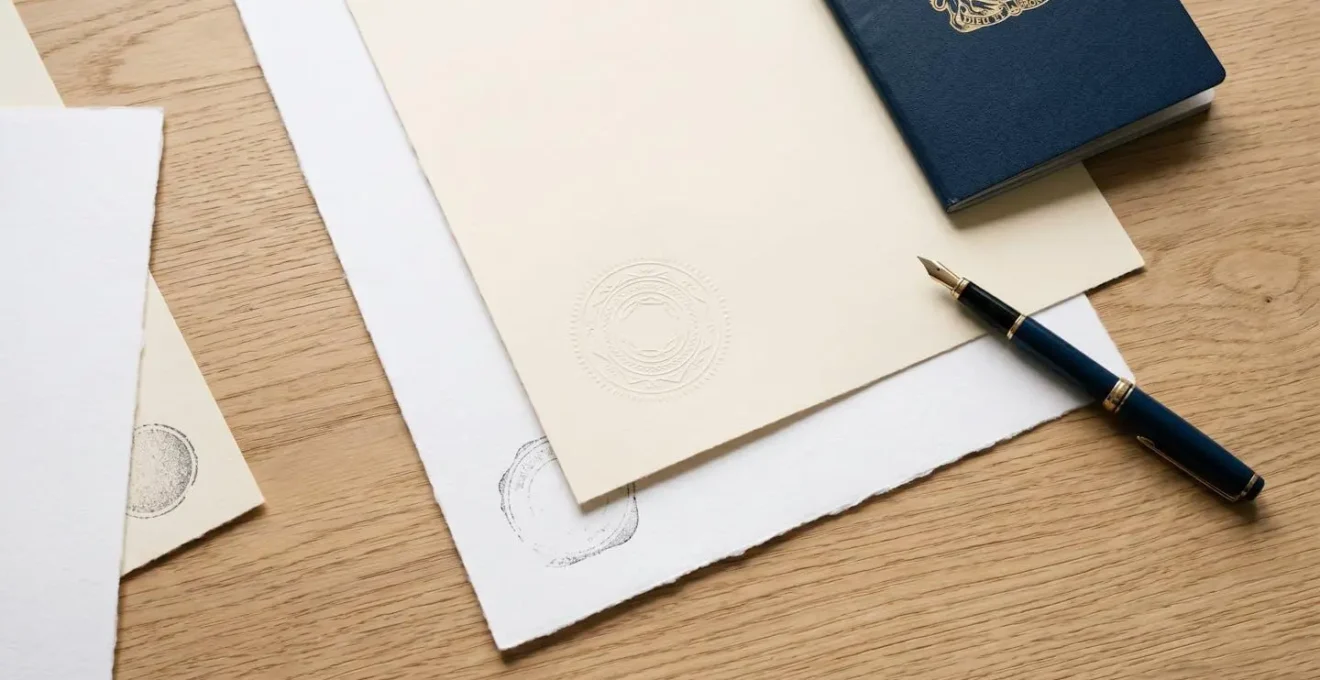
The legalization process is a multi-step chain of authentications:
- The document is certified by local authorities in the destination country.
- It is then authenticated by that country’s Ministry of Foreign Affairs.
- Finally, it must be taken to the embassy or consulate of your home country within the destination country for a final stamp of approval.
This distinction is the ultimate test of procedural compliance. Showing up at a government office in your home country with a non-apostilled (or non-legalized) foreign marriage certificate is the equivalent of showing up with a souvenir. It has no legal standing. Verifying your destination’s status regarding the Hague Convention is a non-negotiable step.
Key Takeaways
- A destination wedding is a legal procedure; compliance with the foreign jurisdiction’s rules on residency, witnesses, and documents is not optional.
- The safest strategy for travel is to book all honeymoon arrangements in the name that appears on your current passport, not your future married name.
- The most effective way to avoid complex, expensive, and stressful foreign bureaucracy is to have a simple, legal civil ceremony at home and a separate symbolic ceremony at your destination.
Why You Might Need a Civil Ceremony at Home Before Your Destination Wedding?
After reviewing the complex web of residency requirements, document translations, witness qualifications, and apostille procedures, a critical strategic question emerges: is it worth it? For a growing number of couples, the answer is no. Instead, they are choosing a smarter, safer, and more cost-effective approach: the “symbolic” destination wedding. This strategy involves getting legally married in a simple, low-cost civil ceremony in your home country first, followed by a beautiful, personalized (but not legally binding) ceremony at your dream destination.
This is not a compromise; it is a strategic decision to separate the legal contract of marriage from the emotional celebration. In fact, according to destination wedding experts, symbolic ceremonies are now the most common choice for U.S. couples marrying overseas because they remove the immense stress and risk of navigating foreign bureaucracy. This approach provides certainty and freedom, allowing you to focus completely on the celebration itself without worrying if a procedural error could invalidate your marriage.
The benefits of this two-step approach are overwhelming from a compliance and risk-management perspective:
- Guaranteed Legality: Your marriage is 100% legal and recognized in your home country without any doubt or further steps.
- Massive Cost Savings: A local courthouse ceremony can cost less than $100, compared to the thousands you might spend on certified translations, apostilles, and international courier fees.
- Zero Stress: You completely bypass all foreign legal requirements: no blood tests, no residency periods, no document authentication sagas.
- Immediate Legal Protection: You gain instant access to all spousal rights regarding property, inheritance, and medical decision-making.
- Total Flexibility Abroad: Your destination ceremony can be officiated by a friend, held anywhere you like, and scripted however you wish, free from legal constraints.
By handling the legalities at home, you transform your destination wedding from a high-stakes legal proceeding into a pure, joyful celebration of your commitment. It is the most logical and secure path for couples whose priority is a beautiful experience without the risk of a legal nightmare.
Ultimately, ensuring your marriage is legally sound is the most important part of your wedding. By prioritizing procedural compliance and making an informed decision between a foreign legal ceremony or a symbolic one, you are building the foundation of your future on solid ground. For couples seeking absolute certainty and peace of mind, the most prudent next step is to evaluate the simple, secure option of a civil ceremony in your home jurisdiction.