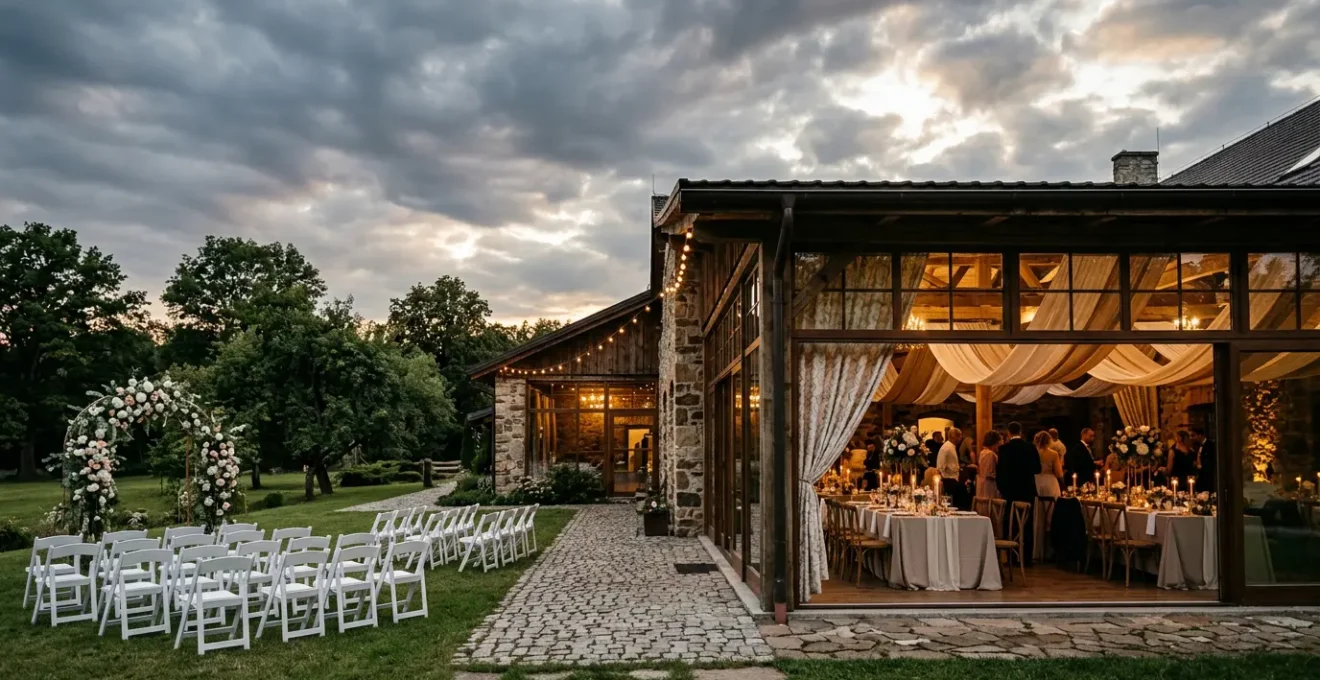
In summary:
- A rain plan is a strategic risk management operation, not a last-minute scramble.
- Key decisions are driven by vendor logistics and safety thresholds, not just the weather forecast.
- The goal is to preserve your wedding’s aesthetic and guest experience, even when moving indoors.
- Understanding the “why” behind tent costs, lighting design, and wind ratings gives you control.
The dread of an ominous weather forecast hangs over every couple planning an outdoor wedding. You’ve spent months, even years, perfecting a vision of a sun-drenched ceremony and a reception under the stars. The common advice is to “embrace the rain” or buy some pretty umbrellas. But for couples terrified that a downpour will wash away their carefully curated aesthetic, this feels like a platitude, not a plan.
The fear isn’t just about getting wet; it’s the fear of compromise. It’s the worry that your beautiful, open-air celebration will be relegated to a drab, soulless conference room. But what if the key to a successful Plan B wasn’t about accepting a lesser version of your day, but about executing a strategic pivot? A truly effective rain plan is an exercise in risk mitigation, one that protects your financial investment, your guests’ comfort, and, most importantly, the aesthetic integrity of your wedding.
This guide moves beyond generic advice to give you the operational logic of a weather-proof wedding. We will dissect the critical decision timelines, demystify the costs, and provide actionable strategies to ensure your backup plan is so good, you’ll almost hope for a little rain. By understanding the logistical chain and the principles of contingency planning, you can build a Plan B that feels intentional, romantic, and anything but a compromise.
This article provides a detailed breakdown of the strategic decisions you need to make. Explore the sections below to master every facet of your wedding’s weather contingency plan.
Table of Contents: A Strategic Guide to Your Wedding Rain Plan
- The “6-Hour Rule”: When to Make the Final Call to Move Indoors?
- Why You Pay a 50% Deposit for a Tent You Might Not Use?
- Walkways and Mats: How to Protect Shoes if it Rained Yesterday?
- How to Light a Drab Conference Room Backup Plan to Look Romantic?
- How to Spin a Rainy Day so Guests Think It’s Cozy, Not Ruined?
- Why Tall Centerpieces Are a Disaster for Coastal Receptions?
- The Wind Rating Mistake That Can Collapse Your Reception
- Tent or Ballroom: Which Indoor Backup Option Saves Your Photos in a Storm?
The “6-Hour Rule”: When to Make the Final Call to Move Indoors?
One of the most nerve-wracking decisions is choosing the exact moment to activate your rain plan. The temptation is to check the forecast weeks in advance, but this often causes more stress than it solves. The reality is that meteorological precision increases dramatically closer to the event. In fact, specific hourly weather forecasts can be pinpointed accurately only within a 0-36 hour window. Making a call before this timeframe is often based on speculation, not data.
The decision isn’t just about precipitation; it’s about the operational timeline of your vendors. A band may need three hours to move and set up their equipment indoors, while a caterer might need four hours to relocate a field kitchen. Your florist might need two hours to move an elaborate arch. The “final call” is therefore not an arbitrary time but the last possible moment you can give your vendors the green light without compromising their ability to execute their services flawlessly. This requires creating a reverse-engineered timeline based on the most time-intensive vendor constraint.
Before the wedding week, you must establish a clear decision-making protocol. Negotiate these timelines with each vendor and get them in writing. Who has the final say—the couple, the planner, or the venue manager? A seasoned planner will often take the lead, making the call based on logistical necessity rather than emotion. This removes the burden from you and ensures the decision is made to protect the integrity of the event. Continuously monitor the weather, but avoid making the final call more than 48 hours out unless your contracts demand it.
Why You Pay a 50% Deposit for a Tent You Might Not Use?
It can feel frustrating to pay a significant non-refundable deposit for a tent you might not even use. This fee, often 50% of the total rental cost, isn’t just a placeholder; it’s a critical component of what makes a high-quality rain plan possible. Think of it not as a potential loss, but as a contingency investment—an insurance policy for your wedding’s aesthetic and your guests’ comfort. With wedding tent rentals typically costing between $1,500 and $6,000, this deposit secures far more than just the canvas.
The business model of a tent rental company is built on logistics, not just equipment. As wedding planners know, when you book a tent, the company must reserve the specific structure, sidewalls, and flooring from their limited inventory. More importantly, they must schedule a specialized labor crew and dedicated trucking resources for both setup and teardown. Your deposit guarantees that this entire logistical chain is held exclusively for you, preventing the company from booking another event on that high-demand Saturday.
In recent years, labor shortages have made this reservation even more critical. There is a finite amount of skilled manpower and a limited number of trucks available, especially during peak season. The deposit compensates the company for the business they must turn away by holding these resources for your event. Without this financial commitment, it would be impossible for tent companies to guarantee availability on short notice, effectively making reliable rain plans impossible. It’s the price of certainty in an uncertain situation.
Walkways and Mats: How to Protect Shoes if it Rained Yesterday?
A successful rain plan addresses not just the downpour on the day, but the aftermath: soggy, muddy ground. Even a light rain the day before can turn a beautiful lawn into a treacherous landscape for guests in heels or formal footwear. The solution lies in protecting the ground and, by extension, your guests’ comfort and your wedding’s sophisticated atmosphere. The goal is to create a seamless transition from arrival to celebration, ensuring no one has to worry about ruining their shoes.
This is where practical elegance comes into play. Installing elevated interlocking floors or even portable wooden dance floor sections as walkways is the most effective solution. These options provide a stable, dry surface that is accessible for everyone, including guests in wheelchairs. For a more rustic look, rolled-out aisles of burlap or coir matting can work, but they must be secured to prevent tripping hazards. The key is to think beyond just a path to the ceremony; consider all high-traffic areas, including the path to restrooms and from the parking area.

To elevate the guest experience further, consider setting up a “comfort station” at the entrance. This thoughtful touch can include shoe-cleaning kits with brushes and towels, a basket of heel protectors, or even a “shoe check” service. Offering complimentary personalized slippers or flip-flops for guests to change into is a playful and highly appreciated gesture. Remember, full flooring inside the tent is also a must. The ground under reception tables can become just as wet and muddy, and addressing this “hidden ground” problem is crucial for overall comfort.
How to Light a Drab Conference Room Backup Plan to Look Romantic?
The greatest fear of moving indoors is often the venue itself: a hotel ballroom or conference room with fluorescent lighting, patterned carpets, and uninspired walls. However, with a strategic approach to lighting, you can completely transform a sterile space into an intimate and romantic environment, preserving your wedding’s aesthetic integrity. The key is to ignore the existing lighting and build your own atmosphere from the ground up using a three-layered design system.
Uplighting is one of the most cost-effective ways to create a dramatic and personalized wedding look.
– 219 Productions Event Lighting Specialists, Stunning Uplighting Wedding Ideas Guide
The foundation of this transformation is the ambient layer. This is achieved with uplighting—placing LED lights on the floor to wash the walls with color. Choosing warm tones like amber, soft white, or blush instantly neutralizes unappealing wall colors and visually raises the ceiling, making the space feel larger and more intentional. Next, add the task layer with pin-spotting. These are focused beams of light that highlight key elements: your floral centerpieces, the wedding cake, and the sweetheart table. This creates depth, drama, and directs your guests’ attention to the beautiful details you’ve planned.
Finally, the accent layer adds personality. Using gobo projectors, you can cast custom patterns onto the walls, ceiling, or dance floor. This could be your monogram, a floral motif that matches your invitations, or an abstract texture that adds visual interest to a blank surface. Combined with strategic draping to hide emergency exit signs or unflattering art, this layered lighting approach doesn’t just mask the room’s flaws—it creates a completely new, immersive environment that feels designed, not defaulted to.
How to Spin a Rainy Day so Guests Think It’s Cozy, Not Ruined?
When the rain plan is activated, the most powerful tool you have is perspective. Your attitude as a couple sets the tone for everyone. If you treat the change of plans as a disaster, your guests will feel it. But if you frame it as an opportunity for an even more intimate and cozy celebration, they will embrace it. The goal is to shift the narrative from “ruined” to “romantic” by creating a multi-sensory experience that makes guests feel comfortable, warm, and cared for.
Engage all five senses to build this cozy atmosphere. For touch, provide baskets of soft blankets or elegant pashminas for guests to wrap themselves in. For smell and taste, introduce warm and comforting elements like a gourmet hot chocolate bar, a hot toddy station, or servers passing trays of warm apple cider. The sound of rain can be a beautiful, natural soundtrack. For hearing, work with your DJ or band to create a curated playlist of acoustic or mellow music that complements, rather than competes with, the sound of the storm outside.

Visually, embrace the intimacy that a smaller indoor space provides. Dim the lights and use an abundance of candlelight to create a warm, inviting glow. This is your sight cue. Finally, leverage the closer quarters for engagement. An indoor setting is perfect for activities that encourage interaction, like a “roaming” guest book passed from table to table, a Polaroid photo station with fun props, or even “wedding speech bingo” cards to keep guests engaged during the toasts. By making the space a hub of warmth and connection, the rain outside becomes a charming backdrop to a uniquely intimate affair.
Why Tall Centerpieces Are a Disaster for Coastal Receptions?
While a rain plan often focuses on precipitation, a far more destructive and common element at outdoor venues—especially coastal ones—is wind. Wind can wreak havoc on your decor, and no element is more vulnerable than tall centerpieces. While they can be visually stunning, lofty floral arrangements or towering candelabras act like sails, creating a dangerous “Sail Effect” that poses a significant risk to your reception’s safety and aesthetic.
The physics are simple: the larger and taller the arrangement, the more wind it catches. A sudden gust can easily topple a top-heavy centerpiece, potentially shattering a vase, knocking over glassware, and creating a hazard for guests seated at the table. In strong winds, this effect can even destabilize the entire table. For this reason, experienced planners and florists will always recommend low, weighted arrangements for any outdoor setting. Using LED candles instead of real flames is also a non-negotiable safety measure, as wind can extinguish or, worse, spread flames.
To achieve a lush look without the risk, there are several beautiful, wind-proof alternatives. Consider these options:
- Low Floral Runners: Lush, low-lying arrangements that run the length of the table provide immense visual impact without the height risk.
- Bud Vase Collections: Grouping multiple small, heavy-bottomed bud vases creates a chic, eclectic look that is inherently stable.
- Heavy Terrariums or Fruit-scapes: Using weighted glass terrariums with succulents or designing low-profile arrangements with fruit and LED candles offers both beauty and stability.
–
A crucial part of your risk mitigation strategy is ensuring your decor choices work for both your outdoor plan and your indoor backup. Tall centerpieces that might be fine outdoors on a calm day may not even fit under the lower ceilings of a tent or ballroom, making low arrangements a smarter, more versatile choice from the start.
Key Takeaways
- A rain plan’s success depends on a data-driven decision timeline, not emotional reactions to a forecast.
- Contingency costs like tent deposits are a necessary investment in logistical certainty and risk management.
- Transforming a backup space is about strategic layering of light and texture to preserve your wedding’s aesthetic integrity.
The Wind Rating Mistake That Can Collapse Your Reception
While a tent is the cornerstone of most rain plans, not all tents are created equal. The single most critical safety factor is its wind rating, and misunderstanding or ignoring this can have catastrophic consequences. A professionally installed, engineered frame tent is designed to withstand significant weather, but it has its limits. According to tent safety research, it is essential to evacuate a tent when sustained wind speeds reach 35-38 mph. While some engineered tents can handle more, this is a standard safety threshold.
The most common and dangerous mistake is assuming any tent will do, or that the wind rating is guaranteed. The certified rating is only valid if the tent is anchored correctly. The superior method for anchoring is deep staking into grass or soil. Water barrels or concrete blocks are significantly less secure and often void the manufacturer’s wind rating. Improper anchoring is the primary reason tents fail in high winds. This makes it absolutely essential to verify the anchoring plan with your rental company.
Your due diligence as part of your risk management is to have a frank conversation with the rental company. Don’t be afraid to ask for the documentation and specifics. A reputable company will welcome these questions and provide clear answers, ensuring you are making an informed decision about the safety of your guests.
Your Action Plan: Critical Wind Rating Verification
- Request Documentation: Ask the rental company for the certified wind rating certificate. Clarify the difference between its ‘sustained wind’ rating and its ‘wind gust’ rating (in mph).
- Verify Anchoring Method: Confirm the tent will be secured with deep staking, not just water barrels. Understand how the rating is affected if installation is on a hard surface like asphalt.
- Confirm Proper Staking: Verbally confirm that the crew is trained to stake the tent according to manufacturer specifications, as improper anchoring is the leading cause of failure.
- Assess Surface Compatibility: Discuss how hard surfaces like concrete will be handled and if that requires different anchoring methods that might alter the wind rating.
- Develop a Plan C: If the forecast predicts winds that exceed your tent’s certified rating, you must have a pre-arranged Plan C with a hard-structure venue.
Tent or Ballroom: Which Indoor Backup Option Saves Your Photos in a Storm?
When your outdoor ceremony is no longer an option, the choice of backup venue—typically a tent or a ballroom—has a profound impact on one of your most lasting investments: your wedding photography. Both can be beautiful, but they present vastly different lighting scenarios that determine the final look and feel of your images. Choosing the right option for your desired aesthetic, and hiring a photographer skilled in that environment, is a critical strategic decision.
A tent with white or translucent walls acts as a giant softbox. It diffuses the natural, ambient light from the overcast sky, creating beautifully soft, even, and flattering light. This environment is ideal for photographers who specialize in a bright, airy, and romantic style. A ballroom, conversely, offers almost no usable natural light and requires complete control with artificial lighting. This is the domain of photographers who excel at creating dramatic, high-contrast, and moody editorial-style images using off-camera flash. One is not better than the other, but they produce fundamentally different results.
The following table, based on an analysis of backup plan options, breaks down the key photographic differences:
| Characteristic | Tent with White/Translucent Walls | Ballroom Indoor Space |
|---|---|---|
| Light Quality | Acts as giant ‘softbox’ – creates beautiful, soft, flattering, diffused natural light | Requires complete artificial light control with off-camera flash for quality results |
| Photo Style Best Suited | Bright and airy, romantic, soft editorial style | Dramatic, high-contrast, moody, editorial-style images |
| Photographer Skill Required | Moderate – natural light is forgiving | High – requires advanced technical skill with artificial lighting |
| Common Photo Problems | Clear plastic walls cause glare and reflections; central poles obstruct key shots | Dark-colored walls, low ceilings, and excessive mirrors create challenging conditions |
| Weather Independence | Still affected by severe storms; ambient natural light varies with sky conditions | Complete independence from outdoor weather conditions |
The most important step is vetting your photographer. Don’t just ask if they’re “comfortable with rain.” Ask to see a full wedding gallery from a rainy day in a tent, and another from a ballroom. This will reveal their true ability to master these challenging environments and help you align your backup venue with a photographer who can make it shine, ensuring your memories are captured beautifully, no matter the weather.
By reframing your rain plan as a series of strategic, logical decisions, you take back control. You are no longer at the mercy of the weather, but are instead a capable manager of risk. This proactive approach ensures that no matter what the sky looks like, your wedding day will be a beautiful, seamless, and joyful reflection of your vision. To begin this process, start by having these critical conversations with your venue and vendors today.