
Contrary to popular belief, a civil ceremony at home isn’t a “lesser” wedding; it’s a strategic logistical firewall that protects your destination celebration from derailing due to hidden bureaucratic traps.
- Many countries have non-negotiable legal hurdles like mandatory medical tests, strict residency periods, and government office-hours-only ceremonies.
- Your foreign marriage certificate can be legally void in your home country without a specific multi-step authentication process called an Apostille.
Recommendation: Decouple the legal paperwork from the emotional celebration. Sign the papers at home to free yourself to have a purely symbolic, stress-free, and personalized ceremony anywhere in the world.
The vision is clear: exchanging vows on a sun-drenched beach, in a historic European castle, or surrounded by lush tropical gardens. A destination wedding promises an unforgettable experience, combining travel, celebration, and romance. Many couples dive into planning, focusing on the venue, the guest list, and the aesthetic. They assume the legal part is just a bit of paperwork, a minor detail to be handled on-site. But this assumption can quickly turn the dream into a logistical nightmare.
The common advice is that getting legally married at home beforehand “simplifies things” or is “less stressful.” While true, this advice barely scratches the surface. It fails to convey the sheer number and complexity of the bureaucratic landmines that await unsuspecting couples abroad. We’re not just talking about extra forms; we’re talking about surprise blood tests, mandatory residency periods that are impossible for tourists to meet, and language barriers that require certified translators for every official interaction. The reality of international marriage law is often rigid, unforgiving, and completely indifferent to your wedding timeline.
But what if the key wasn’t just to simplify, but to strategically de-risk your entire wedding? This guide reframes the “at-home civil ceremony” not as a compromise, but as a powerful logistical firewall. By consciously separating the legal act of marriage (the paperwork) from the public celebration of your union (the party), you aren’t watering down your wedding—you are liberating it. You are ensuring that your beautiful, expensive, and emotionally significant destination event is shielded from bureaucratic friction, allowing it to be exactly what it should be: a pure celebration of your love, unburdened by legal constraints.
This article will walk you through the specific, often surprising, legal hurdles you might face in popular destination wedding locations. We will explore the hidden costs, the inconvenient timelines, and the critical documents required to make your marriage valid back home, demonstrating why a simple trip to your local city hall before you fly may be the smartest wedding decision you make.
Summary: Why You Might Need a Civil Ceremony at Home Before Your Destination Wedding?
- Symbolic vs. Civil: How to Make the “Fake” Ceremony Feel Real to Guests?
- The Medical Test Requirement That Surprises Couples in Mexico
- Why Hiring a Civil Judge Costs 3x More Than a Minister in Europe?
- How to Conduct a Bilingual Civil Ceremony Without Boring Half the Guests?
- The “Business Hours” Trap: Why You Can’t Marry on a Weekend in France?
- Mexico or Jamaica: Which Country Has Easier Marriage Laws for Foreigners?
- Why Your Local Notary Might Not Be Recognized Internationally?
- The Apostille Stamp: What It Is and Why Your Wedding Certificate Is Void Without It?
Symbolic vs. Civil: How to Make the “Fake” Ceremony Feel Real to Guests?
One of the biggest hesitations couples have about a home civil ceremony is the fear that their destination wedding will feel “fake” or inauthentic to them and their guests. This is a valid concern, but it’s rooted in a misunderstanding. A symbolic ceremony is not a fake wedding; it’s a celebration of vows, distinct from the legal contract. The key to making it feel real is to control the narrative and focus on what truly matters: your public commitment in front of loved ones. Instead of hiding the fact you’re already married, embrace it as part of your story.
Position the two events as distinct but equally important chapters. The home ceremony was “The Legal Chapter,” a private, practical step that solidified your partnership in the eyes of the law. The destination ceremony is “The Celebration of Vows,” the moment you share your personal promises and celebrate the union of your hearts with your community. This reframing immediately removes any sense of deception. You can even have the officiant briefly mention it: “On a Tuesday in October, in their hometown, they completed the legal paperwork that bound them together. Today, in this beautiful place, we celebrate the public union of their hearts and lives.”
To deepen the sense of authenticity, create rituals that are guest-focused. For example, during the ceremony, you could pass your wedding rings through the hands of every guest, asking them to “warm” the rings with their blessings and good wishes before you exchange them. This transforms passive observers into active participants. Furthermore, providing a simple ceremony program that explains the context can be incredibly effective: “Having already completed the legal formalities in our home country, we are overjoyed to share our personal vows and celebrate our marriage with you today.” This simple sentence manages expectations and reinforces that today is the main event.
Ultimately, the emotion and significance of a ceremony come from the intention and love present, not from the signature on a piece of paper. By being transparent and focusing on shared experience, your symbolic ceremony will feel more real and heartfelt than a legally-binding one rushed by a government official.
The Medical Test Requirement That Surprises Couples in Mexico
Mexico is a top choice for destination weddings, thanks to its stunning beaches and vibrant culture. However, many couples are blindsided by a particularly invasive and inconvenient legal requirement in many of its states: mandatory medical tests. To be legally married in Mexico, both partners are often required to undergo a blood test and sometimes even a chest X-ray. These tests must be performed in Mexico by a government-approved physician, adding an unexpected and often uncomfortable task to your wedding week itinerary.
This isn’t just a minor inconvenience; it’s a logistical and financial hurdle. The process involves scheduling appointments, traveling to a local clinic, and waiting for the results, all within a tight window before your wedding day. According to destination wedding planning data, these tests can cost around $200-$300 per person and typically have a 24-hour turnaround, consuming precious time that you’d rather spend relaxing with your guests. It’s a stark example of the “bureaucratic friction” that can disrupt the romantic fantasy of a destination wedding.

This requirement is a perfect illustration of why a home civil ceremony is a pragmatic solution. It creates a logistical firewall, protecting you from these foreign administrative procedures. By handling the legalities in your home country, you completely bypass the need for medical testing abroad, freeing up your time, money, and peace of mind.
Case Study: The Couple Who Dodged the Needle
A couple from Cleveland planning their dream wedding in Cabo, Mexico, discovered the blood test requirement during their research. As the bride later explained, “When we decided to have our wedding in Mexico, we looked into getting married legally there, but they have some strange requirements like giving blood.” Faced with this and the rule that all legal ceremonies must be in Spanish, they opted for a simple, legal ceremony in the bride’s parents’ backyard a week before flying to Cabo. This allowed them to have their beautiful, personalized beach celebration without the stress of a pre-wedding clinic visit.
This isn’t an isolated case. Thousands of couples make the same strategic choice each year, ensuring their time in paradise is spent on the beach, not in a waiting room.
Why Hiring a Civil Judge Costs 3x More Than a Minister in Europe?
When planning a wedding in many European countries, particularly those with a strong tradition of Napoleonic Code like France, Italy, or Spain, couples often encounter a surprising cost discrepancy. The title’s “3x more” is a common anecdotal observation, but the underlying reason is structural: you are not just hiring a person, you are engaging a government service with all its associated costs and limitations. A civil judge or mayor’s official is a state employee, and their services are priced based on government fee structures, not a competitive market.
This cost includes not only their time but often administrative fees, travel expenses if the ceremony is off-site (which is rarely allowed), and overtime if it’s outside standard hours (even more rarely allowed). In contrast, a symbolic officiant or minister operates as a private contractor. They have the flexibility to set their prices based on demand, experience, and the level of personalization offered. This competitive environment naturally keeps prices more accessible. The high cost of a civil official is a classic example of bureaucratic friction, where rigid state systems create financial barriers.
Furthermore, the cost is just one part of the equation. Availability is another. A symbolic officiant is dedicated to your event, while a civil official may be performing several marriages in a day, leading to a less personal and often rushed experience. In a top-tier destination, where a €30,800 average cost for a wedding is the norm in places like France, every expense is scrutinized. Paying a premium for a rushed, impersonal, and logistically complicated legal ceremony often doesn’t make financial sense when a more affordable, flexible, and personalized symbolic ceremony is an option.
By opting for a civil ceremony at home for a nominal fee, you free up your budget to hire the perfect symbolic officiant abroad who can dedicate their full attention to crafting a ceremony that reflects your unique story.
How to Conduct a Bilingual Civil Ceremony Without Boring Half the Guests?
A common challenge at destination weddings is the language barrier. If you’re having a legal ceremony abroad, it will almost certainly be conducted in the local language, as required by law. Even with a symbolic ceremony, you may have guests from different linguistic backgrounds. The goal is to create an inclusive experience where no one feels left out or bored. The worst-case scenario is a long, word-for-word translation that doubles the ceremony length and kills the emotional momentum.
The key is to be strategic with translation. Here are two effective approaches:
- The “Consecutive Summary” Method: Instead of translating every single line, the officiant delivers a full thought or paragraph (e.g., the introduction, a reading) in one language. Then, they or a second person provides a concise summary of that section in the other language. This keeps the flow moving and ensures everyone grasps the meaning without tedious repetition.
- The “Bilingual Weave” Method: This works best with a skilled bilingual officiant. They can artfully switch between languages, addressing different sides of the audience or using one language for certain parts (like legal declarations) and the other for more personal elements (like storytelling). The key is balance and ensuring both languages get meaningful “air time.”
Beyond the spoken word, printed materials are your best friend. A beautifully designed ceremony program is essential. It should contain key parts of the ceremony—like the vows and any readings—translated side-by-side. This allows guests to follow along at their own pace, understand the gravity of the words being spoken, and feel connected to the moment, even if they don’t understand the language being spoken. This simple tool empowers guests and makes them feel considered.
Ultimately, a successful bilingual ceremony isn’t about perfect, literal translation. It’s about conveying emotion and meaning. A warm smile, a meaningful glance between the couple, and the shared joy of the occasion are universal languages that everyone will understand.
The “Business Hours” Trap: Why You Can’t Marry on a Weekend in France?
Imagine planning a picturesque Saturday afternoon wedding at a French château, only to discover that it’s legally impossible. This is the reality for many couples who run into the “Business Hours Trap.” In France, and many other European countries with a civil law system, legal marriage is a government function, not a private event. This means it must be performed by a civil servant at the local Mairie (City Hall), and these offices operate like any other government agency: they are typically open Monday to Friday, from 9 AM to 5 PM, and are firmly closed on weekends and public holidays.
This single rule can completely derail the logistics of a destination wedding, which are almost always planned for a weekend to accommodate guests’ travel schedules. The idea of getting married on a Tuesday morning in a municipal office is a far cry from the romantic vision that inspired the destination choice in the first place. This is not a flexible rule; it’s a non-negotiable aspect of the country’s civil code. It’s a prime example of how local administrative culture can create an impassable logistical barrier for tourists.
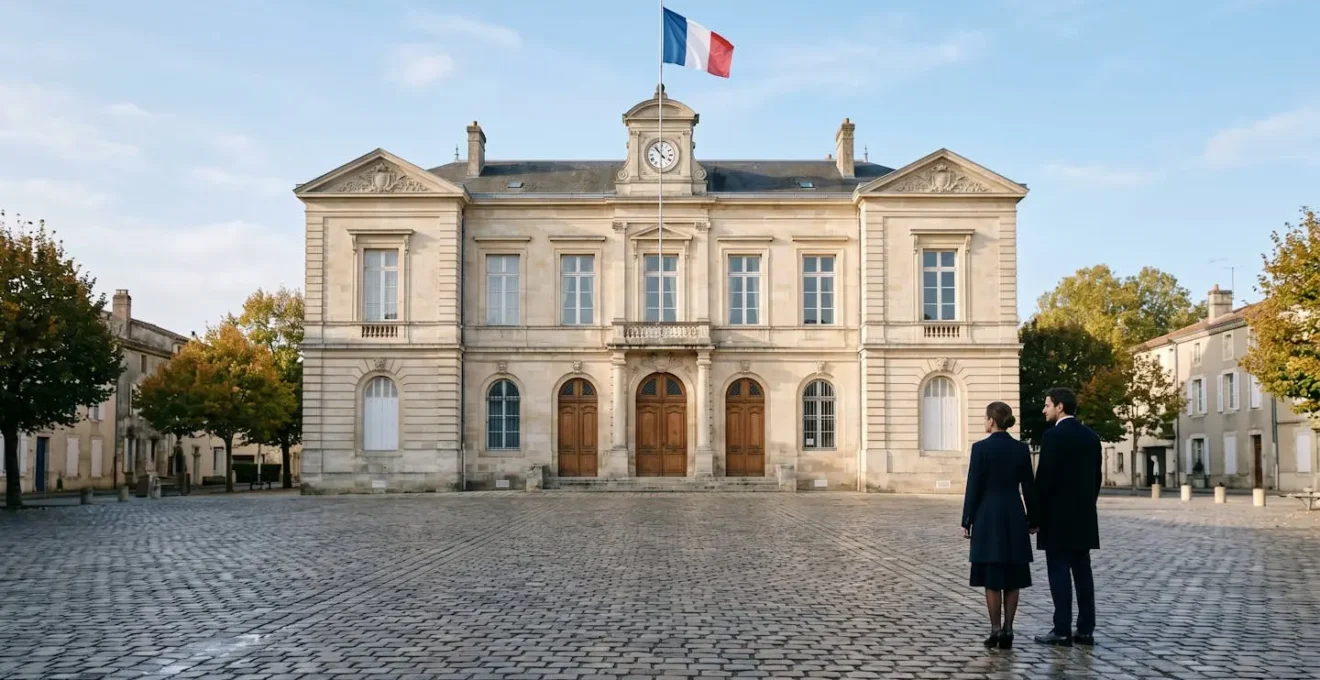
The problem is often compounded by another significant hurdle: residency requirements. To make the “business hours” issue even more challenging, most French Mairies require that at least one of the partners prove they have resided in that specific town for a minimum of 30 to 40 consecutive days prior to the wedding day. For a tourist couple, this is simply not feasible.
Case Study: The French Residency Roadblock
As one comprehensive guide to destination weddings explains, the French model makes legal marriage for non-residents practically impossible. “Many couples choose a symbolic ceremony abroad with a legal wedding at home” specifically to avoid these bureaucratic constraints. The combination of the residency requirement and the strict office hours means that the dream of a legal wedding in a quaint French village remains just that—a dream—unless one is prepared to move there for over a month.
By executing the legal marriage at home, you are free to have your symbolic ceremony at that beautiful château any day of the week, at any time of day, completely unbound by the Mairie’s schedule.
Mexico or Jamaica: Which Country Has Easier Marriage Laws for Foreigners?
For couples set on a legally binding ceremony in the Caribbean, the choice of country can have a massive impact on the ease and cost of the process. Mexico and Jamaica are both incredibly popular destinations, but their legal requirements for foreigners are worlds apart. While both offer stunning scenery, Jamaica has a clear and significant advantage in terms of logistical simplicity, which is why 34% of all Caribbean destination weddings take place there.
The primary difference lies in the concept of “bureaucratic friction.” Jamaica’s system is designed to be tourist-friendly, minimizing hurdles to encourage wedding tourism. Mexico’s laws, while not intentionally difficult, are simply the standard civil requirements for all residents, which are not adapted for short-term visitors. This results in significant extra steps, costs, and time commitments for couples choosing to marry legally in Mexico.
A side-by-side comparison makes the difference starkly clear. From residency periods to medical tests, Jamaica’s requirements are consistently less demanding. The following table, based on data from destination wedding planners, breaks down the key legal hurdles in each country.
| Requirement | Jamaica | Mexico |
|---|---|---|
| Residency Requirement | 24 hours minimum | 4 full business days (some states) |
| Medical Tests Required | None | Yes – Blood test + X-ray (some states) |
| Test Cost | $0 | $200-$300 per person |
| Document Translation | Not required (English accepted) | Required – All documents to Spanish |
| Timeline to Certificate | 7 days to 1 month | Few days to 2 weeks |
| Arrival Timeline | At least 48 hours before wedding recommended | Minimum 3-5 days for medical tests and paperwork |
For couples prioritizing logistical ease and wanting a legally binding ceremony abroad, Jamaica presents a much smoother path. For those whose hearts are set on Mexico, this comparison strongly reinforces the strategic wisdom of handling the legalities at home before you depart.
Why Your Local Notary Might Not Be Recognized Internationally?
A common and dangerous misconception among couples is that any official-looking authority figure can legalize their marriage. Many assume their local Notary Public, who can witness and certify important documents, can also officiate or validate their wedding abroad. This is fundamentally incorrect and stems from a misunderstanding of jurisdictional authority. A notary’s power is granted by their home state or province and has zero legal force outside that specific territory.
A notary’s primary function is to verify identity and witness signatures on documents to deter fraud. This act of notarization does not grant them the power to perform a marriage ceremony, a right reserved for specific civil or religious officials designated by local law. As the U.S. Department of State makes explicitly clear, even government employees are bound by these rules.
U.S. embassy and consulate employees cannot perform marriages in foreign countries. Local law decides who can perform marriages.
– U.S. Department of State, Marriage Abroad Advisory
This principle is absolute: the only people who can legally marry you in a foreign country are those individuals specifically authorized by that country’s government. Relying on your home-country notary to officiate your destination wedding will result in a ceremony that is emotionally meaningful but legally worthless. To avoid this critical error, it’s essential to understand the proper chain of authority.
Thinking your notary can help is a classic trap. Instead, the pragmatic approach is to perform the legal act with a recognized official in your hometown, then work with a symbolic officiant of your choice at your destination, completely avoiding any questions of international legal authority.
Key Takeaways
- A home civil ceremony acts as a “logistical firewall,” protecting your destination event from unexpected bureaucratic hurdles.
- Hidden requirements like mandatory blood tests (Mexico) or strict 9-to-5 government hours (France) can derail weekend wedding plans.
- Your foreign marriage certificate is not automatically valid at home; it requires a specific authentication process called an Apostille to be legally recognized.
The Apostille Stamp: What It Is and Why Your Wedding Certificate Is Void Without It?
Perhaps the most critical and least understood trap in destination weddings is the post-ceremony paperwork. Many couples who successfully navigate the foreign legal requirements and get married abroad return home with their marriage certificate, assuming it’s all done. They are shocked to later discover, often when trying to change a name or file taxes, that their certificate is not legally recognized in their home country. This is because it’s missing a crucial piece of international authentication: the Apostille stamp.
An Apostille is a specialized certificate, attached to your original marriage license, that authenticates it for use in other countries. It is part of an international treaty, the 1961 Hague Convention, designed to simplify the process of legalizing documents across borders. For your foreign marriage certificate to be valid in your home country (and vice versa), it must go through this official authentication process. Currently, the international apostille system covers 129 countries that are part of the Hague Convention, including the US, UK, Australia, and most of Europe.
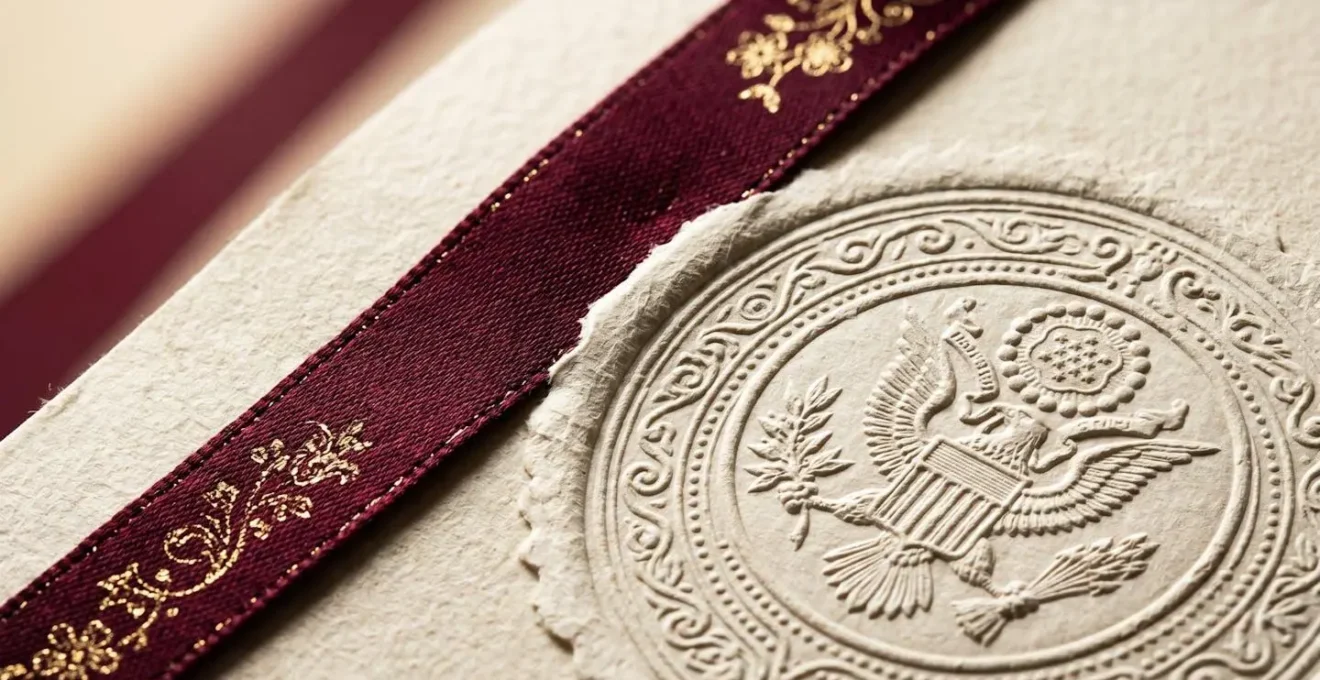
Obtaining an Apostille is not automatic. It involves a specific “chain of authentication” where your marriage certificate must be sent to a designated national authority in the country where you were married (e.g., the Ministry of Foreign Affairs). They verify the document’s authenticity and affix the Apostille stamp. This process can take weeks or even months and often requires navigating a foreign bureaucracy from afar. Forgetting or failing to complete this step effectively renders your foreign wedding legally void back home.
Your Action Plan: The Chain of Authentication for International Recognition
- Marriage Performance: The marriage must be performed by a legal authority in the destination country.
- Certificate Issuance: A marriage certificate is issued by the local civil registry office where the wedding took place.
- Submission to National Authority: The certificate must be sent to the designated national authority (e.g., Ministry of Foreign Affairs or Secretary of State) of that country.
- Apostille Affixation: The competent authority affixes the official Apostille stamp or certificate to your marriage license.
- International Recognition: The document is now legally recognized in all other Hague Convention member countries, including the US, UK, and most of Europe.
This final, complex hurdle is arguably the single most compelling reason to opt for a domestic civil ceremony. It entirely eliminates the need for international document authentication, ensuring your marriage is legal and recognized from the moment you sign the papers at home.