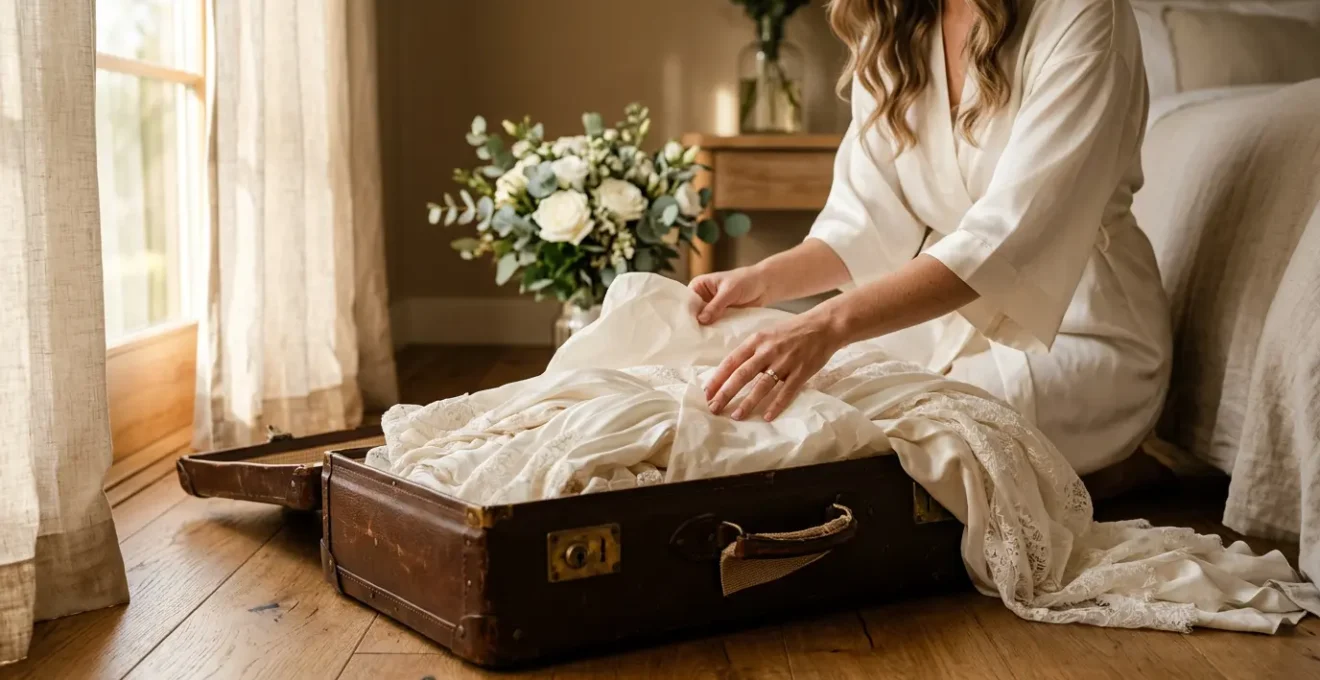
The key to a travel-proof wedding dress isn’t a better garment bag—it’s choosing a gown engineered for resilience from the start.
- Focus on high-performance fabrics like synthetic crepes and chiffons that actively resist wrinkles.
- Schedule your final fitting with specific travel considerations, such as a “comfort allowance” for bloating.
- Match your dress’s construction and your footwear to your venue’s reality, not just its aesthetic.
Recommendation: Think of your dress as high-performance apparel designed for a specific mission, not as a fragile artifact.
The image is a classic bridal nightmare: you, on a plane, wrestling a colossal garment bag, praying the flight attendant will find a spare closet that doesn’t exist. The standard advice—buy a sturdy bag, ask nicely, hope for the best—treats your wedding dress as a fragile, passive object at the mercy of travel chaos. You’re told to pack a steamer and cross your fingers, focusing all your energy on protecting the dress from the journey.
But what if this approach is fundamentally backward? As a bridal stylist specializing in destination weddings, I can tell you the secret to a flawless arrival isn’t in how you pack the dress, but in the dress itself. The most experienced brides don’t just buy a dress; they select a piece of high-performance bridal apparel engineered for resilience. They prioritize material science over tradition and structural integrity over fleeting trends.
This guide will shift your perspective. We won’t just talk about logistics; we will deconstruct the very fabric, fit, and function of a travel-ready gown. We will explore why certain materials thrive in humidity while others fail, how to time your alterations to account for air travel, and why the right shoes are as critical as the right dress. By thinking like a material strategist, you can choose a gown that works with your journey, not against it, ensuring you step off the plane as radiant and stress-free as you’ll be when you walk down the aisle.
This article provides a complete framework for selecting a destination-ready wedding dress. Below, you will find a detailed breakdown of each critical decision point, from fabric science to day-of logistics.
Summary: The Traveler’s Guide: Choosing a Wedding Dress That Survives a 12-Hour Flight
- Why Synthetic Blends Outperform Silk for Tropical Destinations?
- When to Schedule Your Final Fitting If You Fly 3 Days Before the Wedding?
- The Heavy Beading Mistake That Causes Overheating
- Handheld Steamer or Professional Service: What Do You Really Need On-Site?
- Block Heels or Wedges: Which is Better for Uneven Cobblestones?
- Open-Air Pavilion vs. Air-Conditioned Ballroom: The Trade-off for Tropical Views
- How to Plan a Seamless Departure for Your Honeymoon Immediately After the Reception?
- How to Get Candid Photos If You Are Awkward in Front of the Camera?
Why Synthetic Blends Outperform Silk for Tropical Destinations?
When you picture a luxurious wedding gown, natural fibers like silk often come to mind. However, for a tropical destination wedding, this traditional choice can be a significant liability. Silk, especially delicate varieties like dupioni, is highly susceptible to humidity. It absorbs moisture, leading to visible water spots and a limp, heavy feeling. Worse, it wrinkles if you so much as look at it, and those creases can be stubborn to remove, especially in a humid environment where fabrics struggle to dry.
This is where modern, high-performance synthetic blends demonstrate their superiority. Materials like polyester chiffon, synthetic crepe, and organza are engineered for what I call “material resilience.” They are inherently wrinkle-resistant, meaning your dress can be compressed in a garment bag for hours and still hang out with minimal creasing. Their hydrophobic nature means they repel humidity rather than absorbing it. Advanced blends even offer moisture-wicking properties, actively pulling perspiration away from your skin to keep you cooler and more comfortable during an outdoor ceremony. While “synthetic” may not sound as romantic as “silk,” the practical result—a fresh, flawless, and comfortable bride—is the ultimate luxury.
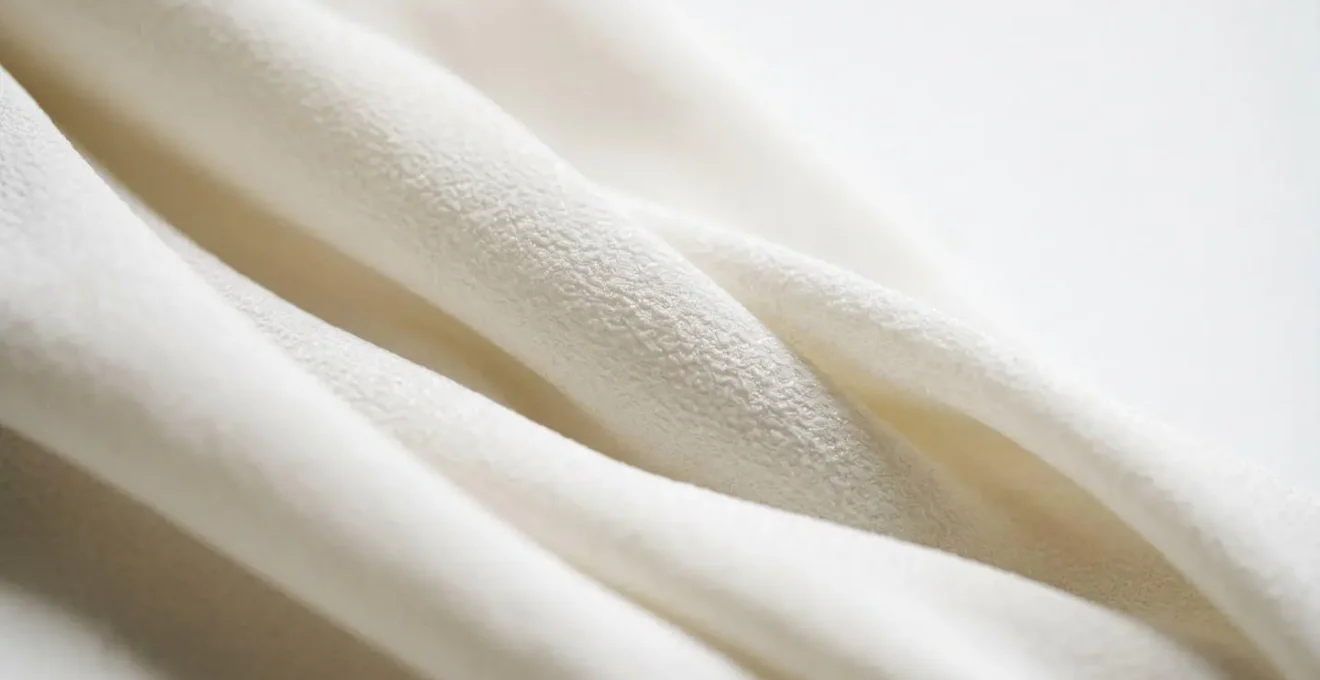
As this close-up shows, the intricate weave of modern synthetic crepe offers a beautiful drape and texture that rivals natural fibers. Its true value, however, lies in its ability to maintain this structure and appearance, even after being packed for a long-haul flight. This focus on performance and resilience is the cornerstone of a successful destination wedding look.
When to Schedule Your Final Fitting If You Fly 3 Days Before the Wedding?
The standard advice for a final dress fitting—typically one to two weeks before the wedding—does not apply to a destination bride. Your body and your dress are about to undergo the unique stresses of air travel, and your fitting schedule must anticipate this. Scheduling your final fitting too early means you risk fluctuations in weight or water retention. Too late, and you have no buffer for last-minute adjustments or to properly pack.
The strategic sweet spot is 5 to 7 days before your departure. This timeframe is critical. It allows enough time for your seamstress to complete the final tweaks, but it’s close enough to your departure that your body is unlikely to change significantly. More importantly, it gives the dress time to “settle” after the alterations. Seams can relax and fabrics can drape slightly differently after being sewn. This window gives you a chance to see how the dress will truly hang before it gets packed.
This appointment is more than just a fitting; it’s a packing tutorial. Ask your seamstress to demonstrate the optimal way to fold or roll your specific gown. They know its construction better than anyone. This is also the time to discuss a crucial, often-overlooked detail: a “comfort allowance.”
Your Destination Wedding Fitting Plan
- Schedule your final fitting 5-7 days before departure to allow the dress to “settle” after alterations.
- Use the fitting as a packing tutorial: ask the seamstress to demonstrate the optimal folding technique for your dress.
- Discuss a “comfort allowance” of 2-3mm of ease in the waist and bust to accommodate air travel bloating.
- Bring your exact wedding day undergarments and shoes to ensure the hemline is perfect for the destination’s terrain.
- Request a small repair kit with spare thread and any beads from the designer.
- Coordinate your fitting date with your on-site steaming plan, working backward from the ceremony time.
By treating your final fitting as a strategic pre-travel checkpoint, you transform it from a simple tailoring appointment into the first step of a seamless journey for your gown.
The Heavy Beading Mistake That Causes Overheating
Elaborate, all-over beading can look breathtakingly opulent in a showroom, but on a bride in a tropical climate, it can quickly turn into a source of misery. The first issue is weight. While a simple dress might be light, a fully beaded gown can be surprisingly heavy; industry data shows that average wedding dresses weigh 7-11 pounds (3-5 kg), with heavy beading pushing a gown to the upper end of that scale or beyond. Lugging that weight through an airport is a workout in itself, but wearing it under the hot sun is a recipe for overheating.
Beading, especially when densely applied with glass beads, creates a heavy, non-breathable layer. It traps body heat and prevents air circulation, making you feel much hotter than the ambient temperature. Furthermore, the structural integrity of beading is a major travel concern. A single snag on an airplane seat or a rough piece of luggage can create a cascade of loose threads and lost beads, leading to a pre-ceremony repair emergency. While a small beading repair kit is essential for any embellished gown, prevention is the better strategy.
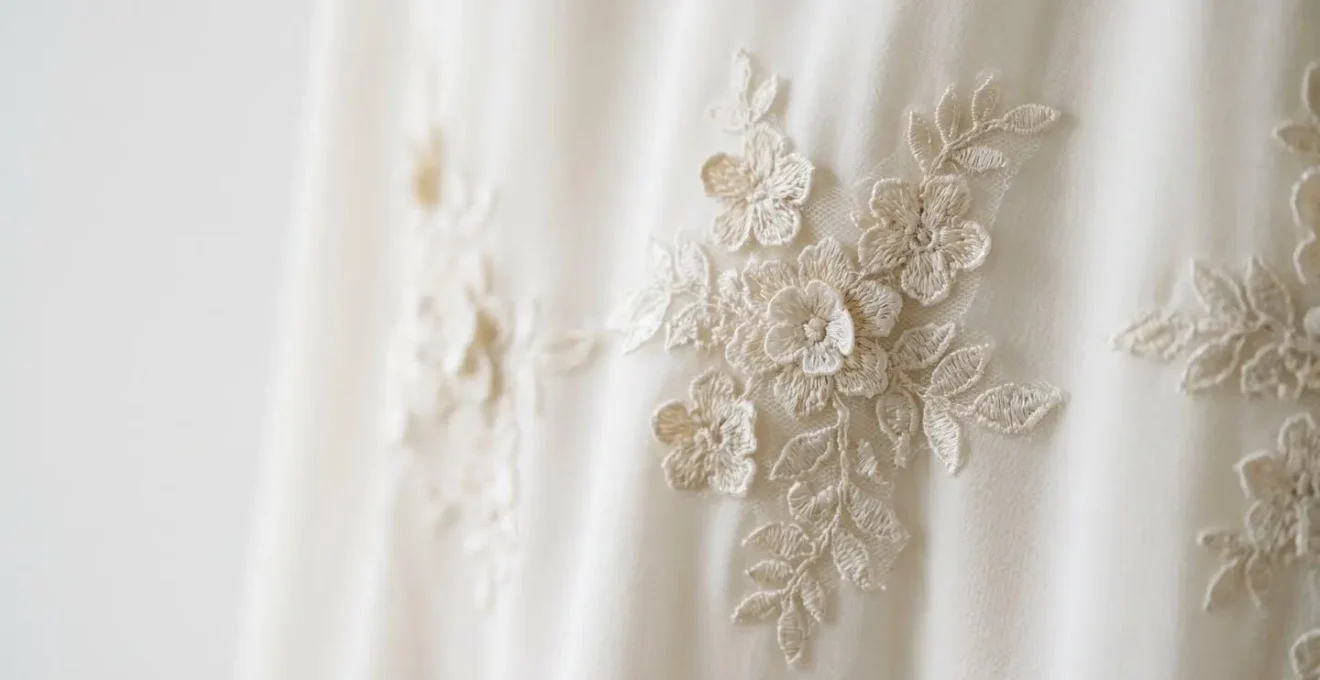
Consider lightweight alternatives that provide texture and detail without the weight and heat penalty. Three-dimensional floral appliqués, intricate lacework, or delicate embroidery offer the same visual richness as beading but with superior breathability and travel resilience. These elements are less prone to snagging and are significantly lighter, contributing to your overall comfort and peace of mind. Choosing these options is a strategic decision that prioritizes your experience on the day over a single, heavy aesthetic.
Handheld Steamer or Professional Service: What Do You Really Need On-Site?
The ubiquitous advice to “pack a handheld steamer” is well-intentioned but dangerously incomplete. While a quality travel steamer is a useful tool, it is not a universal solution. For certain fabrics, like heavy crepe or multi-layered tulle, a handheld unit may lack the power to remove deep-set travel wrinkles effectively. Worse, improper use—holding it too close or using tap water with high mineral content—can lead to water spots or even damage, especially on delicate materials. Relying solely on a DIY steaming job is a high-stakes gamble.
For any bride whose dress is an investment, arranging for a professional steaming service at your destination is the only truly stress-free option. These professionals use industrial-grade, vertical steamers that produce continuous, high-pressure steam, which is far more effective and safer than a consumer device. They understand how different fabrics react and have the expertise to work around delicate embellishments. The key is to vet them properly. Don’t just book the first service you find; ask them specific, technical questions to ensure they are qualified to handle a couture garment.
However, emergencies happen. If a professional service is unavailable or falls through, knowing the correct “last resort” method is crucial. This is where the often-mentioned “bathroom steam method” comes in, but it must be executed with caution.
The “Bathroom Steam Method” Safety Guide
The ‘bathroom steam method’ involves hanging the dress on a padded hanger from a door or high hook, running a hot shower with the door closed, and leaving the gown for 15-20 minutes. According to bridal care experts, this works best for light wrinkles on chiffon, tulle, and organza. Critical warnings: never let the dress touch wet surfaces, ensure the bathroom is clean beforehand, and test a small interior section first. This method should only be used as a backup when professional steaming is unavailable, as certain fabrics like dupioni, shantung, and taffeta can develop worse creases when exposed to moisture.
Ultimately, the choice between a handheld steamer and a professional service is a question of risk management. The professional service is an investment in certainty and peace of mind, making it the superior choice for a travel-savvy bride.
Block Heels or Wedges: Which is Better for Uneven Cobblestones?
Your choice of footwear is not just an accessory; it is a critical component of your bridal look’s structural integrity, especially for a destination wedding involving varied and unpredictable terrain. The romantic vision of walking down a historic cobblestone street can quickly become a clumsy reality if you’ve chosen the wrong shoe. The two most popular and practical options, block heels and wedges, each have distinct advantages and disadvantages depending on the surface.
Many assume wedges are the most stable option due to their continuous sole. While this is true for soft surfaces like grass or sand where they distribute weight and prevent sinking, they can be surprisingly treacherous on uneven cobblestones. The wide, flat base of a wedge can easily get caught between stones or wobble on a protruding edge, creating instability. In contrast, a well-proportioned block heel offers a superior solution for cobblestones. Its smaller, singular contact point is less likely to get trapped in gaps, allowing for more precise and stable foot placement. It provides the height and elegance of a heel with a much more secure foundation than a stiletto.
The decision involves a trade-off between surface performance and all-day comfort. The table below, based on an analysis of bridal footwear performance, breaks down the key differences.
| Feature | Block Heels | Wedges |
|---|---|---|
| Cobblestone Performance | Superior – singular pivot point less likely to catch between stones | Moderate – wider base can get stuck between gaps |
| Grass/Sand Performance | Moderate – can sink into soft surfaces | Superior – greater surface area distributes weight |
| Ankle Stability | High – reduces twisted ankle risk on uneven terrain | Medium – wider base but less precise foot placement |
| Sound on Stone | Audible click-clack – elegant for aisle walk | Silent – rubber or cork absorbs impact |
| Hemline Compatibility | Requires precise tailoring to heel height | Slightly more forgiving due to platform |
| Scuff Resistance | High – minimal side surface exposure | Low – sides prone to scuffing on rough stone |
| All-Day Comfort | Good – weight distributed through heel column | Excellent – continuous sole support |
Your final choice should be dictated by the primary surface you’ll be navigating. If your ceremony is on a lawn but your reception is on a stone patio, you might even consider two different pairs of shoes. Prioritizing stability and safety will allow you to move with confidence and grace.
Open-Air Pavilion vs. Air-Conditioned Ballroom: The Trade-off for Tropical Views
The breathtaking view from an open-air tropical pavilion is a major draw for destination weddings, but it comes with a critical environmental factor that directly impacts your dress: humidity. Choosing a fabric without considering your venue’s climate control (or lack thereof) is a common and costly mistake. The synergy between your venue and your fabric is non-negotiable for both comfort and aesthetics.
An open-air setting demands a dress made from breathable, moisture-wicking, and wrinkle-resistant materials. Lightweight synthetic crepes, chiffons, and organzas are ideal. They allow air to circulate, won’t show perspiration spots, and will resist wilting in the humid air. Conversely, heavy, non-breathable fabrics like traditional satin or silk dupioni will trap heat and moisture, leaving you feeling sticky and uncomfortable, and your dress looking limp and creased before the ceremony is even over.

In contrast, a climate-controlled, air-conditioned ballroom gives you significantly more freedom in fabric choice. The controlled environment mitigates the effects of external heat and humidity, allowing you to opt for more structured or delicate fabrics like silk mikado or charmeuse that might not perform well outdoors. However, there’s a trade-off: what looks magnificent indoors might feel cold and stiff if you step outside for photos. The following table, compiled from expert analysis on destination dress fabrics, highlights the ideal pairings.
| Venue Type | Ideal Fabrics | Fabrics to Avoid | Key Consideration |
|---|---|---|---|
| Open-Air Pavilion (Tropical) | Chiffon, organza, lightweight crepe, breathable synthetic blends | Heavy satin, silk dupioni, velvet, dense beading | Moisture-wicking and wrinkle-resistance essential due to humidity |
| Air-Conditioned Ballroom | Silk charmeuse, mikado, structured satin, jacquard | Extreme lightweight fabrics that look limp indoors | Controlled environment allows less travel-resilient fabrics |
| Mixed Indoor/Outdoor | Performance synthetics (polyester crepe, Tencel), modal blends | Natural fibers that feel cold after A/C exposure | Thermal adaptability – must transition between heat and cool |
| Direct Sunlight Exposure | Matte-finish fabrics, tulle, cotton blends | High-sheen charmeuse, reflective satin | Matte surfaces diffuse harsh light and reduce photo glare |
The best strategy is to make a decision with full awareness of these trade-offs, ensuring your dress is not just beautiful, but perfectly suited to its environment.
How to Plan a Seamless Departure for Your Honeymoon Immediately After the Reception?
For the hyper-efficient couple jetting off to their honeymoon directly from the reception, the wedding dress presents a final logistical hurdle. You cannot simply toss a delicate, expensive gown into a suitcase. A seamless hand-off requires a pre-defined protocol and a designated, responsible individual. This is not a task to be improvised at midnight.
The solution is to appoint a “Dress Guardian”—typically the Maid of Honor, your mother, or a trusted friend—at least two weeks before the wedding. Their sole responsibility at the end of the night is to take custody of and properly pack your ceremony gown while you change and prepare for your departure. This isn’t a casual request; it’s a formal delegation of responsibility. You must provide them with the necessary tools and instructions for success: a pre-packed garment bag or preservation box with acid-free tissue paper, and clear, written instructions (ideally with photos or a video) on how to fold the dress, as demonstrated by your seamstress.
An even more advanced, expert-level strategy completely removes the dress from your post-wedding travel logistics. This involves pre-booking a destination-based service before you even leave home.
Expert Strategy: Pre-Booking Destination Dry Cleaning
For brides departing immediately for a honeymoon, an elite strategy is to research and pre-book a reputable wedding gown specialist dry cleaner near your ceremony venue. Do this 2-3 weeks prior to the wedding. Provide them with your flight time and arrange a specific drop-off window for the morning after the wedding. On departure day, you can drop the worn dress off en route to the airport. According to destination wedding coordinators, this solves the dual problem of immediate dress care and luggage management. Some high-end cleaners even offer preservation services and will ship the cleaned, preserved gown directly to your home address, meaning you never have to travel with it again.
By implementing a clear hand-off protocol or pre-arranging professional care, you unburden yourself from the final and most cumbersome task, allowing you to transition from wedding bliss to honeymoon adventure without a second thought about your gown.
Key takeaways
- Material Over Mystique: The performance of your dress in transit and at your destination is determined by its fabric. Prioritize modern, resilient synthetics over fragile, traditional materials for tropical climates.
- Logistics are Personal: Your fitting schedule, steaming plan, and post-reception dress care are not one-size-fits-all. They must be tailored specifically to your travel timeline and destination environment.
- Function Creates Freedom: A dress that is lightweight, comfortable, and durable isn’t a compromise—it’s an enabler. This freedom from worry is the secret ingredient to genuine, joyful, and photogenic moments.
How to Get Candid Photos If You Are Awkward in Front of the Camera?
Many people feel self-conscious in front of a camera, and the pressure of a wedding day can amplify that feeling. The secret to genuinely candid, beautiful photos isn’t learning how to pose; it’s creating an environment where you can forget you’re being photographed. And a surprising, critical element of that environment is your wedding dress.
If you are constantly worried that your dress will wrinkle if you sit, tear if you move too quickly, or cause you to overheat if you stand in the sun, your body will be tense. Your movements will be stiff and calculated. This physical and mental restriction is the enemy of a candid moment. Conversely, a dress chosen for its performance—lightweight, durable, breathable, and easy to move in—liberates you. It gives you the freedom to laugh without reservation, spin on the dance floor, walk hand-in-hand down a cobblestone path, or sit comfortably close to your partner. This freedom is palpable and directly translates into relaxed, authentic, and joyful photographs.
As noted by destination wedding experts, the connection between the dress and the final photos is direct and undeniable.
A bride who isn’t worried about her dress wrinkling, tearing, or overheating is physically and mentally free. This freedom of movement and mind is the secret ingredient to genuine, candid moments.
– Wedding photography experts and bridal stylists, Destination Wedding Planning Guide
A skilled photographer will use action-oriented prompts to elicit natural interactions. But these prompts are only effective if your attire allows you to perform them without hesitation. When you know your dress can handle a spontaneous run through a field or a comfortable seat on a rustic stone wall, you engage with the moment fully. The result is photos that don’t just document what you looked like, but capture the genuine emotion of how you felt: free, happy, and completely present.
Apply these material-first principles to your dress selection, and you won’t just be traveling with a gown—you’ll be wearing a masterpiece of bridal engineering, ready for anything.