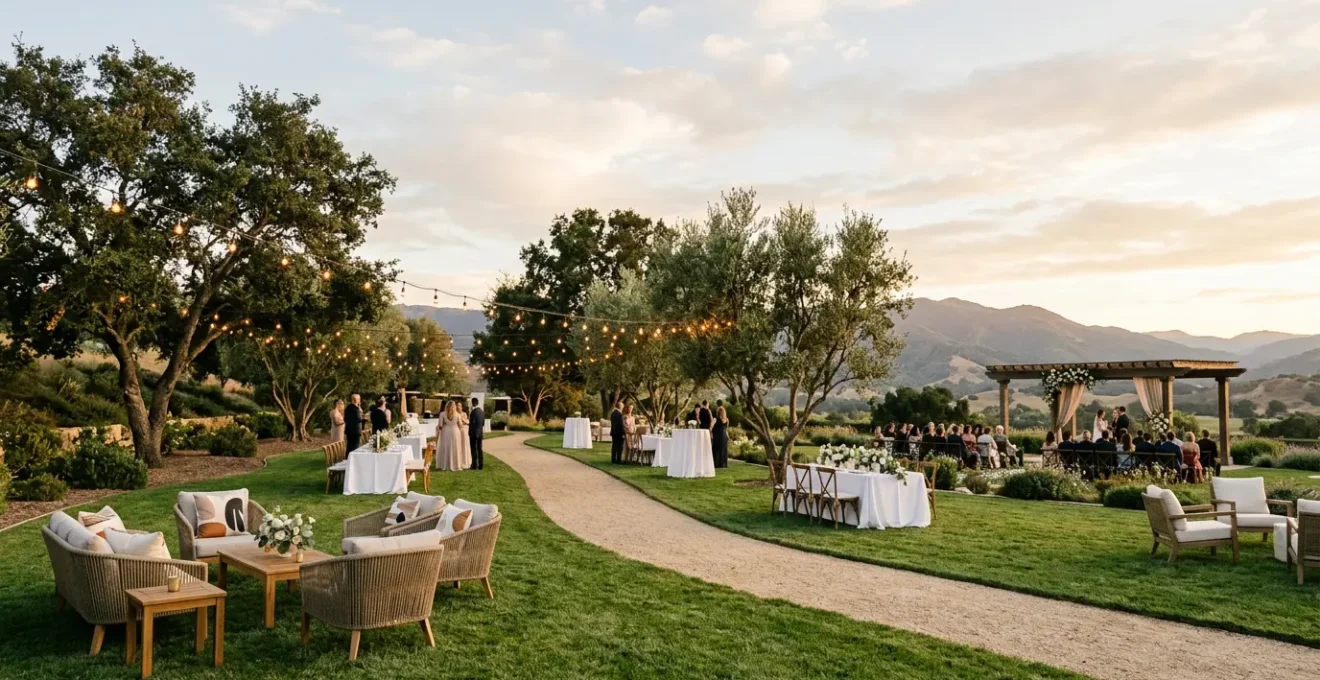
The secret to a successful wedding weekend is treating it like a strategic project: its goal is to manage and peak guest energy for the main event, not to fill every minute with activities.
- An overscheduled itinerary is the primary cause of guest burnout and empty dance floors on the wedding night.
- Hosting every meal can inflate your budget significantly, while a cocktail-style arrival event offers flexibility and cost savings.
Recommendation: Prioritize planned downtime and clear, multi-channel communication to reduce logistical friction and allow guests to treat the weekend like a mini-vacation.
For couples planning a destination wedding, the three-day weekend format seems like a dream. It’s an opportunity to extend the celebration and spend quality time with loved ones who have traveled to be with you. However, this dream can quickly turn into a logistical nightmare, leading to budget overruns and, most critically, guest burnout. The common advice is to create a detailed itinerary, but this often leads to the core mistake: packing the schedule with back-to-back events in an effort to be the perfect host.
The reality is that your guests are also on a mini-vacation. They crave moments of spontaneity and relaxation just as much as planned festivities. The challenge isn’t just scheduling; it’s about managing three finite resources: your budget, your guests’ attention, and most importantly, their collective energy level. A weekend that exhausts everyone before the main event has failed its primary mission. What if the key wasn’t about adding more, but about being more strategic with less?
This guide moves beyond generic tips. As a logistics-focused planner, I’ll walk you through a framework for designing a wedding weekend that feels generous and exciting, yet remains mindful of your budget and ensures your guests arrive at the wedding reception energized and ready to celebrate you. We will deconstruct the weekend, from managing costs and creating a balanced schedule to streamlining arrivals and communicating effectively, all to ensure your dance floor is full when it matters most.
This article provides a complete roadmap for structuring your event. Explore the sections below to master each component of your wedding weekend, from financial planning to guest communication.
Summary: A Strategic Guide to a Flawless 3-Day Wedding Weekend
- Why Hosting Every Meal for 3 Days Can Blow Your Budget by 40%?
- How to Create a Balanced Itinerary That Allows for Downtime?
- Cocktail Reception vs. Sit-Down Dinner: Which Works Best for Arrival Night?
- The Overscheduling Mistake That Leads to Empty Dance Floors on the Big Night
- The Best Way to Share Schedule Updates With Guests During the Weekend
- How to Use the “Critical Path” Method to Plan Your Wedding?
- The Check-In Bottleneck: How to Streamline Guest Arrival at Your Venue?
- How to Use the “Critical Path” Method to Plan Your Wedding?
Why Hosting Every Meal for 3 Days Can Blow Your Budget by 40%?
The instinct to be a gracious host often leads couples down a financially perilous path: covering every single meal for guests over a three-day weekend. While the title’s “40%” figure highlights a common fear, the real issue is the brutal math of per-person catering costs. A welcome dinner, a post-wedding brunch, and potentially lunches in between can easily add up to the cost of another small wedding. For a 100-guest wedding, even a “casual” $75-per-head welcome dinner adds $7,500, and a $50-per-head brunch adds another $5,000. This is how budgets spiral out of control.
The solution isn’t to be cheap; it’s to be strategic. Your responsibility is to host the main events: the rehearsal dinner (for the wedding party), the wedding reception itself, and perhaps one other anchor event like a welcome party. For the other meals, you can take on the role of a helpful concierge rather than a full-service caterer. Provide guests with a curated list of local cafes, restaurants, and delivery options. This empowers them to explore the area, manage their own budgets, and eat according to their own schedule, reducing logistical friction and financial pressure on you.
A successful approach is to replace a formal, expensive meal with a more fluid and cost-effective format. For example, instead of a sit-down welcome dinner, consider a cocktail-style reception. This shift in format not only changes the vibe but also has a dramatic impact on the bottom line. As one case study shows, a couple who chose this route achieved significant savings. They opted for heavy hors d’oeuvres and food stations that remained open for several hours, allowing guests to eat at their leisure without the rigid structure and high per-plate costs of a formal dinner. This demonstrates that guest satisfaction and budget management can go hand-in-hand.
How to Create a Balanced Itinerary That Allows for Downtime?
The most common mistake in wedding weekend planning is overscheduling. An itinerary packed with back-to-back activities, however well-intentioned, treats your guests like bootcamp recruits, not cherished friends and family. The goal is not to fill every hour, but to create a rhythm of celebration and relaxation. A truly balanced itinerary prioritizes structured downtime, which is essential for managing the “Guest Energy Level” (GEL).
Think of your weekend’s schedule in terms of event pacing. You need high-energy moments balanced by periods of rest. This allows guests to recharge, explore the destination on their own terms, or simply take a nap. Explicitly building 2-4 hour blocks of “free time” into the schedule between major events is crucial. Furthermore, you must make it clear that attendance at optional activities (like a morning yoga session or a group hike) is genuinely optional. Framing the weekend as a mini-vacation for them, centered around your wedding, empowers guests to curate their own experience, which dramatically increases their overall satisfaction.
Creating physical spaces for relaxation is as important as scheduling time for it. If your venue allows, setting up a “lounge zone” with comfortable seating away from the main action can be a sanctuary for guests who need a quiet moment. This simple gesture shows a deep consideration for their comfort.
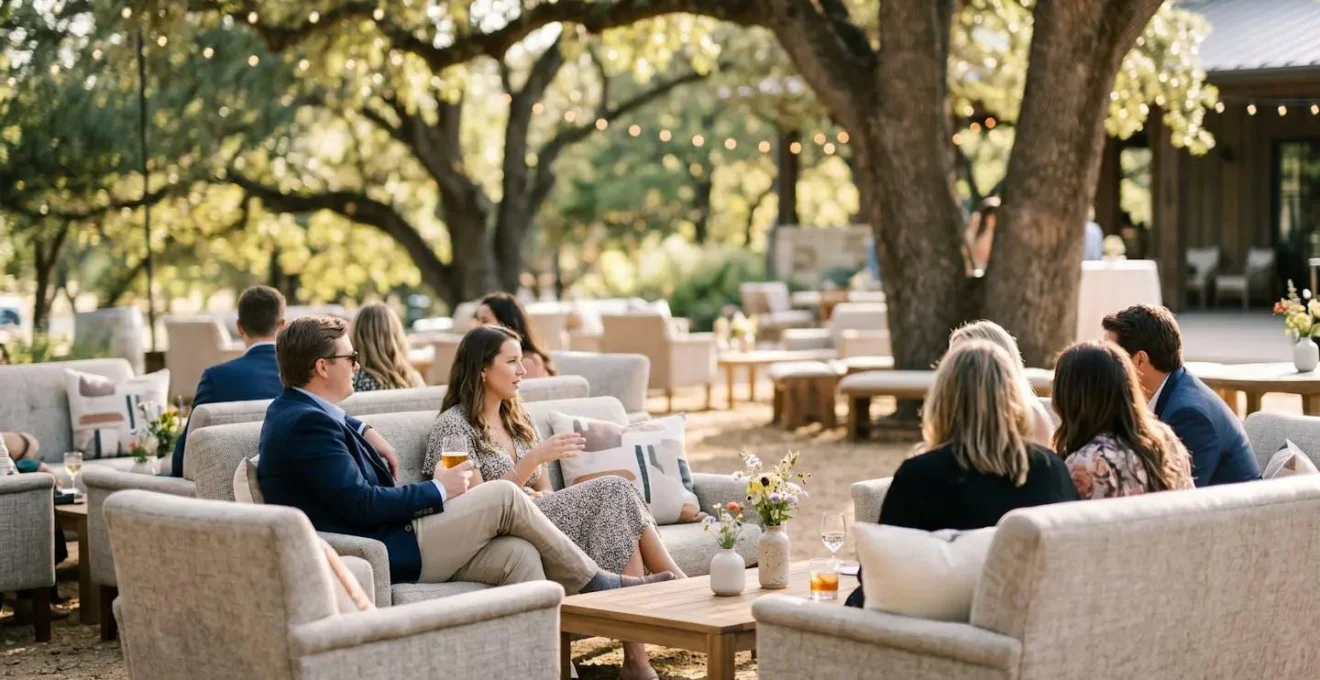
As the image above illustrates, a dedicated space for tranquility enhances the guest experience. To achieve this balance, you should:
- Space out activities to avoid a rushed feeling.
- Build in and clearly label “downtime” in the official itinerary.
- Communicate that optional events are truly optional.
- Encourage guests to treat the weekend like a personal getaway.
- Aim to have guests stay on-site or nearby to minimize travel-related fatigue.
Cocktail Reception vs. Sit-Down Dinner: Which Works Best for Arrival Night?
The first official event of your wedding weekend sets the tone for everything that follows. For arrival night, the choice between a formal sit-down dinner and a more fluid cocktail reception is a critical one. While a sit-down meal can feel traditional and elegant, it introduces a level of rigidity that often works against the realities of travel. Guests’ flights get delayed, traffic happens, and check-in takes longer than expected. A strict start time for a plated dinner can create stress for late arrivals before they’ve even had a chance to say hello.
This is where the cocktail reception truly shines. According to leading wedding planners, a cocktail-style event with a generous 2-hour or even 3-hour window is far more forgiving. It allows guests to arrive at their own pace, drop their bags, and join the celebration without the pressure of being late for a specific course. The atmosphere is inherently more relaxed and interactive, encouraging guests to mingle freely between different social circles rather than being confined to an assigned table for hours. This is especially valuable on the first night, as it helps break the ice and build a communal sense of excitement.
The logistical and social benefits are clear, but the seating and service style also offer advantages. You only need to provide seating for about 50% of your guests, as people will naturally stand, move, and circulate. This can be a major advantage in venues with limited space. The following table breaks down the key differences, highlighting why a cocktail reception is often the superior strategic choice for a wedding weekend’s opening night.
| Factor | Cocktail Reception | Sit-Down Dinner |
|---|---|---|
| Atmosphere | Relaxed, interactive, fluid movement | Formal, structured, traditional rhythm |
| Guest Flexibility | Guests mingle freely, come and go, self-select conversations | Assigned seating, structured service, limited movement |
| Timing Forgiveness | 2-hour window accommodates flight delays and traffic issues | Strict start time less forgiving for late arrivals |
| Seating Requirements | ~50% seating (only 1/3 sit at any time) | 100% seating for all guests required |
| Social Dynamics | Forces mingling between different social circles | Can create conversational silos at assigned tables |
| Service Style | Food stations, passed hors d’oeuvres, open buffet | Plated courses or formal buffet service |
The Overscheduling Mistake That Leads to Empty Dance Floors on the Big Night
An empty dance floor on the wedding night is a couple’s worst fear. Often, the cause isn’t the music or the venue—it’s exhaustion. The biggest threat to a high-energy reception is the cumulative fatigue built up over the preceding 48 hours. When guests have been rushed from a welcome party to a group activity to a rehearsal dinner with no time to breathe, their social and physical energy is depleted long before the main event’s first dance. This is the direct result of the “perfect host” trap: the belief that more planned activities equal a better experience.
The stress of planning can inadvertently contribute to this problem. A Zola survey revealed that 40% of couples found wedding planning “extremely stressful”. This high level of stress can lead to a desire to control every minute of the weekend, creating a rigid schedule that leaves no room for spontaneity or rest. The irony is that this tightly-controlled fun is what ultimately drains the energy from the weekend’s climax.
This phenomenon is not just anecdotal. Experienced planners observe it regularly. As Toronto wedding planner Karina Lemke noted in an interview with The Globe and Mail, the effect is real and predictable. She states:
There’s a great deal of wedding fatigue that does tend to set in. Ambitious celebrations spanning both a Saturday and a Sunday also grow irksome: It becomes a very expensive social obligation. It also zaps the weekend.
– Karina Lemke, The Globe and Mail
Lemke’s point about it becoming a “social obligation” is key. When guests feel obligated to attend every single event, the joy is replaced by duty. The solution is to intentionally build your itinerary to a crescendo. Friday should be about welcome and relaxation. Saturday day should offer optional, low-key engagement. Everything you do should be in service of one goal: having your guests arrive at your Saturday evening reception feeling rested, excited, and ready to celebrate with you on the dance floor.
The Best Way to Share Schedule Updates With Guests During the Weekend
Clear, consistent, and convenient communication is the backbone of a smooth wedding weekend. Once guests have arrived, the challenge shifts to managing information in real-time. A single point of information (like a static wedding website) is no longer sufficient. To prevent confusion and reduce the number of “what time is…?” texts you receive, you must implement a multi-channel communication strategy.
Your strategy should combine digital and physical elements to cater to all guests, regardless of their tech-savviness. The foundation is still your wedding website, which should have dedicated pages for each day’s events, clearly outlining timings, dress codes, transportation details, and what’s provided (e.g., “heavy hors d’oeuvres will be served”). However, this is a passive tool. For active updates, a wedding app that can send push notifications is invaluable for last-minute changes, like moving a cocktail hour indoors due to rain.
Don’t underestimate the power of physical and analog methods. A beautifully designed, printed itinerary included in the welcome bag is both practical and a lovely keepsake. More importantly, well-placed signage in the hotel lobby or at the venue with key timings is a lifesaver for guests with dead phone batteries or spotty Wi-Fi. Your communication plan should include:
- A detailed wedding website: The central source of truth for all planned events.
- A wedding app or text service: For real-time notifications and updates.
- Printed itineraries: A tangible, easy-to-reference guide for each guest.
- Physical signage: Key information in high-traffic areas like the hotel lobby.
- A shared digital photo album: Encourages engagement and creates a collective memory of the weekend.
By creating multiple touchpoints for information, you reduce logistical friction and empower guests to be in the right place at the right time, feeling informed and cared for, not confused and stressed.
How to Use the “Critical Path” Method to Plan Your Wedding?
Beyond itineraries and budgets, the most effective way to manage a complex event like a wedding weekend is to adopt a project management mindset. The Critical Path Method (CPM) is a powerful technique used to map out and schedule complex projects, and it’s perfectly suited for wedding planning. At its core, CPM is about identifying the essential sequence of tasks (the “critical path”) that must be completed on time for the entire project to succeed. Any delay on this path directly delays the final outcome—in this case, your wedding day.
A real-world example from a project manager who applied CPM to their own wedding illustrates this perfectly. They started by breaking the event down into major “workstreams” such as catering, transport, and guest accommodation. Then, for each workstream, they identified all the individual tasks and, crucially, the dependencies between them. For instance, the task “Send Invitations” was dependent on “Finalize Guest List,” “Book Accommodations,” and “Confirm Transport Options,” as all this information needed to be included.
This process revealed that sending the invitations was a critical task that couldn’t happen until several other key decisions were locked in. By mapping this out, the couple could identify their true priorities and allocate their time and resources effectively. They also identified tasks with “float”—non-critical activities that could be delayed without affecting the overall timeline. This approach transformed the overwhelming “to-do list” into a logical, manageable flowchart, reducing stress and ensuring nothing fell through the cracks. It moves you from a reactive planning mode to a proactive, strategic one, which is the hallmark of a professional approach.
The Check-In Bottleneck: How to Streamline Guest Arrival at Your Venue?
The very first impression your guests have of the wedding weekend isn’t the welcome drink; it’s the hotel check-in desk. A long, frustrating wait in the lobby can drain energy and start the weekend on a sour note. This “check-in bottleneck” is a common point of logistical friction, especially when a large group of guests arrives within the same window (e.g., Friday afternoon). As a planner, you must work proactively with your venue to streamline this process.
Effective management begins before guests even leave home. Start by asking for their estimated time of arrival in your final information-gathering email. Share this data with the hotel so they can staff accordingly. It’s also crucial to manage expectations about early check-in. If the official check-in time is 3 PM, communicate this clearly and provide a plan for those arriving earlier. Partnering with the hotel to secure a small conference room or a reserved bar area as a “Welcome Lounge” is a brilliant solution. Here, early arrivals can store their luggage, grab a coffee, and relax until their room is ready. According to planners, the ideal size for a manageable weekend wedding is between 50-120 guests; at this scale, personalized arrival management is not just possible, but essential.
Designating a well-informed “point person” from the wedding party to be stationed in the lobby during peak arrival times is another pro-level move. This person can answer wedding-specific questions that the hotel staff can’t, directing guests to the welcome lounge or confirming the evening’s schedule. This personal touch makes guests feel immediately welcomed and cared for.
Your Action Plan: Eliminating the Check-In Bottleneck
- Gather ETAs: Ask guests for their arrival times in advance and share this schedule with the hotel front desk.
- Communicate Check-In Times: Clearly state the official check-in time and create a plan for early arrivals.
- Create a Digital Pre-Arrival Packet: A week prior, send an email with the hotel’s mobile key link (if available), Wi-Fi password, and weekend schedule.
- Designate a Lobby Ambassador: Have a knowledgeable friend or family member in the lobby during peak hours (e.g., Friday 3-5 PM) to greet guests and answer questions.
- Establish a “Welcome Lounge”: Work with the hotel to provide a comfortable waiting area with baggage check and light refreshments for guests arriving before their rooms are ready.
Key Takeaways
- Treat your guests’ energy as your most valuable resource; every decision should aim to preserve it for the main event.
- Strategic hosting is not about paying for everything, but about facilitating a seamless experience through thoughtful planning and communication.
- A balanced itinerary with scheduled downtime is more luxurious than a packed schedule of forced fun.
How to Use the “Critical Path” Method to Plan Your Wedding?
We’ve now explored the key components of a successful wedding weekend: managing the budget, pacing the itinerary, streamlining communication, and smoothing out arrivals. The final step is to tie all these elements together into a single, cohesive master plan. This is where we return to the Critical Path Method (CPM), not just as a tool for individual tasks, but as the governing philosophy for the entire event.
Think of your wedding weekend as a final project with one ultimate deliverable: a joyful, high-energy wedding reception. Every decision you’ve made is a task on the path to that goal. The “Critical Path” is the sequence of events and conditions that are absolutely essential to achieving this. For example, if your guests are exhausted from a packed Saturday morning (Task A), their energy for the reception (Task B) will be low. Therefore, ensuring adequate downtime (a condition of Task A) is on the critical path to a successful Task B.
Applying this method to the whole weekend means you view your itinerary through the lens of dependencies. The success of the “Full Dance Floor” is dependent on the “Guest Energy Level.” That energy level is dependent on “Balanced Scheduling” and the “Absence of Logistical Friction.” The “Cocktail-Style Welcome” is a task that positively influences these dependencies by promoting flexibility and reducing initial stress. By mapping these connections, you move from a simple list of events to a strategic flowchart where you can see how each choice directly impacts the final outcome. This is the ultimate tool for ensuring all your efforts build towards a single, spectacular moment.
By adopting this strategic, logistics-focused mindset, you can move beyond simply planning a series of events and begin architecting an experience. Your role is that of a project manager for joy, and with this framework, you are equipped to deliver a flawless, memorable, and energizing wedding weekend for everyone involved.