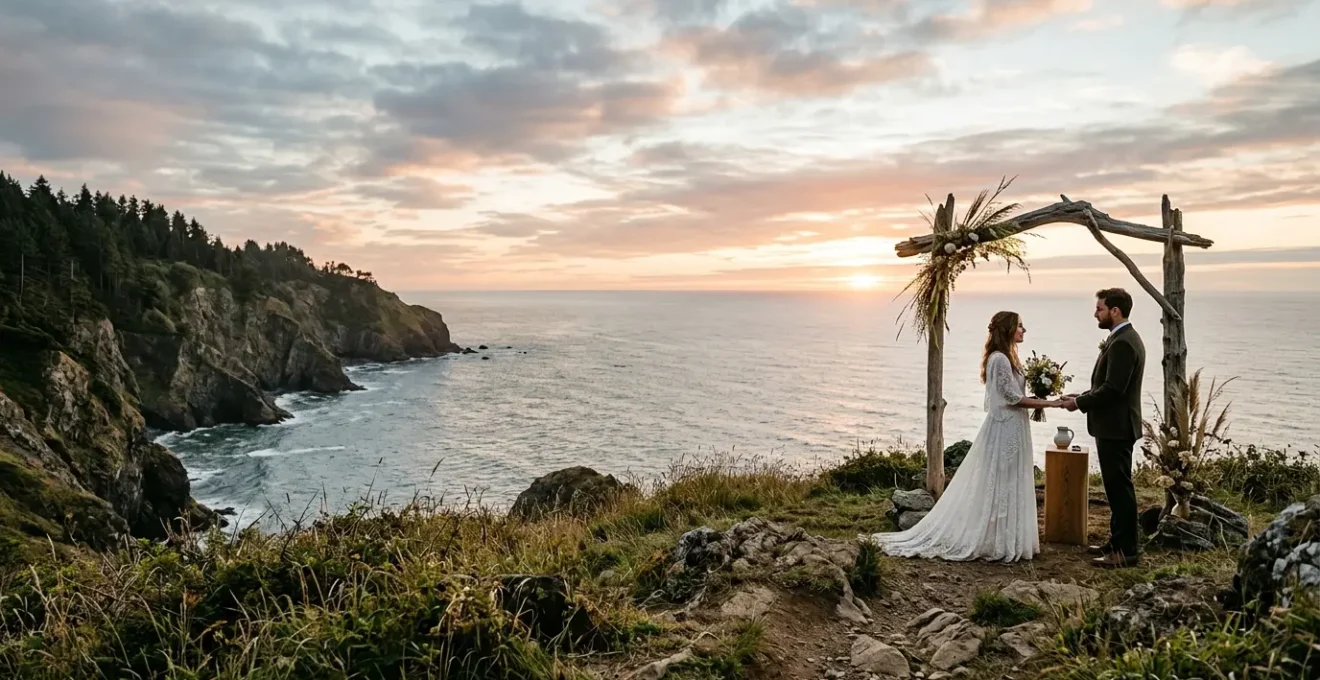
Most couples wrongly believe personalizing a package means adding costs; the real power lies in strategically reallocating the hidden value already inside it.
- Identify and trade low-value “package fillers” (like a free massage) for high-impact experiences (like extra photography time).
- Structure your day like a story with a three-act narrative arc to create a full, meaningful experience, not a short, empty ceremony.
Recommendation: Before asking for discounts, ask the resort coordinator: “What’s the trade-in value of the included amenities?” This single question shifts the dynamic from negotiation to collaboration.
You’ve found the perfect destination, and that all-inclusive elopement package seems like a dream come true. It promises a beautiful ceremony on the beach, a romantic dinner, and a photographer—all wrapped up in a neat, stress-free bundle. But a quiet fear starts to creep in: will your deeply personal commitment feel like just another wedding off an assembly line? Will your photos look identical to the ten couples who got married there the week before? This is the central tension for so many couples: the desire for convenience versus the deep-seated need for authenticity.
The common advice is to “bring your own decor” or “write your own vows.” While these are beautiful touches, they are merely decorations on a pre-built structure. They don’t fundamentally change the experience. The real secret, the one boutique planners use, isn’t about adding more things on top of the package. It’s about seeing the package for what it is: a bundle of assets. The key to unlocking a truly bespoke experience is to stop thinking about what you can add, and start thinking about what you can strategically trade.
This guide is designed to empower you with that mindset. We’ll deconstruct the standard elopement package and show you where the hidden value lies. You will learn how to transform a generic template into a day that is an undeniable reflection of your story. From reallocating budget to structuring your timeline with a narrative arc, you’ll gain the tools to collaborate with your venue and vendors, ensuring your elopement is anything but “cookie-cutter.”
This article breaks down the essential strategies for transforming a standard package into a one-of-a-kind celebration. The following sections will guide you through each critical decision point.
Contents: How to Transform Your Elopement Package
- Why You Should Swap the “Free Massage” for Extra Photography Hours?
- The “Ceremony Location” Trap in Standard Resort Packages
- Base Package + Add-ons vs. Premium Tier: Which Saves More Money?
- How to Structure a Full-Day Elopement That Doesn’t Feel Empty?
- How to Upgrade Standard Resort Decor with Local Flowers?
- How to Ensure Your Destination Marriage Is Actually Legal Back Home?
- Why Synthetic Blends Outperform Silk for Tropical Destinations?
- Fly-In Photographer or Local Talent: Which Is Safer for Your Investment?
Why You Should Swap the “Free Massage” for Extra Photography Hours?
The single most powerful move you can make when customizing a resort package is understanding the principle of asset reallocation. Packages are often padded with “fillers”—items that have a high perceived value but a low cost to the resort, like a “complimentary couples massage” or a bottle of house champagne. While pleasant, these are fleeting moments. Your photographs, however, are the one asset that appreciates in emotional value over time. They are the tangible story of your day.
When you see that “free massage,” don’t see it as a gift; see it as experiential currency you can trade. An extra hour of photography coverage might seem like a costly add-on, but it could be the difference between capturing just the ceremony and documenting your entire story: the quiet moments getting ready, the adventurous trek to a second location for sunset portraits, the joyful celebration afterwards. The amount of work involved in professional photography is immense; according to professional elopement photography estimates, a photographer can spend 60-70 hours on a single client, from planning to final delivery. This is a high-value, high-effort service.
So how do you make the swap? You approach the conversation not as a demand for a discount, but as a collaborative effort to maximize your investment with the resort. You are still spending the same amount; you are just directing it toward what matters most to you. This positions you as a thoughtful client, not a difficult one, and opens the door for true customization.
Your Action Plan: The Package Customization Script
- Identify ‘Package Filler’: List items in your package with low personal value to you, such as massages, champagne bottles, or other standard amenities.
- Estimate Value: Calculate the approximate retail value of these filler items based on the resort’s public pricing.
- Research Alternatives: Identify high-impact services you truly want, like an extra hour of photography, a videography add-on, or a unique local experience.
- Craft Your Request: Frame your request positively. Say, “We are so excited about our elopement and would love to maximize our investment. Would it be possible to reallocate the value of the massage package toward an additional hour of photography coverage?”
- Show the Mutual Benefit: Position the swap as a win for the resort. “This extra photography time would allow us to capture and showcase even more of your beautiful property in our wedding photos.”
The “Ceremony Location” Trap in Standard Resort Packages
Almost every resort elopement package includes a “ceremony location.” This typically means a designated beach spot, a garden gazebo, or a terrace—shared, used, and photographed hundreds of times before. This is the “location trap”: choosing convenience over connection. Your ceremony is the emotional heart of your day, and the place you say your vows should feel as unique as your relationship. Breaking free from the designated spot is essential for a non-template wedding.
Instead of accepting the default, think of the resort as your basecamp. The real magic often lies just beyond its manicured lawns. Ask your coordinator: “Are we allowed to hold our ceremony on the more secluded cove at the end of the property?” or “Is there a scenic overlook nearby that we could travel to?” This requires more logistical effort—and might involve trading another package element to cover a setup fee—but the payoff is immense: a location that is yours and yours alone. It transforms the ceremony from a public performance into a private, intimate moment.

This quest for a personal sanctuary is about claiming ownership of your experience. It’s a declaration that your story deserves its own stage, not a borrowed one. This mindset can lead to incredible adventures and deeply meaningful memories, proving that the most beautiful venues aren’t always the ones with a sign.
Case Study: The Yosemite Hike for a Private “I Do”
A prime example of this spirit comes from a couple who traveled from Australia to elope in Yosemite National Park. When they discovered the main road to the iconic viewpoints was closed, they didn’t settle for an alternative resort location. Instead, as documented in an inspiring story, they chose to hike. Their 4-mile trek involved a 3,000-foot ascent up granite walls, leading them to a breathtaking, private ceremony spot. They had the location completely to themselves, creating an authentic and deeply personal elopement experience that no standard package could ever replicate.
Base Package + Add-ons vs. Premium Tier: Which Saves More Money?
When faced with package options, couples often wonder whether to start with a lean base package and add what they want, or to opt for a premium, all-inclusive tier. The answer isn’t about which is “cheaper” outright, but which offers the most value for *your specific priorities*. The premium tier might seem expensive, but if it includes high-value items you were going to purchase anyway (e.g., top-shelf open bar, extended photography, a specific floral designer), it often provides them at a bundled discount.
Conversely, the base package offers a blank canvas. This is the superior financial choice if you find the premium tier is bloated with “package fillers” you don’t value. By starting small, you can apply the principle of asset reallocation with surgical precision. You’re not paying for a pre-selected bundle of services; you’re hand-picking every element. This approach requires more research and decision-making but gives you total control over your budget. The initial choice of an elopement, especially at a destination, is already a financially savvy one. In fact, 2024 data shows destination weddings average $9,850, a significant saving compared to the typical $28,000 cost for a domestic U.S. wedding.
To make the right choice, do this simple exercise:
- List the elements included in the premium package.
- Beside each item, mark whether you “Must Have,” “Would Like,” or “Don’t Care” about it.
- Research the à la carte cost of your “Must Have” and “Would Like” items.
- Compare that total to the price difference between the base and premium packages.
This quick analysis will immediately reveal whether the premium package is a genuine value for you, or if you’re better off building your own experience from the ground up.
How to Structure a Full-Day Elopement That Doesn’t Feel Empty?
A common fear with elopements is that the day will feel short or anticlimactic. After all, if the ceremony is only 20 minutes, what do you do with the rest of the day? This is where shifting your perspective is key. An elopement isn’t a shorter version of a wedding; it’s a completely different way to experience your first day of marriage. The goal is to create a narrative arc, not just a single event. This is why professional elopement photographers typically recommend 8-10 hours of coverage—to capture the full story.
Think of your day in three acts, like a film. This framework provides structure while leaving room for spontaneity, ensuring your day feels rich, intentional, and deeply personal.
- Act I: The Quiet Build-Up (Morning). This is the anticipation. It could involve getting ready together or separately, enjoying a quiet breakfast, reading letters from loved ones, or the journey to your ceremony location. These are the moments of calm before the emotional peak.
- Act II: The Emotional Climax (Midday/Golden Hour). This is the heart of the story: the ceremony itself, the exchange of vows, and the first few moments as a married couple. It includes your first portraits and perhaps a champagne toast or a private ritual that is meaningful to you.
- Act III: The Joyful Resolution (Afternoon/Evening). This is the celebration and reflection. It can be an adventure activity like a hike to a viewpoint or kayaking, a special private dinner, sunset portraits at a second stunning location, or simply taking time to call family and share the news.
Within this structure, intentionally build in buffer time. Schedule 30-60 minutes of unstructured “negative space” between acts. This isn’t empty time; it’s breathing room. It’s the space where spontaneous, unscripted moments happen—the very memories that will define your day.
How to Upgrade Standard Resort Decor with Local Flowers?
Nothing screams “package wedding” more than generic, out-of-place floral arrangements. The standard resort bouquet often consists of imported roses or lilies that look the same in Mexico as they do in Hawaii. To instantly elevate your aesthetic and make your elopement feel tied to its location, the key is to go local. Sourcing flowers from the region infuses your decor with authenticity, texture, and a genuine sense of place.
Many large-scale or package-focused companies are upfront about their limitations. Their business model relies on standardization, which is the enemy of personalization. As the popular service Simply Eloped states in their FAQ:
Due to our nationwide setup, we do not provide custom flowers. We offer arrangements based on a color palette, which means the types of flowers may not be exactly as pictured, but the colors and arrangement style will match.
– Simply Eloped, Simply Eloped Elopement Package FAQ
This is your opportunity. Ask your resort if you can bring in your own floral designer or, at the very least, provide your own bouquet and boutonnière. Use Instagram and local wedding blogs to find a florist in the area who specializes in using native blooms. Instead of a tight ball of roses, you could have a wild, organic arrangement of tropical ginger, protea, and lush local foliage. This single choice can completely transform the visual narrative of your wedding, making it feel artisanal and unique.

Even if the package includes a floral credit, see if you can reallocate that value toward a different service and handle the flowers yourself. It’s a small step that makes a huge visual impact, ensuring your photos reflect the true beauty of the destination you so carefully chose.
How to Ensure Your Destination Marriage Is Actually Legal Back Home?
The romance of a destination elopement can quickly fade when faced with the bureaucratic reality of making it legally binding. The single biggest mistake couples make is assuming their resort or planner has this completely covered. Legal requirements vary dramatically by country and can involve residency periods, blood tests, and specific document translations. Getting this wrong can mean your marriage isn’t recognized back home.
There are two primary paths to ensure legality:
- The Symbolic Ceremony Strategy: This is often the simplest and most secure option. You handle the legal paperwork in your home country before or after your trip. Your destination ceremony then becomes a purely symbolic and emotional celebration of your commitment, free from any legal stress or requirements. As the U.S. Department of State advises for its citizens getting married abroad, this approach “avoids the complexity of obtaining a foreign marriage certificate and otherwise complying with local laws on marriage.”
- The Official Destination Marriage Strategy: If getting legally married at your destination is important to you, rigorous vetting is non-negotiable. Do not simply trust that the package “includes legal services.” You must become an active participant in the process. Ask your planner or resort coordinator direct, specific questions to confirm their expertise and process.
If you choose the second path, use a checklist to vet any vendor handling your legal paperwork. Ask about their experience with couples from your home country, the exact timeline for document authentication (like an apostille), and what their contingency plan is if documents are rejected. True peace of mind comes from understanding the process yourself, not from blindly trusting a package inclusion.
Why Synthetic Blends Outperform Silk for Tropical Destinations?
Choosing your elopement attire is deeply personal, but for a destination wedding, practicality must go hand-in-hand with style. In a tropical or adventurous setting, the fabric of your dress or suit is just as important as the design. While classic materials like silk are beautiful, they are often a poor choice for heat, humidity, and travel. Silk retains heat, shows perspiration easily, and wrinkles if you so much as look at it the wrong way—making it a high-stress option for a destination elopement.
Modern fabric technology has created incredible alternatives that offer both beauty and performance. High-tech synthetic blends, like those incorporating Tencel or modal, and advanced crepes are designed to be breathable, moisture-wicking, and incredibly wrinkle-resistant. They pack beautifully, emerging from a suitcase looking fresh and ready to wear. These fabrics offer the drape and feel of luxury materials without the high maintenance, allowing you to move freely, stay comfortable, and look flawless from the first look to the final dance, even in 90-degree heat.
The right fabric choice is about enabling your experience, not hindering it. You want to be able to climb a small hill for the perfect photo or walk along a breezy beach without worrying about sweat marks or a wrinkled mess. A comparative analysis shows just how different fabrics perform in these demanding conditions.
This table, based on insights from destination wedding experts, breaks down the performance of common fabrics to help guide your choice. As a recent analysis of elopement personalization highlights, aligning your attire with your environment is a key detail.
| Fabric Type | Breathability | Wrinkle Resistance | Packability | Heat Performance | Best For |
|---|---|---|---|---|---|
| Silk | Moderate | Poor (wrinkles easily) | Good (lightweight) | Poor (retains heat, shows sweat) | Indoor ceremonies, cooler climates |
| Modern Synthetics (Tencel, high-tech crepe) | Excellent | Excellent | Excellent | Excellent (moisture-wicking, doesn’t cling) | Tropical destinations, adventure elopements |
| Linen | Excellent | Very Poor (wrinkles are expected) | Good | Excellent (breathable, lightweight) | Beach elopements where wrinkles are part of the look |
Key Takeaways
- Think of your package as a bundle of assets; identify low-value “fillers” and trade them for high-value experiences like more photography.
- The most meaningful ceremony locations are often outside the resort’s designated spots. Don’t be afraid to explore.
- A full-day elopement needs a narrative arc. Structure your timeline in three acts (build-up, climax, resolution) to make it feel complete.
Fly-In Photographer or Local Talent: Which Is Safer for Your Investment?
Your photographer is arguably the most important vendor for an elopement; they are responsible for the single lasting asset from your day. This leads to a critical decision: do you hire a local photographer (who may even be included in your package) or fly in a photographer whose style you love? There is no single right answer, but the question of safety and security for your investment is paramount. A fly-in photographer introduces risks of travel delays, cancellations, and unfamiliarity with the location. A local or package-included photographer introduces the risk of a stylistic mismatch or lack of personal connection.
Regardless of which you choose, the solution is the same: rigorous contingency planning. Your investment is only as safe as your photographer’s backup plan. You must ask direct questions about their protocols for every potential disaster, from illness to equipment failure. A professional will have confident, detailed answers. Vague responses are a major red flag. Key questions include their plan for photographer illness, travel delays, equipment failure, and data backup.
If a photographer is included in your resort package, you don’t have to settle for an unknown variable. You must take ownership of that relationship and turn the vendor into a creative collaborator.
Case Study: Transforming a Package Photographer into a Partner
A highly effective strategy for working with an included photographer is to proactively manage the relationship from the start. As one elopement guide recommends, couples should first request to see 2-3 complete wedding galleries from the specific venue, not just a curated portfolio of highlights. This gives a realistic view of their work. The next step is to schedule a detailed pre-wedding video call to build rapport, share a mood board to communicate their vision, and discuss specific shots. This simple process transforms the photographer from a package inclusion into a partner who is personally invested in the couple’s vision.
By shifting your mindset from a passive buyer to an active collaborator, you hold the power to transform any elopement package. Start today by reviewing your package, identifying its true assets, and drafting the first email to your coordinator to begin the conversation about making the day uniquely yours.