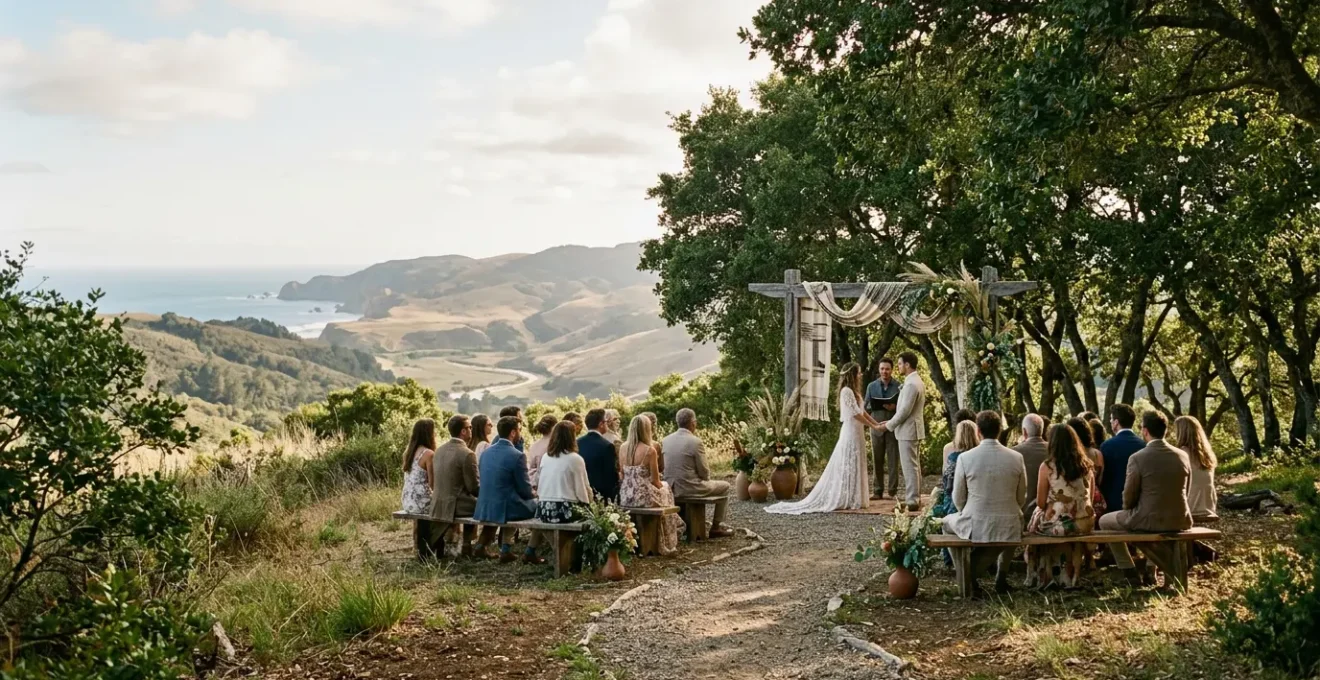
The secret to an authentic destination wedding experience isn’t scheduling more local activities; it’s architecting a framework of curated freedom that empowers guests to discover the culture on their own terms.
- Prioritize significant unstructured time (at least 4 hours daily) to boost guest satisfaction and allow for spontaneous discovery.
- Design multi-generational excursions using a “Hub-and-Spoke” model to cater to all energy and mobility levels simultaneously.
- Choose flexible transport, like multiple vans over one large bus, to access unique venues and create a more intimate experience.
Recommendation: Shift your mindset from being a tour guide to becoming an “experience architect.” Your role is to provide the tools, not a rigid script, for an authentic journey.
For couples planning a destination wedding, the ultimate goal is to share a cherished place with their most beloved people. The intention is pure: to create a memorable, immersive experience that transcends a typical wedding. Yet, this noble ambition often falls into a common trap. In the quest to showcase the best of a location, itineraries become packed, prescriptive, and rigid. The guest experience, intended to be a unique adventure, can quickly devolve into feeling like a mandatory school trip, herding everyone from one pre-planned activity to the next.
The conventional wisdom—booking group tours, creating minute-by-minute schedules, and arranging large-scale transport—is precisely what erodes the sense of personal discovery and authenticity. But if the answer isn’t a packed itinerary, what is? The key lies in a paradigm shift. Instead of planning activities, you must begin to architect experiences. The most sophisticated and successful destination weddings operate on a principle of curated freedom: providing a thoughtful structure and high-quality options while leaving ample space for the serendipity and personal exploration that define true travel.
This guide moves beyond the platitudes of itinerary planning. We will explore the strategic thinking required to build a balanced schedule, the psychology of guest satisfaction, and the logistical choices that separate a generic tour from a genuinely bespoke event. By focusing on experience architecture, you can craft a journey that feels both effortless and deeply personal, allowing your guests to connect with the destination—and each other—in a truly meaningful way.
This article details the essential strategies for crafting an itinerary that feels both luxurious and authentic. You will discover how to balance group activities with personal downtime, make logistical choices that enhance the guest experience, and ensure every detail, from arrival to departure, is seamless.
Summary: How to Blend Local Culture Into Your Itinerary Without It Feeling like a Tour Group?
- How to Create a Balanced Itinerary That Allows for Downtime?
- Why Leaving 4 Hours of Daily Unstructured Time Improves Guest Satisfaction
- When to Schedule High-Energy Activities Relative to the Ceremony
- How to Choose Group Excursions Suitable for Both Toddlers and Grandparents?
- Local Artisanal Goods or Travel Essentials: What to Put in Welcome Bags?
- The Check-In Bottleneck: How to Streamline Guest Arrival at Your Venue?
- One Large Bus or Three Vans: Which Navigate Narrow European Streets Better?
- The Transport Error That Strands Guests at Remote Excursion Sites
How to create a balanced itinerary that allows for downtime?
The foundation of a luxury guest experience is not a packed schedule but a beautifully composed rhythm. A balanced itinerary is an exercise in restraint, understanding that the most memorable moments are often those that are not planned. The goal is to move away from a checklist of sights and toward a cadence of experiences, alternating between moments of connection, discovery, and repose. This approach respects your guests’ energy, investment, and individual travel styles, making them feel cared for, not managed.
A practical framework for achieving this is the “one main event” per day rule. Each day should have a single, anchor activity—a welcome dinner, a group excursion, the ceremony itself—but the rest of the day should be loosely structured. Offer a morning yoga session as an option, not a mandate. Suggest a list of curated cafés or boutiques for afternoon exploration, but let guests choose their own path. This philosophy of optionality is the core of curated freedom.
Furthermore, consider the energy flow of the entire wedding weekend. Avoid scheduling two high-intensity days back-to-back. Follow a lively beach party with a day dedicated to relaxation, where the only thing on the agenda is a poolside cabana or a suggested scenic walk. This intentional pacing prevents burnout and creates a sense of rejuvenation. After all, research from the Family Travel Association reveals that 85% of parents say family travel brings them closer, and that closeness is fostered in moments of shared relaxation, not just in transit between scheduled activities.
Why leaving 4 hours of daily unstructured time improves guest satisfaction
The instinct to fill every moment of a destination wedding with planned activities comes from a good place: the desire to be a perfect host. However, research into travel psychology reveals a counter-intuitive truth: over-scheduling is a primary driver of dissatisfaction. Granting guests significant unstructured time—ideally a block of at least four hours each day—is not a sign of neglectful planning. It is a sophisticated strategy that directly boosts their sense of autonomy, discovery, and overall enjoyment.
This block of free time allows for serendipity. It’s the freedom to take a nap, revisit a charming shop discovered earlier, or simply sit at a cafe and watch the world go by. These unscripted moments are where guests form their own personal connection to the place, creating memories that are uniquely theirs. Academic research on personalized travel confirms this, highlighting that itineraries must balance multiple factors including time utilization. The study identified that “penalty functions” for over-scheduling directly reduce overall trip satisfaction, providing scientific validation for the importance of downtime.
This is the essence of “curated freedom.” You provide the canvas—a beautiful destination and a well-vetted list of suggestions—but your guests hold the brush. Provide them with a beautifully designed map highlighting a few favorite spots, a list of local phrases, and the confidence to explore. This empowers them to be travelers, not tourists.

By stepping back, you create space for the magic to happen. The stories guests share later will not be about the perfectly timed bus departure, but about the hidden courtyard they stumbled upon or the friendly local artist they met during their afternoon of freedom. This is the return on investment for trusting your guests with their own time.
When to schedule high-energy activities relative to the ceremony
The “Energy Arc” is a crucial concept in multi-day event planning. Guests arrive with varying levels of travel fatigue but also a high degree of social anticipation. Harnessing this initial energy is key to fostering a cohesive group dynamic long before the ceremony begins. Scheduling your most engaging, high-energy activity early in the itinerary—ideally on the first or second full day—serves as a powerful icebreaker.
An activity like a guided coastal hike, a catamaran trip, or an interactive cooking class encourages mingling and creates shared experiences between friends and family who may not know each other. These early adventures break down social barriers and build a collective memory, transforming a disparate group of guests into a unified community. One destination wedding in Ireland successfully implemented this by scheduling a day of traditional activities, including a carriage ride and falconry lesson, as an early-arrival event. This allowed guests to bond through a shared cultural immersion, setting a warm, collaborative tone for the rest of the festivities.

Conversely, the day immediately preceding the wedding and the wedding day itself should be reserved for low-energy, relaxing activities. Guests need time to rest, prepare, and mentally transition into a celebratory mindset. Scheduling a strenuous hike or a late-night party the day before the ceremony is a common mistake that leads to exhausted guests and a subdued atmosphere. The rehearsal dinner should be an intimate, relaxed affair, not another high-octane event. By front-loading the energy and tapering down as the ceremony approaches, you ensure everyone arrives at the main event feeling connected, refreshed, and fully present.
How to choose group excursions suitable for both toddlers and grandparents?
Planning for a multi-generational group, a growing trend with nearly 57% of parents planning to travel with grandparents and children, requires a more nuanced approach than a one-size-fits-all tour. The key to success is not finding one activity everyone can do, but designing an experience with multiple layers of engagement. The “Hub-and-Spoke” model is the most effective strategy for this.
First, select a central, accessible “hub” location. This could be a beautiful park with benches, a beach club with shaded seating and amenities, or a town square with a comfortable café. This hub serves as the home base, a comfortable and safe spot for those with limited mobility, such as grandparents, or parents with sleeping toddlers. It is the anchor of the excursion.
From this hub, you design optional “spoke” activities of varying intensity. For instance:
- Spoke 1 (Low Mobility): A seated wine tasting at the café in the square, or simply relaxing and people-watching from a comfortable vantage point.
- Spoke 2 (Family-Friendly): A short, guided walk around the square to see a historic fountain, or a hands-on artisan demonstration in a nearby shop that is easily accessible.
- Spoke 3 (Active): A more challenging walk up the bell tower for a panoramic view or a brief hike on a trail starting from the edge of the park.
This model allows everyone to be part of the same excursion without forcing anyone outside their comfort zone. It promotes a sense of togetherness by establishing a common gathering point for sharing stories afterward, while still honoring individual needs and energy levels. The focus shifts from physical exertion to sensory-rich experiences—tasting local foods, listening to regional music, or observing a craft—that all ages can appreciate together.
Local artisanal goods or travel essentials: What to put in welcome bags?
The wedding welcome bag is the first tangible expression of your hospitality and the opening chapter of the story you are telling about the destination. The most common pitfall is filling it with generic trinkets or, conversely, items that are beautiful but not useful. The most sophisticated approach achieves a delicate balance, blending authentic, sensory local goods with genuinely practical travel essentials. This transforms the bag from a simple gift to an indispensable “launch kit” for the guest experience.
To infuse authenticity, think of the welcome bag as a sensory itinerary. The “Five Senses Framework” is an excellent guide for curating items with meaning:
- TASTE: Include a small artisanal snack with its origin story on a tag. For example, a jar of local jam with a note saying, “Made by Maria, whose farm we will pass on tomorrow’s drive.”
- SMELL: A sachet of local herbs like lavender or rosemary, or a small, naturally scented candle representative of the region’s flora.
- SOUND: A beautifully printed card with a QR code linking to a curated playlist of local music.
- SIGHT: An artful postcard or a small print from a local artist, offering a beautiful, non-literal glimpse of the destination.
- TOUCH: A small, locally made textile piece like a woven bookmark, or a tactile ceramic dish.
However, this artistry must be grounded in practicality. Destination wedding experts consistently advise that the most appreciated items are the “island essentials” guests often forget. These include reef-safe sunscreen, lip balm with SPF, electrolyte packets for hydration, and a small kit with plasters and pain relievers. The perfect welcome bag marries the two: it might contain the artisanal jam and the artist’s postcard alongside high-quality sunscreen and a beautifully designed, illustrated walking map. This combination says, “We want you to feel the soul of this place, and we are also taking care of your every need.”
The check-in bottleneck: How to streamline guest arrival at your venue?
The first 15 minutes of a guest’s arrival can define their entire perception of the event. A frustrating check-in—long lines, confused staff, missing information—creates an immediate sense of disorganization. Conversely, a seamless, personal, and warm welcome sets a tone of effortless luxury and care. Eliminating the check-in bottleneck is not just a logistical task; it is the first act of hospitality.
The most effective strategy is to eliminate the traditional front desk queue altogether by implementing a “roaming concierge” system. Designate one or two well-informed members of your wedding team (or hire professionals) to act as personal greeters. Stationed in the lobby or arrival area, their sole role is to identify and approach your guests as they arrive. They should be equipped with a guest list and pre-assembled welcome packages containing room keys, welcome letters, and the weekend itinerary.
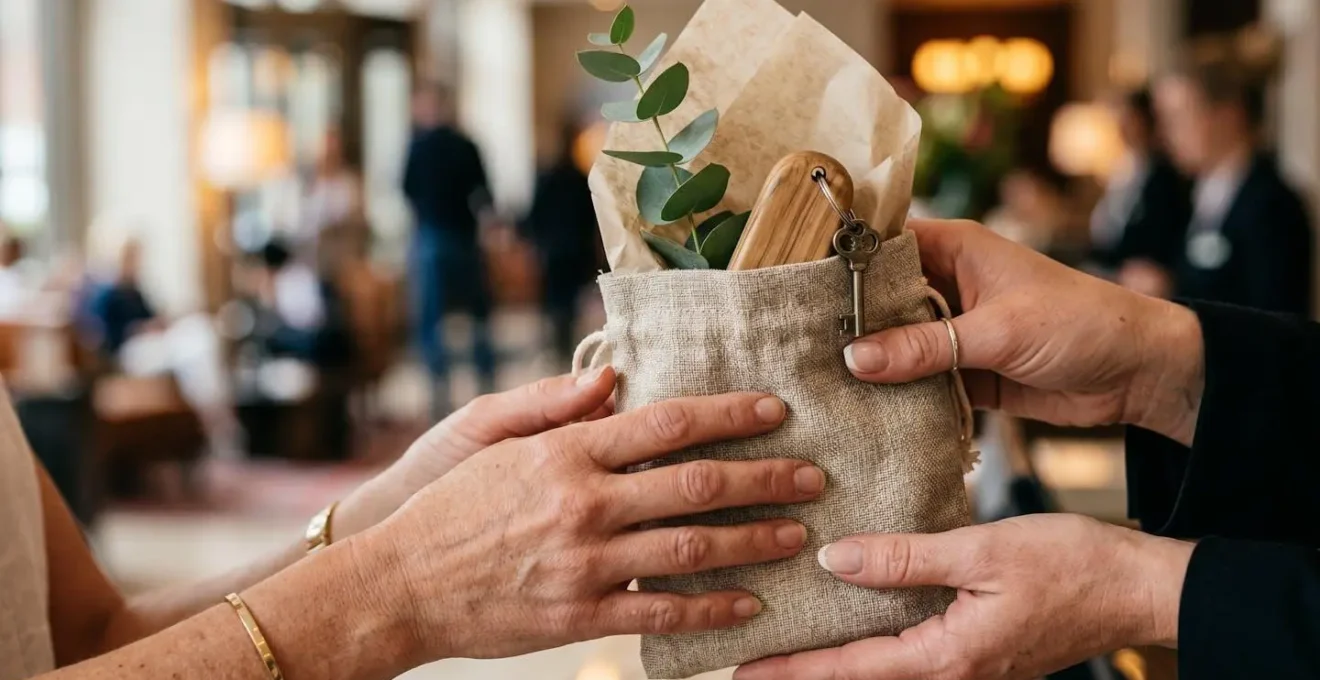
This personalized approach bypasses the line and transforms a transactional moment into a personal one. The concierge can greet guests by name, hand them their key, briefly orient them to the property, and answer any immediate questions. This requires close pre-coordination with the venue to pre-register guests and have keys ready. For villa or property rentals, this is even more critical. Having a host meet guests upon arrival with keys, a property tour, and a cold drink is far superior to a lockbox code sent via text.
Pre-arrival communication is also key. A week before the event, send a detailed email with the venue’s address, a map link, arrival instructions, and the name and photo of the person who will be greeting them. This manages expectations and reduces anxiety, ensuring guests arrive feeling confident and cared for, not stressed and confused. The goal is to make them feel like a visiting dignitary, not just another hotel check-in.
One large bus or three vans: Which navigate narrow European streets better?
Transportation is often viewed as a purely logistical line item, but for a destination wedding, it is a critical component of the experience architecture. The choice between a single large coach and a fleet of smaller vans is not just about cost or capacity; it’s a decision that fundamentally shapes your guests’ interaction with the destination. While a large bus may seem efficient, it often creates a psychological and physical barrier, reinforcing the “tour group” mentality you want to avoid.
Smaller vehicles, such as 13-18 passenger vans, cultivate a more intimate, exclusive, and authentic atmosphere. They allow for greater flexibility and spontaneity—the very essence of real travel. A van can easily pull over for an impromptu photo at a stunning scenic overlook or navigate the charming side street that leads to a hidden gem of a restaurant. A 56-passenger coach is locked into a rigid route, unable to maneuver in historic town centers or reach the remote farmhouses and secluded beaches that often host the most memorable experiences.
This choice directly impacts your ability to deliver an authentic itinerary. Many of the most unique venues in destinations like Tuscany, Provence, or the Greek islands are simply inaccessible to large buses. Opting for vans opens up a world of possibilities. While the per-head cost may be higher, that cost is an investment in access and experience. It is the difference between seeing a historic village from a highway and walking its cobblestone streets. The following analysis breaks down the key trade-offs.
| Factor | One Large Bus (56-passenger) | Three Vans (13-18 passengers each) |
|---|---|---|
| Perception & Experience | Signals ‘tour group’ mentality; creates psychological barrier from destination; less intimate | Cultivates private, curated, exclusive feeling; reinforces authenticity goal; more personal |
| Flexibility & Spontaneity | Locked into predetermined route; cannot make impromptu stops; limited maneuverability | Can make spontaneous photo stops; explore charming side streets; capture unscripted authentic moments |
| Access to Unique Venues | Cannot access narrow streets, remote farmhouses, secluded beaches, historic town centers | Full access to authentic venues; can reach remote restaurants; navigate medieval streets |
| Cost Structure | Lower per-head cost (~$15-25/person for 56 guests) | Higher per-head cost (~$35-50/person) but enables access to otherwise unreachable experiences |
| Group Dynamics | All guests together; easier coordination; single pickup/dropoff | Guests naturally segment by affinity; allows for varied departure times; more logistical coordination needed |
Ultimately, the decision reflects the core philosophy of your event. If the goal is authenticity and intimate discovery, a fleet of vans is almost always the superior choice, as this comparative analysis demonstrates.
Key Takeaways
- The goal is “curated freedom,” providing a framework for discovery, not a rigid schedule.
- Use the “Energy Arc” principle: schedule high-energy icebreakers early and taper down to low-energy activities before the ceremony.
- Design multi-generational activities using a “Hub-and-Spoke” model to include everyone without forcing participation.
The transport error that strands guests at remote excursion sites
Of all the potential logistical failings at a destination wedding, leaving a guest behind at a remote location is one of the most stressful and damaging. This entirely avoidable error stems from a breakdown in communication and a lack of a clear, redundant protocol. A driver’s assumption, a guest’s confusion about time, or a poorly chosen meeting point can quickly escalate into a crisis. Implementing a robust “Triple Confirmation” protocol is non-negotiable for any off-site excursion.
This protocol relies on redundancy, ensuring the departure information is communicated and confirmed through multiple channels. The system is simple but effective, turning a potential point of failure into a well-managed process. It requires designating a responsible “Transport Captain”—a reliable member of the wedding party, not the couple—to execute the plan and act as the central point of contact. This person is the key to a smooth and secure operation.
A vague meeting point like “the parking lot” is a recipe for disaster. The designated rally point should always be a pleasant and specific location, such as a café, a scenic overlook, or a particular shop. This turns inevitable waiting time into an enjoyable part of the experience rather than a period of anxious uncertainty. A clear, well-executed communication plan is the ultimate sign of a thoughtful host who has anticipated every need.
Action Plan: The Triple Confirmation Transport Protocol
- Verbal Confirmation: Before any guest disembarks at an excursion site, the designated ‘Transport Captain’ or driver must verbally announce the exact return time and the specific, named pickup location (e.g., “We depart at 4:00 PM from the entrance of the ‘Gelato Paradiso’ shop”).
- Headcount System: The Transport Captain is responsible for conducting a formal headcount from a guest manifest before departing from the hotel and, crucially, before leaving the excursion site to return.
- Digital Reminder: A group message (via WhatsApp or text) must be sent to all guests 30 minutes before the scheduled departure time, restating the time and location.
- Contingency Planning: A “what-if” plan must be shared with guests in advance. This includes contact numbers for 2-3 pre-vetted local taxi services and the Transport Captain’s number. This empowers guests in a worst-case scenario.
- Driver Backup: Ensure all drivers have a hard copy of directions and emergency contact numbers, as GPS and cell service can be unreliable in remote areas.
By shifting from a logistical mindset to one of experience architecture, you can craft a destination wedding that delivers on its promise of authenticity. It’s an approach that respects your guests as discerning travelers and provides a framework for them to create their own magical memories within the beautiful world you’ve invited them into. To apply these principles, the next logical step is to begin mapping out your own itinerary’s rhythm, balancing key events with generous moments of curated freedom.